
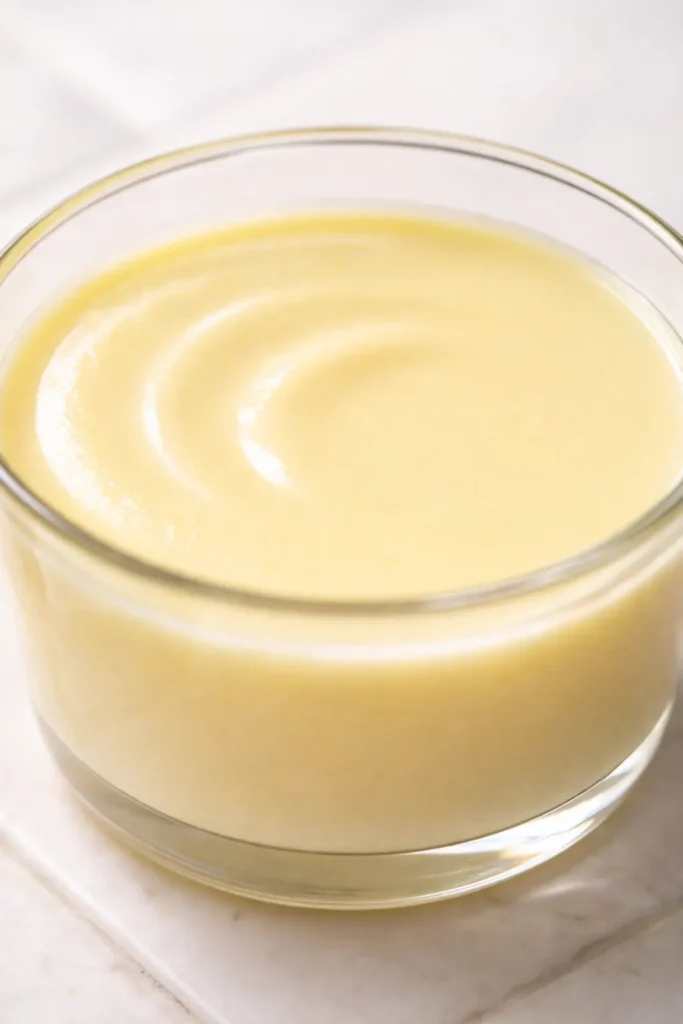
That first spoonful — when it’s cold and silky and the lemon hits the back of your throat right behind the cream — is the kind of quiet moment that makes the whole day slow down. My eight-year-old Simone calls it adult pudding, which is the highest compliment she can give something that isn’t chocolate.
The short version: This lemon posset looks like you spent hours but actually comes together in about 15 minutes of hands-on work, then chills into something magical.
I’ve made this for Easter brunch, for sick-day comfort, and for the time Marcus brought his boss home and I needed something that felt special without needing me to disappear into the kitchen. It’s the quiet hero of my dessert rotation.
- Serves: 4 as a dessert
- Hands-On Time: 15 min | Total Time: 4 hrs 15 min (includes chilling)
- Difficulty: So easy — no special skills needed, seriously
- Cost per serving: ~$1.75
- Calories: ~320 per serving
- Dietary Notes: Naturally gluten-free and vegetarian
(Photo above: Two small glass cups of pale yellow posset on a marble counter, a thin layer of cream on top, a single mint leaf and a curl of lemon zest for garnish. Side angle, afternoon light coming in from the left.)
Why This Almost-Magic Trick Gives You the Silkiest Dessert
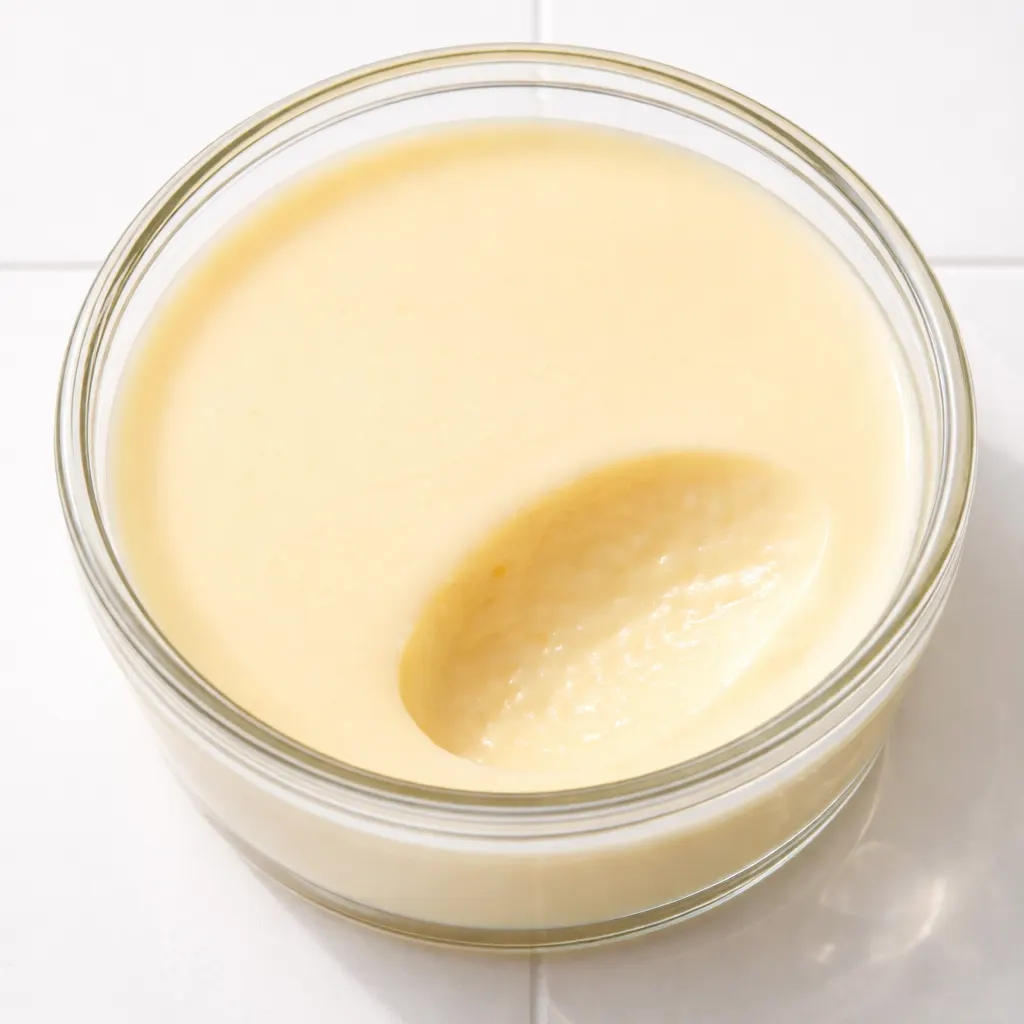
The first time I made posset, I was convinced I’d curdled it. You stir lemon juice into hot cream and it thickens instantly — it looks like you made a mistake. But that’s the whole trick.
The acid tightens the proteins in the cream, and as it chills, that structure sets into a texture that’s softer than panna cotta but firmer than pudding. No eggs, no gelatin, no fuss. It’s the kind of kitchen science that feels like a party trick the first time you do it.
My husband Marcus ate his in about 12 seconds and asked if there was more. That’s the full review.
What Goes In (Just 4 Things, With Notes)
- 2 cups heavy cream: Must be full fat — the kind with the green top. Anything less won’t set, and I learned that the hard way. Don’t swap it. I mean it.
- ½ cup granulated sugar: Standard white sugar dissolves cleanly. I’ve tried brown sugar and it competes with the lemon instead of letting it shine.
- 2 to 3 lemons (zest and juice): Fresh. Bottled juice tastes flat in this — you need the bright top notes. Celestine would’ve used a whole lemon and a little faith. I use a microplane and measuring spoons. Same result. You need about ¼ cup of fresh juice, which is usually 2 to 3 lemons depending on size.
- Pinch of salt: Not negotiable. It lowers the sweetness and pushes the lemon forward. My daughter thinks I’m being dramatic about this, but she eats it every time.
What to Pull Out Before You Start
- Small saucepan
- Microplane or fine zester
- Citrus juicer (or just your hand — I won’t judge)
- Fine-mesh strainer (don’t skip it)
- 4 small ramekins, cups, or glasses — whatever you’d serve pudding in
Let’s Make It (Yes, It’s This Easy)
Read this once before you start — it moves fast at the end.
Prep first: Zest and juice your lemons before you turn on the heat. You need to move quickly once the cream is hot.
- Heat: Combine cream, sugar, and salt in the saucepan. Heat over medium, stirring occasionally, until the sugar dissolves and the cream comes to a gentle simmer. Don’t let it boil hard — small bubbles at the edges is what you’re looking for.
- Infuse: Remove from heat. Stir in the lemon zest. Let it sit for 2 minutes to infuse. The kitchen will smell incredible. (📸 Photo tip: The cream should be steaming, not bubbling violently.)
- Strain: Pour the hot cream through the strainer into a bowl or large measuring cup. Discard the zest. I’ve skipped this before and trust me — the texture is better when you take the time.
- Curdle (intentionally): Whisk in the lemon juice. The mixture will thicken immediately — that’s the posset doing its thing. Don’t panic. You haven’t messed it up. (📸 Photo tip: It should look thick and smooth, like a thin pudding or a loose custard.)
- Pour: Divide the mixture into your serving cups. Tap them gently on the counter to release any air bubbles.
- Chill: Refrigerate, uncovered, for at least 4 hours, or overnight. Cover them once they’re fully set to keep them from picking up fridge smells.
Make It Ahead (It’s Actually Better That Way)
This is the ideal make-ahead dessert. It needs the time in the fridge, so you can’t rush it — which means you can also totally forget about it until you need it.
- Fridge: Covered tightly with plastic wrap or a lid, they keep for up to 4 days. The texture stays silky the whole time.
- Freezer: Not recommended. Thawing changes the texture and makes it grainy. This one lives in the fridge.
- Reheat: There’s no reheating this one — it’s a cold dessert. Serve it straight from the fridge and let it sit on the counter for 5 minutes if you want it slightly less cold.
Things I Learned the Hard Way (So You Don’t Have To)
- Use the right cream: I tried this once with half-and-half because that’s what I had. It never set. There are some corners you just can’t cut, and this is one of them. Heavy cream only.
- Don’t skip the strainer: The zest gives flavor, but if you leave it in, the texture gets slightly bitter and gritty. Strain it. Your future self will thank you.
- Be patient with the set: It looks loose when it goes in the fridge. Don’t poke it after an hour. Let it do its thing. Overnight is best, but 4 hours is the minimum. Even if you check it early and it’s still jiggly, give it more time.
- Taste your lemons: Some lemons are wildly tart, some are mild. If you have really intense lemons, start with 3 tablespoons of juice, taste, and add more if needed. You can always add, you can’t take away.
Ways to Make It Your Own
- Lime posset: Swap lemon for lime. Add a drop of green food coloring if you want it to look like key lime pie. My family loves this version in the summer.
- Herb-infused: Add a sprig of rosemary or a few thyme sprigs to the cream as it heats. Remove it before adding the lemon. It adds a subtle savory note that’s incredible.
- Topping ideas: Fresh berries, a dollop of lightly whipped cream, shortbread cookies for dipping, or a sprinkle of toasted sugar on top right before serving.
- The kid version: Simone insists on hers with a handful of fresh raspberries on top. She says it makes it fancy. She’s not wrong.
Questions I Get About This Recipe All the Time
Q: Why did my posset not set?
A: Ugh, I’ve been there. You either used light cream (you absolutely need heavy cream!) or didn’t let it chill long enough. Give it the full 4 hours. If it’s still liquid after that, whisk in a tiny bit more lemon juice and pour it back into the fridge. You’ve got this next time.
Q: Can I use bottled lemon juice?
A: You can, but I won’t. The flavor is flat and the acid level is inconsistent. A real lemon is worth the 30 seconds it takes to juice it.
Q: Can I make this dairy-free?
A: I haven’t had luck with full substitutions. Coconut cream might work, but the flavor changes completely and the set isn’t the same. I’d honestly just look for a coconut panna cotta recipe instead.
Q: What do you serve with lemon posset?
A: We eat it plain for dessert, but it’s also incredible alongside a rich chocolate cake or a slice of buttery shortbread. It cuts through richness like nothing else. My kids love it with a handful of fresh blueberries on top.
More Recipes My Family Makes on Repeat
If you loved this simple lemon dessert, here are a few others that get the same reaction at our table:
- Classic Buttermilk Chess Pie — Sweet, tart, and uses up that leftover buttermilk. My grandmother’s version.
- No-Churn Vanilla Bean Ice Cream — Three ingredients, no machine, my kids’ most-requested project.
- Celestine’s Lemon Icebox Cake — Layers of lemon curd, cream, and graham crackers that tastes like summer in a dish.
This is the dessert I make when I want something that feels special but doesn’t ask me to do any real work. It’s just you, a pot, and four ingredients — and a few hours later, you have something that tastes like it took all day.
If you try it, drop a comment below or tag me on Pinterest — I love seeing your kitchen wins.
📌 Save this easy lemon posset recipe for your next dinner party — it’s the gluten-free, make-ahead dessert everyone will ask you for.
Lemon Posset That Doesn’t Curdle (Finally) — Rich, Creamy & Done in 15 Minutes of Hands-On Time
Equipment
- Small saucepan
- Microplane or fine zester
- Citrus juicer
- Fine-mesh strainer
- 4 small ramekins, cups, or glasses
Ingredients
- 2 cups heavy cream (must be full fat)
- 1/2 cup granulated sugar
- 2-3 lemons (zest and juice, about 1/4 cup juice)
- 1 pinch salt
Instructions
- Prep first: Zest and juice your lemons before you turn on the heat. You need to move quickly once the cream is hot.
- Heat: Combine cream, sugar, and salt in the saucepan. Heat over medium, stirring occasionally, until the sugar dissolves and the cream comes to a gentle simmer. Don’t let it boil hard — small bubbles at the edges is what you’re looking for.
- Infuse: Remove from heat. Stir in the lemon zest. Let it sit for 2 minutes to infuse. The kitchen will smell incredible.
- Strain: Pour the hot cream through the strainer into a bowl or large measuring cup. Discard the zest. I’ve skipped this before and trust me — the texture is better when you take the time.
- Curdle (intentionally): Whisk in the lemon juice. The mixture will thicken immediately — that’s the posset doing its thing. Don’t panic. You haven’t messed it up.
- Pour: Divide the mixture into your serving cups. Tap them gently on the counter to release any air bubbles.
- Chill: Refrigerate, uncovered, for at least 4 hours, or overnight. Cover them once they’re fully set to keep them from picking up fridge smells.
Notes
– Use heavy cream only — anything lighter won’t set.
– Don’t skip the strainer; leftover zest makes the texture gritty.
– Be patient — 4 hours minimum, overnight is best.
– Taste your lemons: if very tart, start with 3 tbsp juice and add more. Make ahead: Covered tightly, possets keep in the fridge for up to 4 days. Freezing is not recommended. Variations: Swap lemon for lime, or infuse the cream with rosemary or thyme before adding juice. Top with fresh berries, whipped cream, or shortbread cookies.
Related posts:
 Breakfast Crunchwraps That Stay Golden and Crisp in 30 Minutes — The Only One You’ll Need
 High Protein Banana Pudding Yogurt That Doesn’t Taste Like a Protein Shake — Finally
 Marry Me Chickpeas: The Creamy, Garlicky Version That’s Actually Worth the Hype – in 30 Minutes
 Tortellini Carbonara That’s Creamier Than Any Restaurant — in 30 Minutes