
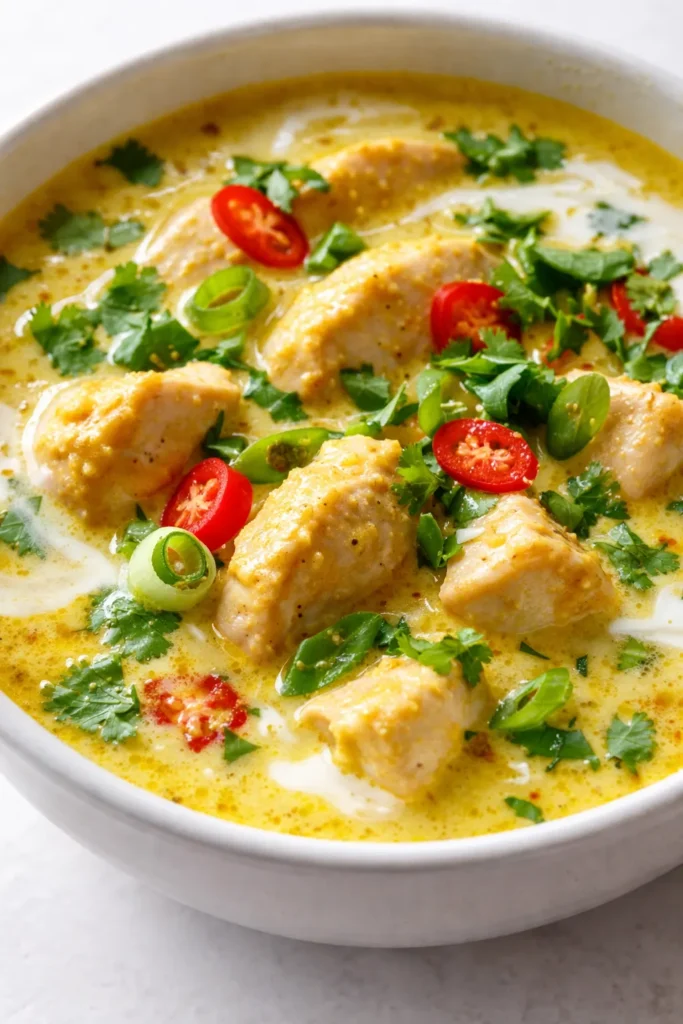
The first time I made this, Marcus asked me what takeout place I’d ordered from. That’s not a flex about authenticity — it’s a flex about depth. The version you get from most weeknight recipes is thin, one-dimensional, and reminds you why you usually just order out. This one settles into something rich, slightly sweet from the caramelized onions, warm from the curry, and creamy from the coconut milk. I spent a year testing versions of this until it had the depth I was looking for. This is the one I stuck with.
The short version: Bone-in chicken thighs simmered in a coconut-curry broth with soft potatoes and carrots — one pot, bold flavor, and Marcus packs the leftovers before I’ve finished eating.
Simone, who is eight and has opinions about everything, told me the potatoes are the best part. She’s not wrong. They soak up the broth and turn into little flavor bombs. I’ve made this recipe close to thirty times now, and it’s the one I make when I want a Sunday dinner that fills the house with something warm and promises a good lunch on Monday.
- Serves: 6 as a main
- Hands-On Time: 25 min | Total Time: 1 hour
- Difficulty: Easy — just needs patience for the onions, not skill
- Cost per serving: ~$4.50
- Calories: ~490 per serving
- Dietary Notes: Naturally dairy-free, gluten-free adaptable
(Photo above: overhead shot of a wide white bowl filled with golden curry and jasmine rice, bone-in chicken thigh visible, chunks of potato and carrot scattered through, garnished with fresh cilantro and sliced scallions, steam rising lazily in the late afternoon light coming from the left.)
The Thing That Makes This Curry Different from the Takeout Version
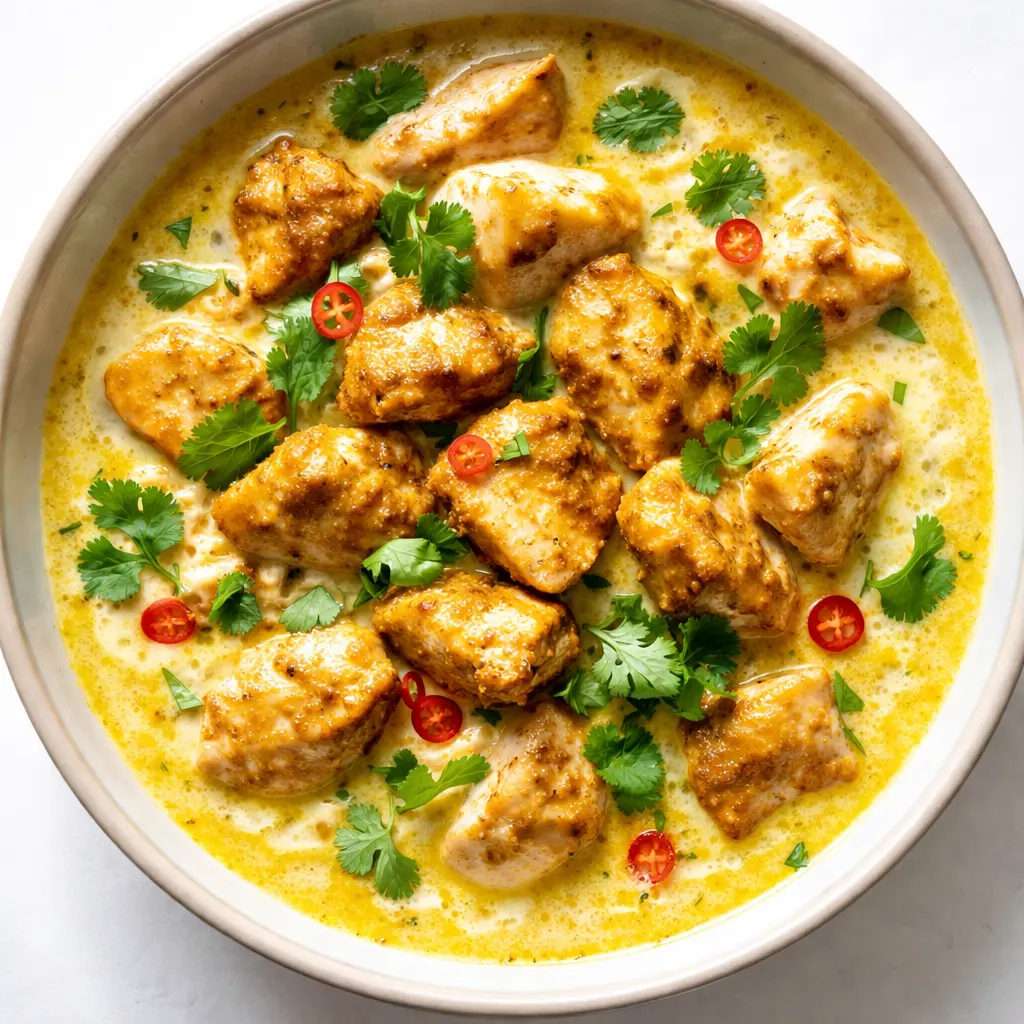
The difference comes down to one step that almost nobody does at home: you treat the curry powder like a spice that needs blooming, not a powder you dump into liquid. I add it to the hot fat after the onions have cooked down and let it toast for about a minute before any liquid goes in. That minute changes everything. The curry powder opens up, the aromatics release, and the final broth has a warmth that sits in the back of your throat instead of just sitting on the surface.
The other thing is the onions. I cook them until they’re jammy and starting to stick to the bottom of the pot. Not burnt — just deeply caramelized. That sweetness balances the curry and the coconut milk in a way that makes the whole thing taste rounded rather than sharp. My grandmother Celestine took the same approach with her tomato gravy — let the base cook until it’s almost doing something else entirely. That patience is what builds flavor worth waiting for.
And I use bone-in chicken thighs. Not breast, not boneless skinless. The bones add body to the broth while it simmers, and the dark meat stays tender even after an hour of cooking. If you want the version that tastes like it cooked all day, bone-in thighs are how you get there in under an hour.
What Goes In — Plus My Honest Notes
- 2 tablespoons vegetable or coconut oil: Something neutral. You want the curry to be the star, not the oil. Simone once asked me why the oil matters. I told her it’s like the stage for the spices — it just needs to hold them up, not steal the show.
- 1 large yellow onion, finely diced: This is the backbone. Cook it low and slow until it’s soft and starting to brown. Don’t rush it or the whole dish will taste like raw onion instead of sweet depth.
- 4 cloves garlic, minced: Goes in after the onions, just before the curry powder. Garlic burns fast, so it gets less time in the fat.
- 1 tablespoon fresh ginger, grated: Non-negotiable. The jarred stuff from the fridge aisle works in a pinch but fresh is worlds better. I keep a knob of ginger in the freezer and grate it straight from frozen — easier to peel and it releases more juice.
- 3 tablespoons Madras curry powder: This is the one. Not generic yellow curry powder. Madras has heat and depth. I use Sun Brand or a blend from the Indian market. I toaste mine in a dry pan before I start cooking if I’m feeling extra, but blooming it in the oil is the non-negotiable step.
- 1 teaspoon turmeric: For color and that earthy undertone. Most curry powders already have turmeric, but an extra teaspoon makes the broth glow.
- 1 can (14 oz) full-fat coconut milk: Not lite. The fat carries the spices. If you’re worried about richness, use full-fat and just use less. I’ve tested this with lite and the broth turns out thin and sad. Don’t do it.
- 2 cups chicken stock: Homemade is great, but a good carton works. I like the low-sodium kind so I can control the salt level myself.
- 2 pounds bone-in, skinless chicken thighs: You can use skin-on and remove the skin after browning if you want the extra flavor. I go skinless to keep the broth from getting greasy.
- 2 medium potatoes, peeled and cut into 1-inch chunks: Yukon Gold or Russet. They break down slightly and thicken the broth naturally.
- 2 carrots, peeled and cut into chunks: Adds sweetness and color. Simone eats around these sometimes but admits they taste good.
- 1 tablespoon fish sauce: This is the secret weapon. It doesn’t make the dish taste fishy — it adds savory depth that salt alone can’t give you. If you’re strictly vegetarian, use a teaspoon of miso paste dissolved in a little water.
- 1 teaspoon sugar or honey: Just a touch to balance the curry and coconut.
- Salt and white pepper to taste: White pepper is traditional in Chinese cooking. Black pepper works too but white has a cleaner heat.
- Fresh cilantro and sliced scallions for garnish: Not optional in my kitchen. They add freshness and color.
- Steamed jasmine rice for serving: The rice soaks up the broth. Make extra.
The Setup (It’s Minimal, I Promise)
- A heavy-bottomed pot or Dutch oven — 5 to 6 quarts. I use my Le Creuset knockoff from Aldi and it works perfectly.
- A wooden spoon or silicone spatula for stirring.
- A grater or microplane for the ginger and garlic.
- A measuring cup for the stock and coconut milk.
That’s it. No special equipment. If you have a rice cooker, use it for the jasmine rice so you can focus on the curry.
Making Chinese Curry Chicken: My Exact Process
This goes fast once you start, so read through once before you turn on the stove. Most of the active time is in the first fifteen minutes — then it just simmers.
Prep and Brown: Pat the chicken thighs dry with paper towels and season them lightly with salt and white pepper.
- Heat the oil: In your Dutch oven, heat the oil over medium-high heat until it shimmers. Add the chicken thighs in a single layer, skin side down if they have skin. Cook for 4-5 minutes per side until golden brown. Don’t crowd the pot — work in two batches if needed. (📸 Photo tip: The chicken should be deeply golden, not pale. That browning is flavor.) Remove the chicken to a plate and set aside.
- Cook the onions: Reduce the heat to medium. Add the diced onion to the pot and stir, scraping up any browned bits from the bottom. Cook for 8-10 minutes, stirring occasionally, until the onion is soft and starting to turn golden. This is the patience step. If the onion starts to burn, add a splash of water and lower the heat.
- Bloom the aromatics: Add the garlic and ginger to the pot and cook for 30 seconds until fragrant. Then add the curry powder and turmeric. Stir constantly for 1 minute. The mixture will look dry and paste-like. Keep stirring — this is where the magic happens. The kitchen will smell warm and spicy. (📸 Photo tip: The paste should be dark golden and smell deeply toasted, not raw.)
- Add the liquids: Pour in the coconut milk and chicken stock, stirring to combine. Bring the mixture to a gentle simmer. Add the fish sauce, sugar or honey, and a pinch of salt.
- Return the chicken: Nestle the browned chicken thighs back into the pot, along with any juices that collected on the plate. Add the potato and carrot chunks. The liquid should almost cover the chicken — if it doesn’t, add a splash more stock or water.
- Simmer: Partially cover the pot and let it simmer gently for 30-35 minutes, stirring occasionally, until the potatoes are tender and the chicken is cooked through and tender. Skim off any excess fat if you want a cleaner broth, but I usually leave it.
- Finish and adjust: Taste the broth. It should be savory, slightly sweet, with a warm curry kick. Add more fish sauce for saltiness, a squeeze of lime for brightness, or a pinch of sugar if it’s too bitter. This is the part where you make it yours. Remove from heat.
- Serve: Spoon rice into wide bowls and ladle the curry over the top, making sure each bowl gets a chicken thigh, some potatoes, and carrots. Garnish with cilantro and scallions.
How I Meal Prep This for the Week
This is one of my favorite recipes for Sunday meal prep. I make a double batch and we’re set for lunches through Wednesday. The flavors actually get better overnight as the spices settle and the potatoes absorb more broth. I store the curry and rice separately so the rice doesn’t get soggy — my secret is I pack them in separate containers and let everyone build their own bowl.
- Fridge: Store in an airtight container for up to 4 days. The curry thickens as it sits. Add a splash of water or stock when reheating to loosen it up.
- Freezer: Yes, it freezes beautifully. Portion into freezer-safe containers without the rice. Thaw overnight in the fridge and reheat gently on the stovetop or microwave.
- Reheat: Stovetop is best — low heat, covered, with a splash of water. The microwave works in a pinch but stir halfway through to heat evenly.
Things I Wish I’d Known the First Time
- Don’t skip browning the chicken: I know it’s an extra step and you’re hungry. But that brown crust on the chicken adds flavor to the broth that you cannot get from anything else. Even if you’re using boneless thighs, brown them first.
- Bloom the curry powder in the fat, not the liquid: This is the most important tip in this entire article. Curry powder is fat-soluble. If you dump it into the coconut milk without blooming it first, it will taste raw and dusty. One minute in hot oil unlocks everything it has to offer.
- Use more curry powder than you think you need: Three tablespoons sounds like a lot, but the potatoes and rice absorb a lot of the flavor. I tried two tablespoons the first time and the result was timid. Three is the sweet spot for a full-flavored broth.
- Taste before you serve and adjust: Every curry powder blend has a different personality. Some are hotter, some are milder, some have more salt. Taste the broth at the end and adjust the seasonings to what it needs. A little lime juice at the end can wake up the whole dish.
Swaps That Actually Work
- Chicken breast: Use it if that’s what you have, but add it later in the simmering process so it doesn’t dry out. Add the breast pieces after the potatoes have cooked for 15 minutes.
- Vegetarian version: Omit the chicken and use chickpeas or tofu. Use vegetable stock instead of chicken stock. Add more potatoes and carrots or cauliflower. The fish sauce can be replaced with a teaspoon of miso paste or a splash of soy sauce for that savory depth.
- Different vegetables: Snap peas, bell peppers, zucchini, or green beans can go in during the last 10 minutes of simmering. They add color and freshness.
- Less spicy version: Use a milder curry powder and cut it back to 2 tablespoons. Add a can of coconut milk instead of 1½ cups of stock for a creamier, milder broth.
- Fancier version for company: Use whole spices — toast a cinnamon stick, star anise, and a few cardamom pods in the oil before adding the onions, then remove them before serving. It adds a layer of complexity that feels special.
Questions I Get About This Recipe All the Time
Q: Why did my broth turn out thin and watery?
A: This usually happens when you don’t cook the onions long enough or you add too much liquid. The onions need to cook down to a jammy consistency before you add the stock and coconut milk. And stick to the liquid amounts in the recipe — the potatoes also need room to absorb some of the broth. If it’s still thin at the end, simmer it uncovered for 5-10 more minutes to reduce it.
Q: Can I make this dairy-free and gluten-free?
A: It already is! Full-fat canned coconut milk keeps it dairy-free. And the recipe doesn’t use any thickeners or soy sauce that contain gluten. Just check your curry powder label — some blends have wheat flour in them. Pure curry powder is naturally gluten-free.
Q: How long does this last in the fridge? Can I freeze it?
A: It lasts 4 days in the fridge and freezes beautifully for up to 3 months. The flavors deepen as it sits. I freeze it in portion-sized containers without the rice. To reheat from frozen, thaw overnight in the fridge and warm it on the stovetop with a splash of water. The potatoes will be softer after freezing but the flavor stays excellent.
Q: What do you serve with this?
A: Steamed jasmine rice is the classic. But it’s also incredible over rice noodles or with warm naan bread for dipping. I like it with a simple cucumber salad on the side — sliced cucumbers with rice vinegar, a pinch of sugar, and sesame seeds. Simone loves the potatoes so much she eats them first and leaves the rice for last. She has her own system.
More Recipes My Family Makes on Repeat
If you liked this one, here are a few others that get the same reaction at our table:
- One-Pot Creamy Spinach Tortellini — The Monday pot that feeds us for days, made without the ham hock but with all the soul
- Crispy Baked Chicken Tenders — In the same family as this curry, ready in 40 minutes
- Southwest Chicken Salad Meal Prep — The vegetarian quick dinner she actually asks for by name
This curry is the kind of dinner that doesn’t just feed you — it fills the house with a smell that makes everyone wander into the kitchen to ask when it’s ready. That’s the kind of cooking I want more of in my life. Slow, patient, and worth every minute.
If you make it, drop a comment below. I love hearing how it goes — especially if your kids end up fighting over the potatoes the way mine do.
📌 This Chinese curry chicken recipe makes a richly aromatic, coconut-curry broth that gets better overnight — save it for your next Sunday dinner or cozy weeknight meal prep.
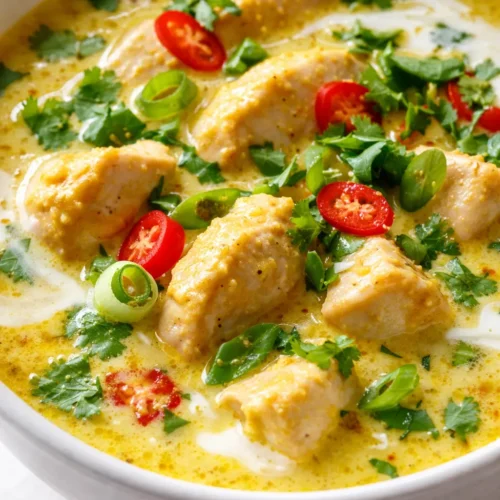
My Go-To Chinese Curry Chicken with the Rich, Fragrant Broth You’ll Want on Everything
Equipment
- Heavy-bottomed pot or Dutch oven (5-6 qt)
- Wooden spoon or silicone spatula
- Grater or microplane
- Measuring cup
- Rice cooker (optional)
Ingredients
Chicken Base
- 2 pounds bone-in, skinless chicken thighs
Aromatics
- 2 tablespoons vegetable or coconut oil
- 1 large yellow onion, finely diced
- 4 cloves garlic, minced
- 1 tablespoon fresh ginger, grated
Spices
- 3 tablespoons Madras curry powder
- 1 teaspoon turmeric
Liquids
- 1 can (14 oz) full-fat coconut milk
- 2 cups chicken stock (low-sodium)
Vegetables
- 2 medium potatoes (Yukon Gold or Russet), peeled and cut into 1-inch chunks
- 2 medium carrots, peeled and cut into chunks
Seasonings & Finish
- 1 tablespoon fish sauce
- 1 teaspoon sugar or honey
- to taste salt and white pepper
Garnish & Serving
- fresh cilantro and sliced scallions
- steamed jasmine rice (for serving)
Instructions
- Prep and Brown: Pat the chicken thighs dry with paper towels and season lightly with salt and white pepper.
- Heat the oil: In your Dutch oven, heat the oil over medium-high heat until it shimmers. Add the chicken thighs in a single layer, skin side down if they have skin. Cook for 4-5 minutes per side until golden brown. (Don’t crowd the pot — work in two batches if needed.) Remove the chicken to a plate and set aside.
- Cook the onions: Reduce the heat to medium. Add the diced onion to the pot and stir, scraping up any browned bits from the bottom. Cook for 8-10 minutes, stirring occasionally, until the onion is soft and starting to turn golden. (If the onion starts to burn, add a splash of water and lower the heat.)
- Bloom the aromatics: Add the garlic and ginger to the pot and cook for 30 seconds until fragrant. Then add the curry powder and turmeric. Stir constantly for 1 minute. The mixture will look dry and paste-like. Keep stirring — this is where the magic happens.
- Add the liquids: Pour in the coconut milk and chicken stock, stirring to combine. Bring the mixture to a gentle simmer. Add the fish sauce, sugar or honey, and a pinch of salt.
- Return the chicken: Nestle the browned chicken thighs back into the pot, along with any juices that collected on the plate. Add the potato and carrot chunks. The liquid should almost cover the chicken — if it doesn’t, add a splash more stock or water.
- Simmer: Partially cover the pot and let it simmer gently for 30-35 minutes, stirring occasionally, until the potatoes are tender and the chicken is cooked through and tender. Skim off any excess fat if you want a cleaner broth.
- Finish and adjust: Taste the broth. Add more fish sauce for saltiness, a squeeze of lime for brightness, or a pinch of sugar if it’s too bitter. Remove from heat.
- Serve: Spoon rice into wide bowls and ladle the curry over the top, making sure each bowl gets a chicken thigh, some potatoes, and carrots. Garnish with cilantro and scallions.
Notes
Related posts:
 Breakfast Crunchwraps That Stay Golden and Crisp in 30 Minutes — The Only One You’ll Need
 Savory Red Lentil Pancakes That Stay Crispy and Keep You Full Until Lunch
 Marry Me Chickpeas: The Creamy, Garlicky Version That’s Actually Worth the Hype – in 30 Minutes
 Pizza Quesadillas That Don’t Get Soggy — Finally