
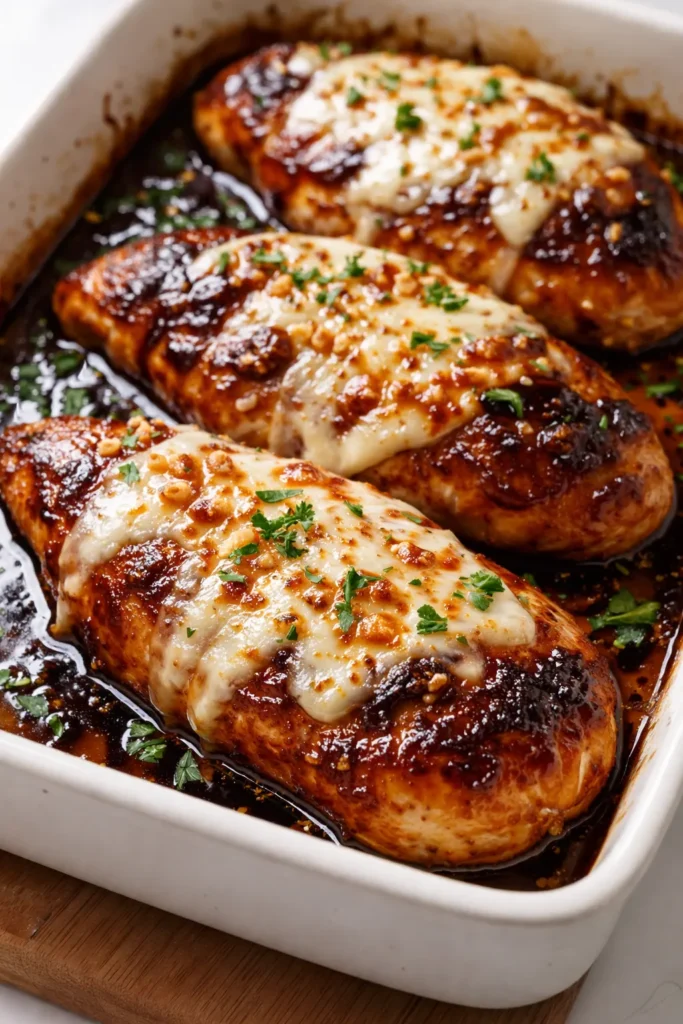
I’ve made a lot of baked chicken breasts in my time. Most of them were fine — the kind of fine you eat without complaint and forget by the next meal. This one is different. The balsamic reduces into a sweet-tangy glaze that locks in moisture, and the mozzarella melts into golden, bubbled pockets across the top. It’s the kind of dinner that makes my kitchen smell like something special, even on a random Tuesday. Marcus asked for it three weeks in a row when I first started making it. That’s when I knew it was a keeper.
The short version: Juicy, golden-brown chicken breasts baked with a balsamic glaze and melted mozzarella — ready in half an hour, and my kid actually asks for seconds.
I’ve been making this version for about two years now. It started as a weeknight experiment when I needed something fast that still felt like a real dinner. Simone was skeptical at first (she’s eight and has opinions about vinegar), but the balsamic sweetens as it reduces, and now she eats it without complaint. That counts as a win in my house. Celestine always said that a good vinegar can wake up almost anything. She used it in her greens, in her pot liquor, in her rice. I think of her every time I let balsamic reduce on chicken. The sharpness sweetens into something rich. It’s the same principle she taught me, just translated for a different plate.
- Serves: 4 as a main
- Hands-On Time: 10 min | Total Time: 30 min
- Difficulty: Easy — a weeknight staple, no special skills needed
- Cost per serving: ~$3.50
- Calories: ~380 per serving
- Dietary Notes: Naturally low-carb / Adaptable for gluten-free (check balsamic label)
(Photo above: An overhead shot of the balsamic chicken breasts in a white baking dish, mozzarella melted and golden across the top, fresh basil scattered over, with a side of roasted asparagus and lemon wedges. Natural light from the kitchen window.)
The Thing That Keeps This Chicken from Drying Out
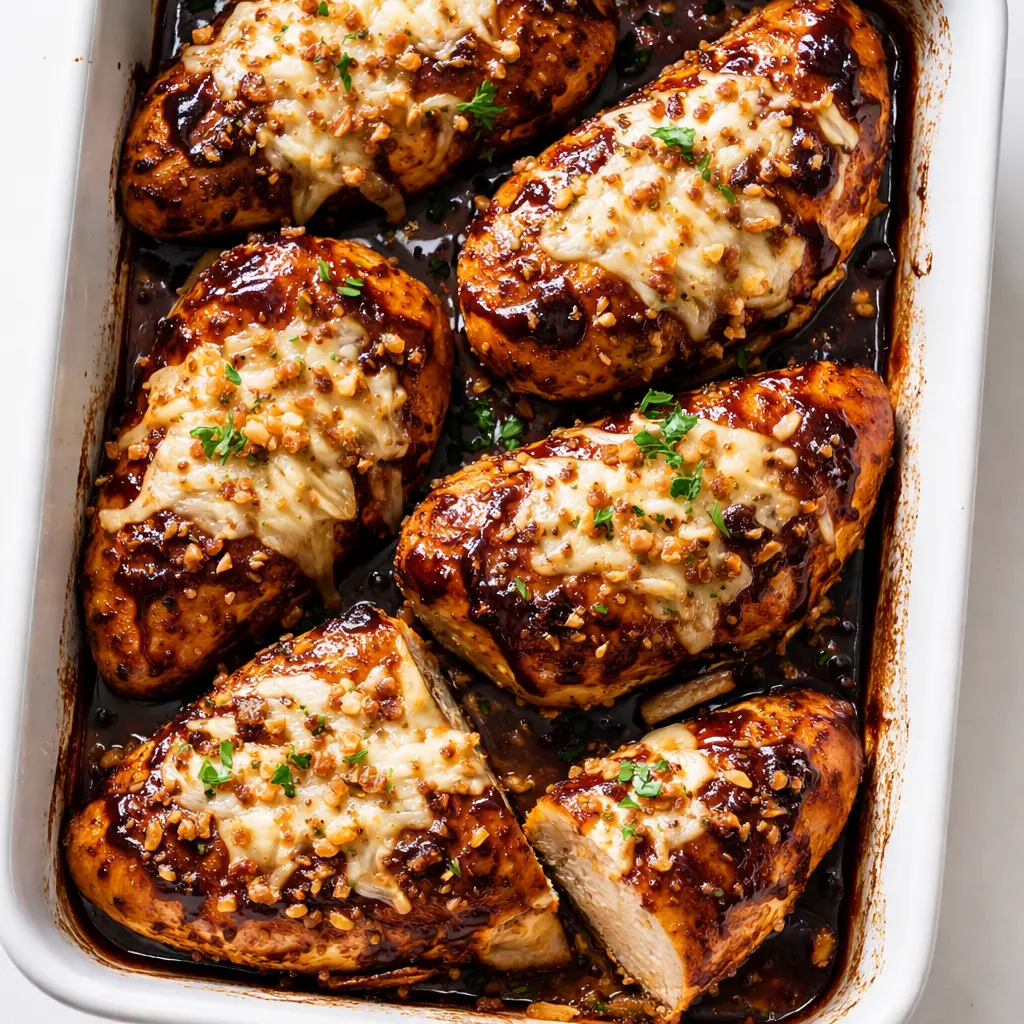
The problem with most baked chicken breast recipes is that the meat dries out before the top finishes cooking. The solution here is the balsamic glaze. As it reduces in the oven, it creates a barrier that traps moisture inside the meat. The acid in the vinegar also helps keep the meat tender — it’s a simple trick that makes a big difference.
The other trick is the layer of mozzarella on top. It melts and forms a protective cap over the chicken. That means the breast stays juicy on the inside while the cheese gets golden and bubbly on top. No dry, stringy chicken here. I learned this the hard way after too many dry chicken dinners. This version changed the game for me.
I’ve tested this at 375°F, 400°F, and 425°F. 400°F is the sweet spot — hot enough to reduce the balsamic into a glaze, but not so hot that the exterior dries out before the interior cooks through. The timing matters, and I’ve been very specific about it here. Follow it and you’ll end up with chicken that’s actually, genuinely juicy.
Ingredients Worth Talking About
- Chicken breasts (4, boneless skinless, about 6 oz each): Look for breasts that are similar in thickness so they cook evenly. If they’re huge, butterfly them or pound them down to an even thickness. Simone calls it “flat chicken,” and she’s not wrong. I buy a 2-pound pack and use whatever I don’t cook for lunch the next day.
- Balsamic vinegar (1/2 cup): Use a good one here — not the $2 bottle, but you don’t need the stuff aged for 12 years either. A decent balsamic has a sweetness that concentrates as it reduces. Check the label — some cheaper balsamics are cut with wine vinegar and sugar, and they don’t reduce the same way.
- Mozzarella (8 oz, fresh or low-moisture): Fresh mozzarella gives you those gorgeous melty pockets. Low-moisture mozzarella browns a bit more on top. I use fresh when I want it to feel fancy and low-moisture when it’s a Tuesday. Simone prefers the low-moisture version — she says fresh is “too slippery.”
- Garlic (4 cloves, minced): Not optional. Garlic and balsamic are a flavor pairing that works every time. I use a microplane when I’m feeling efficient, a knife when I want to feel like a chef.
- Olive oil (2 tbsp): Helps the seasoning stick and helps the balsamic glaze come together. Extra virgin is fine here, but I save the really good stuff for salad dressings.
- Dried oregano (1 tsp) and red pepper flakes (1/2 tsp): The oregano adds the Italian note. The red pepper flakes are optional — they add a tiny kick that Marcus loves. My daughter doesn’t notice them, so they stay in.
- Fresh basil (for garnish): Not strictly necessary, but the color and freshness cut through the richness of the cheese and the sweetness of the balsamic. I grow basil in a pot on my kitchen windowsill, so I always have it. If you don’t, flat-leaf parsley works too.
What to Pull Out Before You Start
- 9×13 baking dish (or any oven-safe dish that fits the chicken in a single layer)
- Small bowl for the balsamic mixture
- Whisk or fork
- Instant-read thermometer (optional, but it takes the guessing out of it)
That’s it. No special equipment needed. If you don’t have an instant-read thermometer, just make sure the juices run clear when you cut into the chicken.
Let’s Make It (Step by Step)
This goes fast, so read through once before you start. The hardest part is waiting for the oven to preheat.
Preheat the oven to 400°F: Make sure the rack is in the middle position. Line your baking dish with parchment or foil if you want an easier cleanup — I usually skip it, but don’t come for me when you’re scrubbing the balsamic residue.
- Season the chicken: Pat the chicken breasts dry with paper towels. This is not a step to skip — moisture is the enemy of a good sear, and a dry surface helps the salt and pepper stick. Season both sides generously with kosher salt and freshly ground black pepper. I use about 1 teaspoon of salt per pound of chicken. Don’t skimp here. (📸 Photo tip: You should see an even dusting of salt and pepper on the surface of the chicken, not a heavy coating — just enough to cover the pink.)
- Make the balsamic mixture: In a small bowl, whisk together the balsamic vinegar, olive oil, minced garlic, dried oregano, and red pepper flakes. It should smell sharp and fragrant — that’s what you’re after. Let it sit for a minute while you sear the chicken.
- Sear the chicken (the optional step I never skip): Heat a tablespoon of olive oil in a cast-iron skillet or heavy stainless-steel pan over medium-high heat. When the oil shimmers and moves easily across the pan, place the chicken breasts in gently. Let them cook undisturbed for 2 minutes. The chicken should release easily from the pan when it’s ready to flip. If it sticks, it’s not done searing. Flip and cook for another 2 minutes on the other side. Transfer the chicken to your baking dish. I know this adds 4 minutes, but it’s the difference between good chicken and great chicken. (📸 Photo tip: The chicken should have a deep golden-brown crust on each side, not pale or dry-looking.)
- Pour the balsamic mixture over the chicken: Spoon it over each breast so it pools around the edges. Don’t entirely submerge the chicken — you want the glaze to reduce and concentrate as it bakes.
- Bake for 15 minutes: The balsamic will bubble and reduce into a thick, glossy glaze. The chicken should be about 150°F internally at this point if you’re using a thermometer.
- Top with mozzarella: Tear or slice the mozzarella and layer it over the chicken. Don’t pile it all in the center — spread it out so every bite has some melted cheese.
- Bake for another 5–7 minutes: The mozzarella should be melted, golden, and bubbly. The chicken should reach 160–165°F internally. If you want the cheese extra golden, switch the oven to broil for the last 2 minutes. Keep an eye on it — broil goes fast.
- Rest and garnish: Let the chicken rest in the baking dish for 5 minutes. This lets the juices redistribute. Then scatter fresh basil over the top and serve. The glaze will thicken slightly as it cools — that’s exactly what you want.
How I Meal Prep These for the Week
I make a double batch on Sundays and we eat them throughout the week. They hold up surprisingly well, and the balsamic glaze gets even more flavorful after a day or two. Just don’t slice them before storing — keep the breasts whole so they stay juicy. When I’m packing lunch for Marcus, I slice the chicken thick and lay it over a bed of greens with cherry tomatoes and a drizzle of olive oil. It makes for a really good work lunch.
- Fridge: Store whole in an airtight container for up to 4 days. The glaze will thicken as it sits — that’s a good thing.
- Freezer: Yes! Place cooled chicken in a freezer-safe container or bag. Freeze for up to 3 months. Thaw in the fridge overnight before reheating.
- Reheat: Oven at 350°F for 8–10 minutes is best. The microwave works in a pinch, but the cheese won’t be as pretty. I wrap mine in foil so the top doesn’t burn before the middle heats through.
Things I Wish I’d Known the First Time
- Pound the chicken to even thickness: If you’ve got thick breasts, butterfly them or pound them out to about 3/4-inch thick. This ensures they cook evenly. I learned this after serving a piece that was undercooked on one end and dry on the other. Simone was not impressed.
- Don’t skip the sear: I know it’s an extra step. I know you want to just dump everything in the dish and bake it. But that 2-minute sear per side is what gives you that deep, savory flavor that makes the dish taste like it cooked longer than 30 minutes. Trust me on this one.
- Use a thermometer: 165°F is the magic number for chicken. But carryover cooking is real — if you pull it at 160°F and let it rest, it’ll climb to 165°F. I pull mine at 158°F because I like my chicken just barely done, and resting brings it to 163°F. Even if it hits 165°F, it’s still juicy because of the balsamic glaze.
- Make extra balsamic glaze: If you want more sauce to spoon over rice or vegetables, double the balsamic mixture and simmer the extra on the stove while the chicken bakes. It reduces into a syrupy glaze that’s amazing on everything.
Swaps That Actually Work
- Dairy-Free: Skip the mozzarella completely or use a dairy-free mozzarella substitute. The balsamic glaze is flavorful enough on its own that you won’t miss the cheese. My sister-in-law makes it this way and swears by it.
- Chicken Thighs: Use boneless, skinless thighs instead. They take about the same time to cook but are more forgiving if you leave them in a few extra minutes. Marcus prefers thighs, so I swap them in about half the time.
- Add Vegetables: Tuck some cherry tomatoes, zucchini slices, or bell pepper strips into the baking dish around the chicken. They roast in the balsamic glaze and make for an easy one-pan dinner.
- Spicy Version: Double the red pepper flakes or add a minced Fresno or serrano pepper to the balsamic mixture. The heat cuts through the richness of the cheese beautifully.
- Kid-Friendly Version: Leave out the red pepper flakes entirely. Swap fresh mozzarella for low-moisture mozzarella slices — they melt faster and have a milder flavor. Simone gives this version a thumbs up.
Questions I Get About This Recipe All the Time
Q: Why did my chicken turn out dry?
A: Ugh, I’ve been there. Two most likely culprits: the chicken breast was too thick and didn’t cook evenly, or it baked too long. Pound the chicken to even thickness and use a thermometer to pull it at 160°F. The balsamic glaze helps, but it can’t fix overcooked chicken entirely. You’ve got this next time.
Q: Can I make this without the cheese?
A: Yes, absolutely. It becomes a simple balsamic baked chicken, and it’s still really good. The cheese adds richness and a protective layer that keeps the chicken moist, but the balsamic glaze does most of the heavy lifting. I’d still sear the chicken and use the full balsamic mixture.
Q: How long does this last in the fridge? Can I freeze it?
A: It keeps for 4 days in the fridge in an airtight container. The glaze thickens into a coating, which is delicious. Yes, it freezes well for up to 3 months — freeze the whole breasts flat in a bag, then thaw overnight in the fridge. Reheat in a 350°F oven so the cheese doesn’t get rubbery.
Q: What do you serve with this?
A: I keep it simple: rice or crusty bread to soak up the balsamic glaze, and a vegetable on the side. Roasted asparagus, green beans, or a crisp arugula salad with lemon vinaigrette all work well. My kids love it with buttered egg noodles and steamed broccoli — the balsamic drips into the noodles and makes them extra good.
More Recipes My Family Makes on Repeat
If you liked this one, here are a few others that get the same reaction at our table:
- Garlic Butter Shrimp with Lemon and Herbs — Ready in 15 minutes, one skillet, and my kids ask for it every week.
- One-Pan Italian Sausage and Peppers — The sauce gets better overnight, and it’s perfect for meal prep.
- Creamy Sun-Dried Tomato Chicken — Rich, saucy, and exactly what you want on a cold night.
This is the kind of recipe that makes a weeknight feel a little special. It’s fast enough for a Tuesday, but elegant enough for company. I hope it becomes a regular in your home the way it has in mine.
If you try it, drop a comment below — I love hearing how it goes for you! Tag me on Pinterest so I can show yours off!
📌 Juicy balsamic baked chicken breast recipe with melted mozzarella — save this for your next busy weeknight when you need dinner on the table fast.
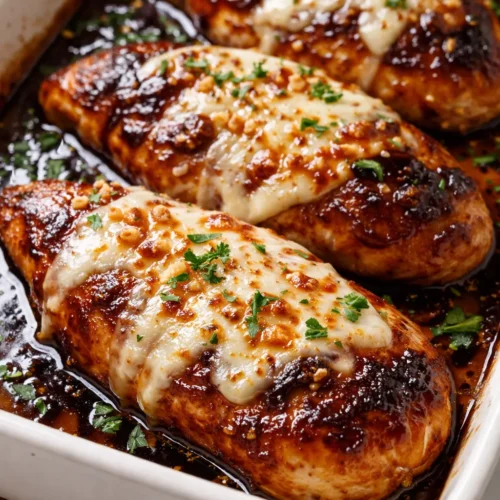
Balsamic Baked Chicken Breast with Mozzarella That’s Actually Juicy (Not Dry) — in 30 Minutes
Equipment
- 9×13 baking dish
- Small Bowl
- Whisk or fork
- Instant-read thermometer (optional)
Ingredients
- 4 boneless skinless chicken breasts (about 6 oz each)
- 1/2 cup balsamic vinegar
- 8 oz mozzarella (fresh or low-moisture)
- 4 cloves garlic, minced
- 2 tbsp olive oil
- 1 tsp dried oregano
- 1/2 tsp red pepper flakes (optional)
- Kosher salt and freshly ground black pepper
- Fresh basil for garnish
- Extra olive oil for searing (optional)
Instructions
- Preheat the oven to 400°F with the rack in the middle. Line a 9×13 baking dish with parchment or foil if desired.
- Pat the chicken breasts dry with paper towels. Season both sides generously with kosher salt and freshly ground black pepper (about 1 tsp salt per pound of chicken).
- In a small bowl, whisk together the balsamic vinegar, olive oil, minced garlic, dried oregano, and red pepper flakes. Set aside.
- Heat a tablespoon of olive oil in a cast-iron or stainless-steel skillet over medium-high heat. Sear the chicken for 2 minutes per side until deep golden brown. Transfer to the baking dish.
- Pour the balsamic mixture over the chicken, spooning it to coat each breast. Bake for 15 minutes, until the balsamic bubbles and reduces and the chicken reaches 150°F internally.
- Tear or slice the mozzarella and layer it over the chicken. Return to the oven and bake for another 5-7 minutes, until the cheese is melted and golden and the chicken reaches 160-165°F. For extra browning, broil the last 2 minutes.
- Let the chicken rest in the baking dish for 5 minutes. Scatter fresh basil over the top and serve. The glaze will thicken as it cools.
Notes
Related posts:
 Creamy Pasta Salad That Doesn’t Get Soggy on Day Two — Finally
 Breakfast Crunchwraps That Stay Golden and Crisp in 30 Minutes — The Only One You’ll Need
 Savory Red Lentil Pancakes That Stay Crispy and Keep You Full Until Lunch
 My Healthy Turkey Breakfast Bowl for Busy Mornings: 20 Minutes, Zero Stress, Whole Family Fed