
I tried making vegan ramen for years and it always came out watery. Broth that looked deep but tasted thin. My family would say “it’s fine,” and that’s food-talk for “it’s missing something.” This version? My non-vegan husband asked for seconds before I’d even sat down. The trick is layering umami from four different sources and giving it the time it needs — which isn’t all day, just two honest hours.
The short version: Rich, silky, mushroom-miso broth with chewy noodles and all the classic toppings, done in two hours with maybe 30 minutes of hands-on time.
I’ve made this about fifteen times now, tweaking each batch — adding a little more kombu here, swapping shiitake for cremini there — and this is the version that finally made my eight-year-old Simone say “this is better than the restaurant.” That’s the gold standard in our house.
- Serves: 4 as a main meal
- Hands-On Time: 30 min | Total Time: 2 hours
- Difficulty: Easy — just takes a little patience for the broth
- Cost per serving: ~$3.50
- Calories: ~420 per bowl (with toppings)
- Dietary Notes: Naturally vegan, can be made gluten-free with GF noodles and tamari
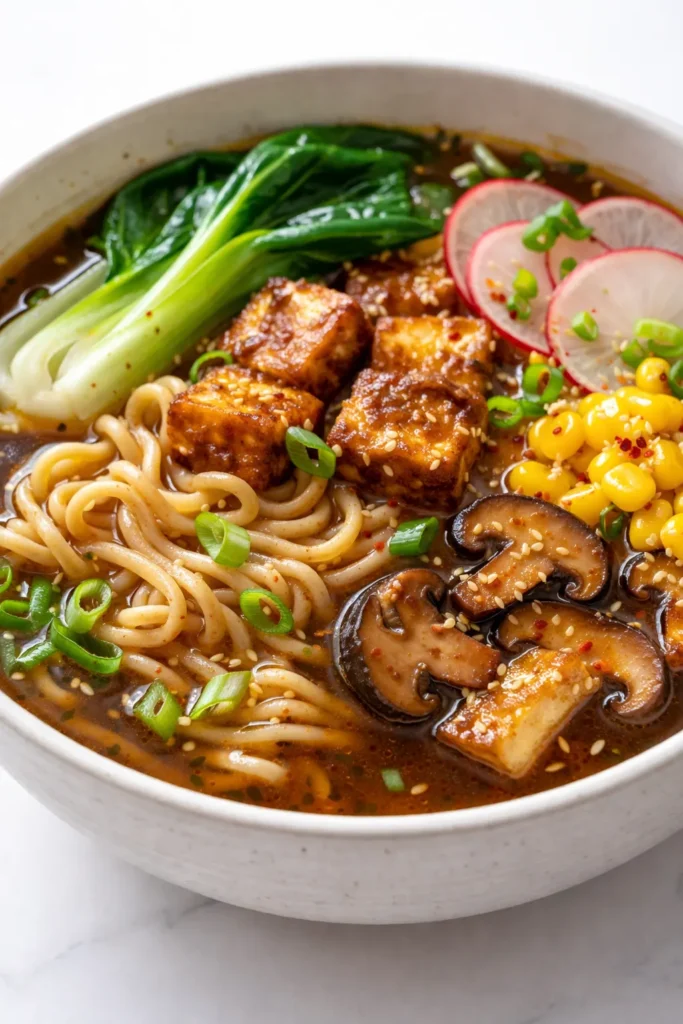
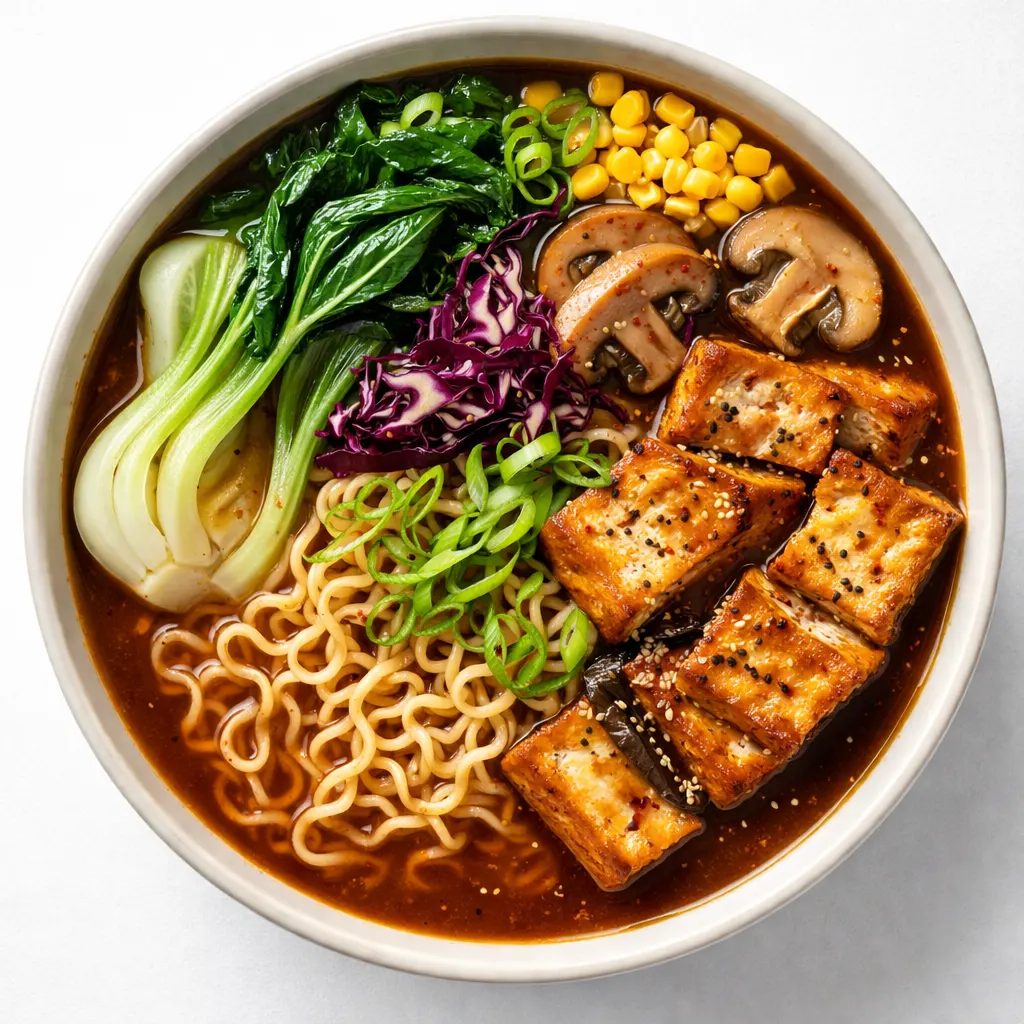
(Photo above: Overhead shot of a deep ceramic bowl filled with steaming ramen, broth dark and glossy, topped with a swirl of chili oil, wilted bok choy, enoki mushrooms, and a half of soy-marinated soft tofu — the garnish in place of a soft-boiled egg since it’s vegan. Wooden chopsticks resting on the bowl, morning light from the window catching the broth’s sheen.)
Why This Broth Actually Has Body (No Bones Required)
The problem with most vegan ramen is it’s thin. The color’s right but the mouthfeel’s wrong. Here’s what fixes it: rehydrate dried shiitake mushrooms and kombu in your broth base for at least an hour — that’s where the natural glutamates and gelatin-like polysaccharides come from. Then blend a handful of the softened shiitakes into the finished broth. It turns silky without any cream or dairy.
Second: miso goes in at the very end, off the heat. Boiling miso kills its flavor and the good bacteria that give it that funky depth. I stir in a big spoonful right before serving, and it makes the whole bowl taste like it’s been simmering since breakfast.
Third: a tiny splash of toasted sesame oil and a dash of soy sauce (or tamari) just before serving. That final hit of savory fat and salt wakes up every other flavor. My husband thought I was adding a secret ingredient until I showed him it’s just sesame oil. It’s not a secret — it’s just smart.
Everything You Need — With a Few Notes From My Kitchen
- For the Broth:
- 8 cups water: Filtered if yours has a strong tap taste.
- 1 large onion, halved: Don’t bother dicing — we’re fishing out the solids later. Just halve and throw it in.
- 1 head of garlic, halved crosswise: Cut it across the equator so the cloves release flavor fast.
- 1 (2-inch) piece of ginger, sliced thickly: No need to peel — just smash it with the side of your knife.
- 2 large carrots, in big chunks: They add sweetness and a bit of body.
- 1 green onion, white part only: The green part goes in the garnish — save it.
- 4 dried shiitake mushrooms: Find these in any Asian grocery or online. Don’t sub fresh — dried has ten times the umami.
- 1 (4-inch) strip of kombu: That’s dried kelp. It adds gentle ocean-y savor. Wipe it with a damp paper towel first (white powder is flavor, not dust).
- 1 tablespoon soy sauce or tamari
- 1 teaspoon toasted sesame oil
- 2 tablespoons white or yellow miso paste: I prefer mellow white miso so it doesn’t overpower. My kids can smell the difference if I use red miso — too intense for them, so I keep white on hand.
- Salt to taste
- For the Noodles and Toppings (choose your adventure):
- 12 ounces fresh ramen noodles (or 8 oz dry): Fresh are chewier — look for them refrigerated near the tofu. Dry works fine too, just cook per package.
- 1 block firm tofu, pressed and sliced: I press mine for 15 minutes between paper towels with a heavy pan on top. Then marinate in soy + sesame for 10 minutes and pan-fry until golden.
- Baby bok choy, halved lengthwise
- Enoki or shiitake caps
- Corn kernels (fresh or frozen): My non-negotiable topping. Simone calls them “sweet pops.”
- Green onions, sliced on bias
- Chili oil or Sriracha: For the grown-up bowls.
- Sesame seeds and nori strips: Optional but nice for crunch.
What to Pull Out Before You Start
- Large stockpot (at least 5-quart): A Dutch oven works great.
- Fine-mesh strainer or cheesecloth: For straining the solids.
- Small skillet: For the tofu and shiitakes.
- Large pot for noodles: Ramen needs its own boiling water — don’t cook them in the broth.
- Immersion blender: Optional but makes blending the shiitakes into the broth way easier. A regular blender works too — just let the broth cool a little first.
- Bowls and chopsticks
Let’s Make It — Step by Step, No Stress
Here’s the deal: the broth does the heavy lifting while you prep the toppings. I usually start the broth, then chop and cook everything else while it simmers. Read through once so you know the timeline — you’ll be fine.
Prep the Broth Base: Put the water, onion, garlic, ginger, carrots, green onion white parts, shiitake mushrooms, and kombu into the stockpot. Don’t turn on the heat yet — let everything sit for 20 minutes while the mushrooms and kombu soften. This is a lazy step that saves you from missing flavor later.
- Simmer the aromatics: Turn heat to medium-high. Bring to a boil, then reduce to a gentle simmer — small bubbles, not a rolling boil. Let it go for 45 minutes. (📸 Photo tip: After 45 minutes, the broth should look deep golden-brown, and you’ll smell the garlic and ginger coming through clearly.)
- Strain and retrieve shiitakes: Pour the broth through a fine-mesh strainer into a clean pot. Save 3 of the softened shiitake mushrooms. Discard everything else (the veggies have given their all).
- Blend the shiitakes: Take those 3 reserved shiitakes and put them in a small blender with about ½ cup of the warm broth. Blitz until completely smooth, then stir that paste back into the strained broth. This is the step that turns thin broth into liquid silk — don’t skip it. (📸 Photo tip: The blended shiitakes should form a smooth, dark brown puree — like a thick sauce. You’ll see little bits of mushroom but that’s fine.)
- Season and finish: Add the soy sauce and sesame oil to the broth. Taste. It should be savory but not salty — you’ll finish with miso later. Keep warm on low heat while you prep toppings.
- Cook the tofu: Heat a thin layer of vegetable oil in a small skillet over medium-high. Sear the pressed tofu slices for 2–3 minutes per side, until golden and crisp. Deglaze the pan with 1 tablespoon soy sauce and 1 tablespoon mirin (or a splash of maple syrup) — let it reduce into a glaze.
- Blanch the bok choy and mushrooms: In a pot of boiling salted water, drop the bok choy halves for 1 minute, then transfer to a plate. Drop the fresh shiitake caps for 30 seconds. Don’t overcook — they’ll continue cooking in the hot broth.
- Cook the ramen noodles: Bring a separate large pot of water to a boil. Cook noodles according to package — usually 2–3 minutes for fresh, 4–5 for dry. Drain well and divide among 4 bowls.
- Finish the broth with miso: Turn off the heat under the broth. Put the miso paste in a small bowl and ladle in about ½ cup of warm broth — whisk until smooth, then pour it back into the pot. Stir gently. Taste and add salt or a splash more soy if needed. Do not boil after adding miso.
- Assemble the bowls: Ladle hot broth over the noodles. Top with tofu slices, bok choy, shiitakes, a handful of corn, sliced green onions, and a sprinkle of sesame seeds. Drizzle chili oil if you’re into spice.
How I Meal Prep This for the Week
On Sundays I make a double batch of broth (minus the miso) and keep it in the fridge. Then during the week I just reheat the broth, stir in miso as needed, and cook fresh noodles and toppings. Makes a lonely Tuesday lunch feel like a treat. The broth without miso keeps for up to 5 days in the fridge.
- Fridge: Store strained broth (without miso) in an airtight container for up to 5 days. Add miso only when reheating individual portions.
- Freezer: Yes — freeze the broth in quart-sized bags or containers for up to 3 months. Thaw in fridge overnight. Don’t freeze with noodles or toppings.
- Reheat: Warm broth gently on the stovetop — not a hard boil. Once hot, stir in miso off heat. Noodles are best cooked fresh (they get mushy reheated), but you can prep the tofu and veggies in advance.
Things I Wish I’d Known the First Time
- Don’t skip the 20-minute cold soak: Letting the dried shiitakes and kombu sit in cold water before heating extracts way more flavor than dumping them into boiling water. I know it feels like you’re doing nothing, but you’re actually building the base.
- Miso goes in at the very end, off heat: I learned this the hard way after killing two batches. Miso is a living ingredient — boil it and you lose the depth. Stir it in after the heat’s off, and the flavor stays complex and alive.
- Blend those shiitakes: The first few times I made this, I strained everything out and wondered why it was watery. The blended mushroom trick came from a ramen-obsessed friend, and it changed everything. Even if you blend a little too much, it still tastes great — I’ve done it.
- Taste before you add extra salt: Between the soy sauce, miso, and natural umami from the mushrooms, this broth can get salty fast. I always taste after adding each seasoning, and I’m often surprised at how little extra salt it needs.
Make It Yours — Easy Variations That Actually Work
- Gluten-Free Version: Use rice ramen noodles or buckwheat soba (check labels — many soba has wheat). Swap soy sauce for tamari or coconut aminos. My sister-in-law is GF and she loves this with vermicelli rice noodles too.
- Nut-Free Version: Naturally nut-free — no concerns here. Just check your chili oil if you add it (some brands use peanut oil).
- Kid-Friendly Version: Keep the chili oil off, and add extra corn and a handful of frozen peas. Simone likes hers with the tofu extra crispy and a little ketchup on the side (yes, she dips her tofu in ketchup — I don’t love it but she’s happy).
- Spicy Adult Version: Add a spoonful of gochujang (Korean chili paste) to the miso mixture. Or drizzle with chili crisp and a few slices of fresh jalapeño. I do this after the kids are in bed.
- Fancy Guest Version: Top with marinated soft tofu (instead of seared firm), nori strips, a sprinkle of furikake, and a side of pickled ginger. Serve with a spoon for the broth — my mother-in-law was impressed.
Questions I Get About This Recipe All the Time
Q: Why did my broth turn out bland?
A: Two things usually cause that: not simmering long enough (45 minutes is the minimum — I’ve gone up to an hour and it’s even better), and not blending the shiitakes. Also, check your miso — if it’s been sitting in the fridge for a year, it loses potency. Buy fresh miso paste and keep it sealed.
Q: Can I make this soy-free?
A: Yes, but it’s a shift. Skip the tofu and use coconut aminos instead of soy sauce. For the miso, use chickpea miso or skip it and add extra sesame paste (tahini) for creaminess. The flavor won’t be the same but it’s still delicious — I’ve tested it with a friend who’s soy-sensitive.
Q: How long does the broth last? Can I freeze it?
A: Without miso, 5 days in the fridge, 3 months in the freezer. With miso mixed in, eat within 2 days — the miso flavor fades. To freeze, cool the broth completely, pour into freezer bags (lay them flat for easy stacking), and thaw in the fridge overnight. Freeze without noodles or toppings.
Q: What do you serve with vegan ramen to make it a full meal?
A: We love it with edamame sprinkled with sea salt, or simple cucumber salad (rice vinegar + sesame oil + pinch of sugar). On weekends I make a quick batch of pan-fried vegetable gyoza — those dumplings and this broth together are my happy place.
More Recipes My Family Makes on Repeat
If you liked this vegan ramen, here are a few other bowls we love at our table:
- [INTERNAL LINK PLACEHOLDER: Miso Mushroom Soup with Udon Noodles] — Just as savory but comes together in 30 minutes flat.
- [INTERNAL LINK PLACEHOLDER: Coconut Curry Ramen] — Creamy, spicy, and my husband’s all-time favorite.
- [INTERNAL LINK PLACEHOLDER: 15-Minute Sesame Noodles with Broccoli] — No broth but all the flavor — perfect for busy nights.
This ramen has become our Sunday ritual — a bowl of warmth that takes a little effort but pays back in quiet satisfaction. Simone already asked if we can make it again next weekend. I said yes before she finished the sentence.
If you try it, drop a comment below — I love hearing how it goes for your family. Or tag me on Pinterest so I can see your beautiful bowls. Happy slurping!
📌 Vegan ramen recipe with a deeply savory mushroom-miso broth that tastes like it simmered all day — save this one for your next cozy weekend meal prep session.
2-Hour Vegan Ramen Broth with Mushrooms and Miso
Equipment
- Large stockpot (at least 5-quart)
- Fine-mesh strainer or cheesecloth
- Small skillet
- Large pot for noodles
- Immersion blender (optional)
- Bowls and chopsticks
Ingredients
For the Broth
- 8 cups water, filtered if possible
- 1 large onion, halved
- 1 head garlic, halved crosswise
- 1 2-inch piece ginger, sliced thickly (no need to peel)
- 2 large carrots, cut into big chunks
- 1 green onion white part only
- 4 dried shiitake mushrooms
- 1 4-inch strip kombu (dried kelp), wiped clean
- 1 tablespoon soy sauce or tamari
- 1 teaspoon toasted sesame oil
- 2 tablespoons white or yellow miso paste
- to taste salt
For the Noodles and Toppings
- 12 ounces fresh ramen noodles (or 8 oz dry)
- 1 block firm tofu, pressed and sliced
- 4 heads baby bok choy, halved lengthwise
- 1 cup enoki or shiitake caps
- 1/2 cup corn kernels (fresh or frozen)
- 2 green onions sliced on bias (for garnish)
- to taste chili oil or Sriracha
- optional sesame seeds and nori strips
Instructions
- Prep the Broth Base: Put the water, onion, garlic, ginger, carrots, green onion white parts, shiitake mushrooms, and kombu into the stockpot. Do not turn on the heat yet. Let everything sit for 20 minutes while the mushrooms and kombu soften.
- Simmer the aromatics: Turn heat to medium-high. Bring to a boil, then reduce to a gentle simmer (small bubbles, not rolling boil). Let it go for 45 minutes. The broth should become deep golden-brown and smell of garlic and ginger.
- Strain and retrieve shiitakes: Pour the broth through a fine-mesh strainer into a clean pot. Save 3 of the softened shiitake mushrooms. Discard everything else.
- Blend the shiitakes: Put the 3 reserved shiitakes in a small blender with about 1/2 cup of the warm broth. Blitz until completely smooth, then stir that paste back into the strained broth. This gives the broth body.
- Season and finish: Add the soy sauce and sesame oil to the broth. Taste. It should be savory but not salty. Keep warm on low heat while you prep toppings.
- Cook the tofu: Heat a thin layer of vegetable oil in a small skillet over medium-high. Sear the pressed tofu slices for 2–3 minutes per side, until golden and crisp. Deglaze the pan with 1 tablespoon soy sauce and 1 tablespoon mirin (or a splash of maple syrup) — let it reduce into a glaze.
- Blanch the bok choy and mushrooms: In a pot of boiling salted water, drop the bok choy halves for 1 minute, then transfer to a plate. Drop the fresh shiitake caps for 30 seconds.
- Cook the ramen noodles: Bring a separate large pot of water to a boil. Cook noodles according to package — usually 2–3 minutes for fresh, 4–5 for dry. Drain well and divide among 4 bowls.
- Finish the broth with miso: Turn off the heat under the broth. Put the miso paste in a small bowl and ladle in about 1/2 cup of warm broth — whisk until smooth, then pour it back into the pot. Stir gently. Taste and add salt or a splash more soy if needed. Do not boil after adding miso.
- Assemble the bowls: Ladle hot broth over the noodles. Top with tofu slices, bok choy, shiitakes, a handful of corn, sliced green onions, and a sprinkle of sesame seeds. Drizzle chili oil if you like spice.
Notes
Related posts:
 Creamy Pasta Salad That Doesn’t Get Soggy on Day Two — Finally
 Breakfast Crunchwraps That Stay Golden and Crisp in 30 Minutes — The Only One You’ll Need
 Savory Red Lentil Pancakes That Stay Crispy and Keep You Full Until Lunch
 My Healthy Turkey Breakfast Bowl for Busy Mornings: 20 Minutes, Zero Stress, Whole Family Fed