
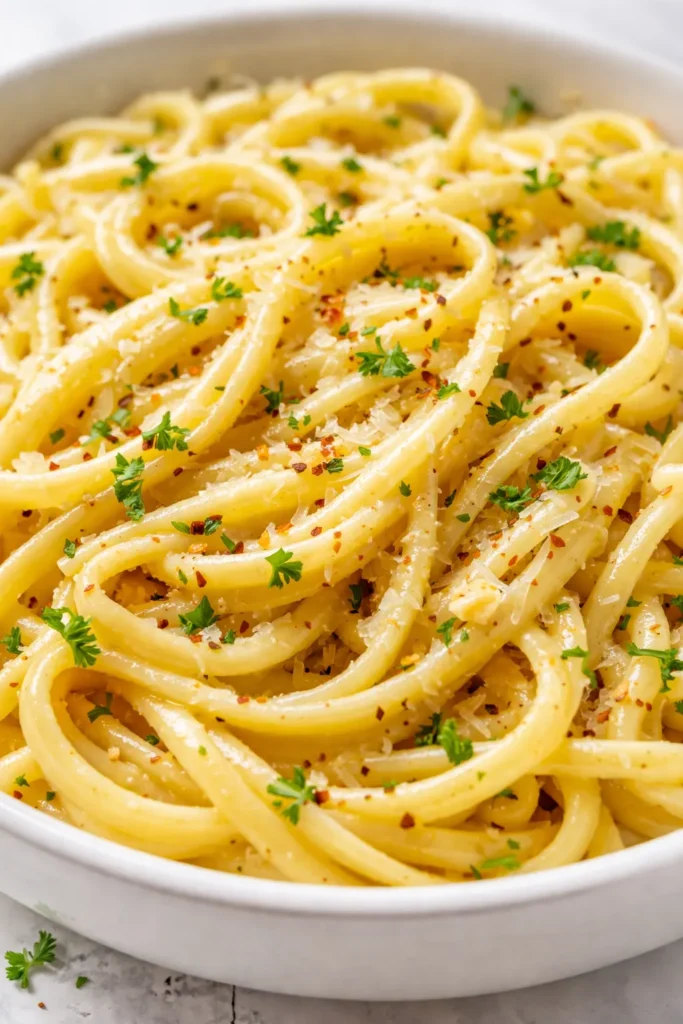
The first time I made Pasta al Limone the real way, I was mad at every version I’d settled for before. There’s no cream in this. No flour. No cornstarch. What it has is good butter, real Parmigiano-Reggiano, pasta water, and a quick hand at the end. That’s it. That’s the whole trick. And the sauce clings to every single strand of pasta. I’ve been making this for my family on busy weeknights for the last three years. Simone, my eight-year-old, calls it “the lemony spaghetti that disappears.”
The short version: This lemon butter garlic pasta sauce comes together in exactly 20 minutes and tastes like you spent an hour on it.
- Serves: 4 as a main, 6 as a side
- Hands-On Time: 15 min | Total Time: 20 min
- Difficulty: Easy (but requires attention at the end)
- Cost per serving: ~$3.50
- Calories: ~480 per serving
- Dietary Notes: Vegetarian. Adaptable for gluten-free.
(Photo above: An overhead shot of spaghetti al limone in a wide white bowl, a fork twirled high showing the sauce clinging to the pasta, a lemon half and a microplane in the background, warm afternoon light.)
Why This Sauce Clings Like You’d Never Believe
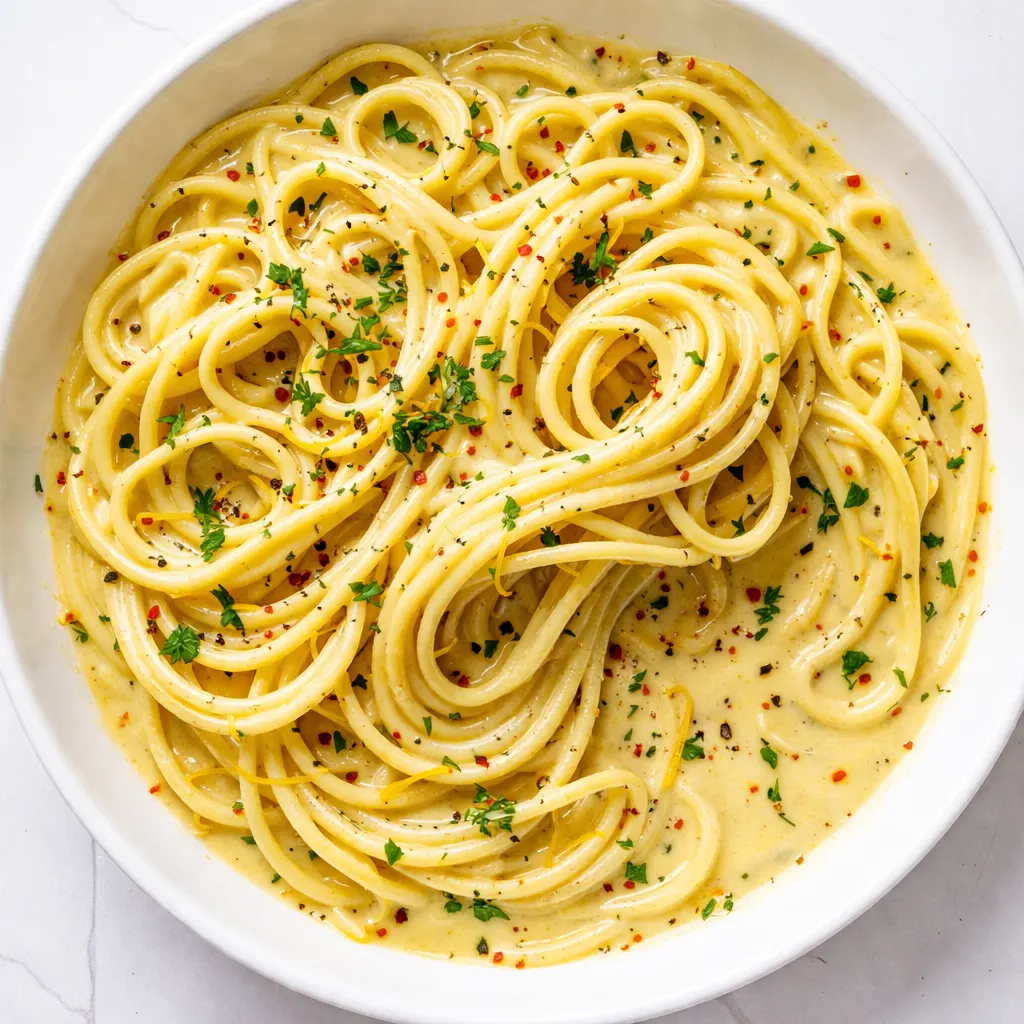
The magic is in the emulsion. You’re basically forcing melted butter, cheese, and starchy pasta water to become friends. It’s not complicated, but it needs you to move fast at the end. If you dump the sauce on top of the pasta, you’ll be sad. If you toss it together in the hot pan with a splash of that water, the sauce wraps itself around every noodle. Celestine would have called it “the right way to finish a dish” — a last step that pulls everything together.
Also, the lemon zest matters more than the juice. The juice gives you the tang, but the zest carries the actual lemon perfume. You need both. But timing is everything. Too early and the heat kills the freshness. Too late and it just sits on top.
What You’ll Need (and What You Can Swap)
- 1 lb dried spaghetti or linguine: A bronze-die-cut pasta makes a real difference here. The rough surface grabs the sauce in a way that smooth pasta can’t. I use De Cecco or whatever good brand I can get my hands on. Whole wheat works, but the sauce won’t cling quite the same way.
- 2 large lemons: One for zest, both for juice. Get thin-skinned ones if you can find them — they yield more juice. Simone zests for me. She takes it very seriously!
- 4 tbsp unsalted butter: Cut it into small cubes before you start cooking. It needs to melt fast and evenly. I use European-style butter when I have it — it has less water and makes the sauce richer.
- 2 large garlic cloves: Thinly sliced, not minced. We want a gentle garlic presence, not a punch in the face. If you mince it, the raw bits can overwhelm the lemon. Slices melt into the butter.
- 1 cup finely grated Parmigiano-Reggiano: Pre-grated from a bag won’t melt the same way. Grate it yourself from a wedge. This is non-negotiable. The anti-caking agents in pre-grated cheese break the emulsion.
- Red pepper flakes (optional): Just a pinch. It doesn’t make the dish spicy — it makes the lemon taste more like lemon. I add it to mine. Simone gets hers without.
- Fresh basil or flat-leaf parsley: A handful, torn. For the finish.
- Salt and black pepper: You’ll season the pasta water heavily. It’s your only chance to season the pasta from the inside out.
The Setup (It’s Minimal, I Promise)
- A large pot for boiling pasta
- A large skillet or sauté pan (big enough to hold all the pasta later)
- A microplane or fine grater for the lemon zest and Parm
- Tongs for tossing
- A liquid measuring cup for reserving pasta water
Making Pasta al Limone, Start to Finish
This moves fast at the end, so have everything ready before you start. The actual active work is about 15 minutes.
- Boil the pasta: Bring a large pot of water to a rolling boil. Salt it generously — it should taste like the sea. Cook the pasta 1 minute less than the package says. It’ll finish cooking in the sauce.
(📸 Photo tip: The water should look clear and actively bubbling — drop the pasta and give it a stir right away so it doesn’t stick.) - Reserve the water: Right before you drain, scoop out 2 cups of the pasta water. This is your gold. Set it aside.
- Start the sauce: While the pasta cooks, melt the butter in a large skillet over medium heat. Add the sliced garlic and a pinch of red pepper flakes if using. Cook for 1-2 minutes until the garlic is fragrant and just starting to turn golden. Don’t let it burn. This is where the flavor base is built — treat it with respect.
(📸 Photo tip: The garlic should be soft and barely golden, not brown and crispy.) - Add the lemon: Turn the heat to low. Add the zest of one lemon and the juice of both lemons (about 1/4 cup). Stir it into the butter. It might look a little broken here — that’s fine.
- Emulsify the sauce: Drain the pasta and add it directly to the skillet with the lemon butter. Toss it together with tongs. Add 1/2 cup of the reserved pasta water and toss it hard. The water and fat will start to combine into a silky sauce. This is the moment where it either comes together or doesn’t. Toss it like you mean it!
- Add the cheese: Remove the skillet from the heat. Add the grated Parm in handfuls, tossing between each addition. If the sauce looks too thick, add a splash more pasta water. It should coat the pasta like a thin cream. Off the heat is crucial — if the pan is too hot, the cheese gets clumpy instead of creamy.
- Finish and serve: Taste it. Add salt, black pepper, and more lemon if it needs it. Toss in the fresh herbs. Serve immediately, with extra zest and Parm on top. This dish does not wait. It goes from pan to bowl to table.
How I Make This Work for a Busy Weeknight
Honestly, this is a 20-minute dish. I make it fresh on the night we eat it. But there are a few ways to shave off even more time.
- Fridge: This is best fresh. Reheated leftovers lose the emulsion. If you have leftovers, store them with a little olive oil to keep them from clumping.
- Freezer: I don’t recommend freezing the finished dish. The sauce will break when you thaw it.
- Reheat: The best way to revive leftovers is in a skillet with a splash of water or milk, tossing over low heat. The microwave will work in a pinch but it won’t be as creamy.
Things I Wish I’d Known the First Time
- Salt the water like the ocean: This is your only chance to season the pasta itself. If you’re heavy-handed with salt, back off on the salt in the sauce. But underseasoned pasta water means a flat final dish.
- Work fast at the end: The emulsion happens in the last 60 seconds. Have everything measured and ready to go. If you stop to grate more cheese while the pasta is sitting in the hot pan, you risk breaking the sauce.
- Trust the pasta water: If the sauce seems thin at first, keep tossing. The starch in the water will bind with the butter and cheese as you toss. It thickens as it cools slightly on the plate. Don’t be tempted to add flour or cream.
- Use the right pan: A wide skillet or sauté pan gives you room to toss the pasta with the sauce. A narrow saucepan makes it hard to coat everything evenly.
Swaps That Actually Work
- Gluten-Free: Use a high-quality brown rice or chickpea pasta. Reserve extra pasta water — gluten-free pasta often needs more starch to help the sauce cling.
- Add Protein: Grilled chicken, shrimp, or pan-seared scallops work beautifully on top. I make this with lemon butter shrimp when I want something more substantial.
- Herb Variations: Basil is classic, but flat-leaf parsley, chives, or a few torn mint leaves work too. Each brings a slightly different freshness.
- Vegan Version: Use a high-quality vegan butter and a nutritional yeast-based ‘Parm’ instead of the dairy. The emulsion still works with the starch and fat. It’s not the same but it’s good in its own way.
Questions I Get About This Recipe All the Time
Q: Why did my sauce turn out clumpy and greasy?
A: Two things probably happened — the pan was too hot when you added the cheese, or the cheese was pre-grated. Heat plus anti-caking agents equals broken sauce. Try again with low heat and freshly grated Parm. It works, I promise.
Q: Can I use bottled lemon juice?
A: I wouldn’t. Bottled juice is flat and bitter. You need the brightness of fresh lemon juice and the oils from the zest to make this dish sing. If you only have bottled, you’re better off making a different sauce.
Q: Can I make this ahead for a dinner party?
A: You can get everything prepped — zest the lemons, grate the cheese, measure the butter — but the final toss needs to happen right before serving. It’s fast. Once the water is boiling, you’re 10 minutes out from dinner.
Q: What do I serve with Pasta al Limone?
A: A simple arugula salad with lemon vinaigrette is my go-to. Grilled asparagus or roasted broccoli work well. For a bigger meal, I add pan-seared scallops or a piece of flaky white fish.
More Recipes My Family Makes on Repeat
If you liked this one, here are a few others that get the same reaction at our table:
- Simple Tomato Basil Pasta — The summer pasta that uses up all the cherry tomatoes from the garden.
- Creamy Garlic Shrimp Pasta — Weeknight luxury that comes together in 25 minutes.
- Easy Lemon Roasted Potatoes — The side dish that stole the show at our last Easter dinner.
This lemon butter garlic pasta sauce is the one I make when I want to feel like a real cook on a Tuesday night. It’s fast, it’s tangy, and it makes the whole family happy. If you try it, come back and let me know how it went for you. I read every single comment.
📌 Pin this creamy lemon butter garlic pasta sauce recipe for your next busy weeknight dinner — it’s ready in 20 minutes and uses ingredients you probably already have.
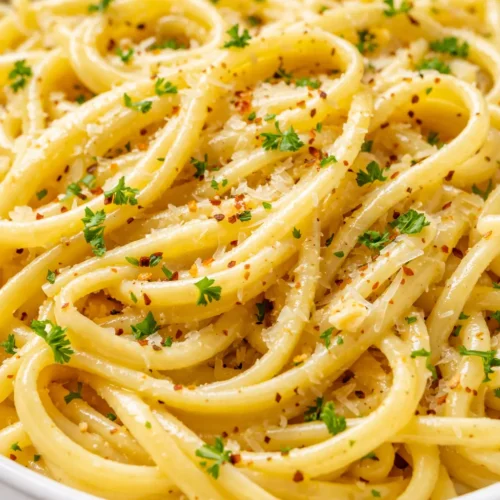
Lemon Butter Garlic Pasta Sauce (Pasta al Limone) That’s Creamy Without a Drop of Cream – Ready in 20 Minutes
Equipment
- Large Pot
- Large Skillet or Sauté Pan
- Microplane or fine grater
- Tongs
- Liquid Measuring Cup
Ingredients
- 1 lb dried spaghetti or linguine
- 2 large lemons
- 4 tbsp unsalted butter, cut into small cubes
- 2 large garlic cloves, thinly sliced
- 1 cup finely grated Parmigiano-Reggiano
- 1/4 tsp red pepper flakes (optional)
- handful fresh basil or flat-leaf parsley, torn
- Salt and black pepper, to taste
Instructions
- Bring a large pot of water to a rolling boil. Salt generously. Cook pasta 1 minute less than package directions. Reserve 2 cups of pasta water before draining.
- In a large skillet over medium heat, melt the butter. Add sliced garlic and a pinch of red pepper flakes (if using). Cook until fragrant and just golden, about 1-2 minutes. Do not let the garlic burn.
- Reduce heat to low. Add the zest of one lemon and the juice of both lemons (about 1/4 cup) to the butter. Stir to combine. The mixture may look broken — that’s fine.
- Drain the pasta and add it directly to the skillet with the lemon butter. Toss with tongs. Add 1/2 cup of the reserved pasta water and toss vigorously to emulsify the sauce.
- Remove the skillet from the heat. Add the grated Parmigiano-Reggiano in handfuls, tossing between additions. If the sauce seems too thick, add a splash more pasta water. It should coat the pasta like a thin cream.
- Taste and adjust with salt, black pepper, and more lemon if needed. Toss in the fresh herbs. Serve immediately, with extra zest and Parm on top.
Notes
Related posts:
 Breakfast Crunchwraps That Stay Golden and Crisp in 30 Minutes — The Only One You’ll Need
 Savory Red Lentil Pancakes That Stay Crispy and Keep You Full Until Lunch
 Marry Me Chickpeas: The Creamy, Garlicky Version That’s Actually Worth the Hype – in 30 Minutes
 Creamy Tuscan Gnocchi That Tastes Like a Slow Sunday in Italy — in Under 30 Minutes