
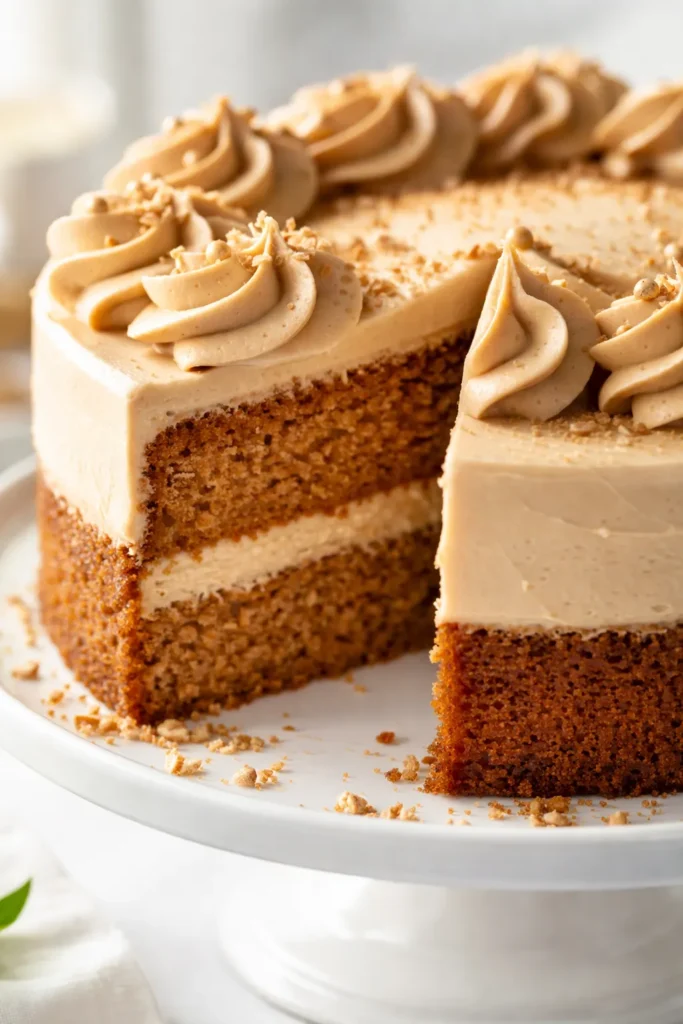
That first forkful — when the coffee buttercream hits your tongue right before the caramel melts into the brown sugar cake — is the kind of moment that makes you close your eyes without thinking. I’ve been making this cake for every birthday in my house for the last four years, and it tastes like a slow Saturday morning in New Orleans , no matter where you actually are. Simone has officially declared it her “make this one, Mama” cake, and she’s my toughest critic.
The short version: Three layers of brown sugar cake, a coffee buttercream that’s smooth as silk, and salted caramel dripping down the sides. It looks like you spent all day on it — and you kind of did — but every step is worth it.
- Serves: 12–16 as dessert (generous slices)
- Hands-On Time: 45 min | Total Time: 2 hrs (plus cooling time for cakes and caramel)
- Difficulty: Intermediate — a few steps, but nothing you can’t handle
- Cost per serving: ~$3.50
- Calories: ~550 per slice
- Dietary Notes: Vegetarian. Easily adaptable for dairy-free (see swaps).
(Photo above: A three-tiered brown sugar cake on a vintage milk-glass cake stand, thick swirls of coffee buttercream between each layer and a slow drip of salted caramel down the sides. A fork rests on the plate next to a sliced piece, showing the tender, golden-brown crumb. Warm afternoon light from the kitchen window catches the caramel drip.)
Why Brown Sugar Makes This Cake Different
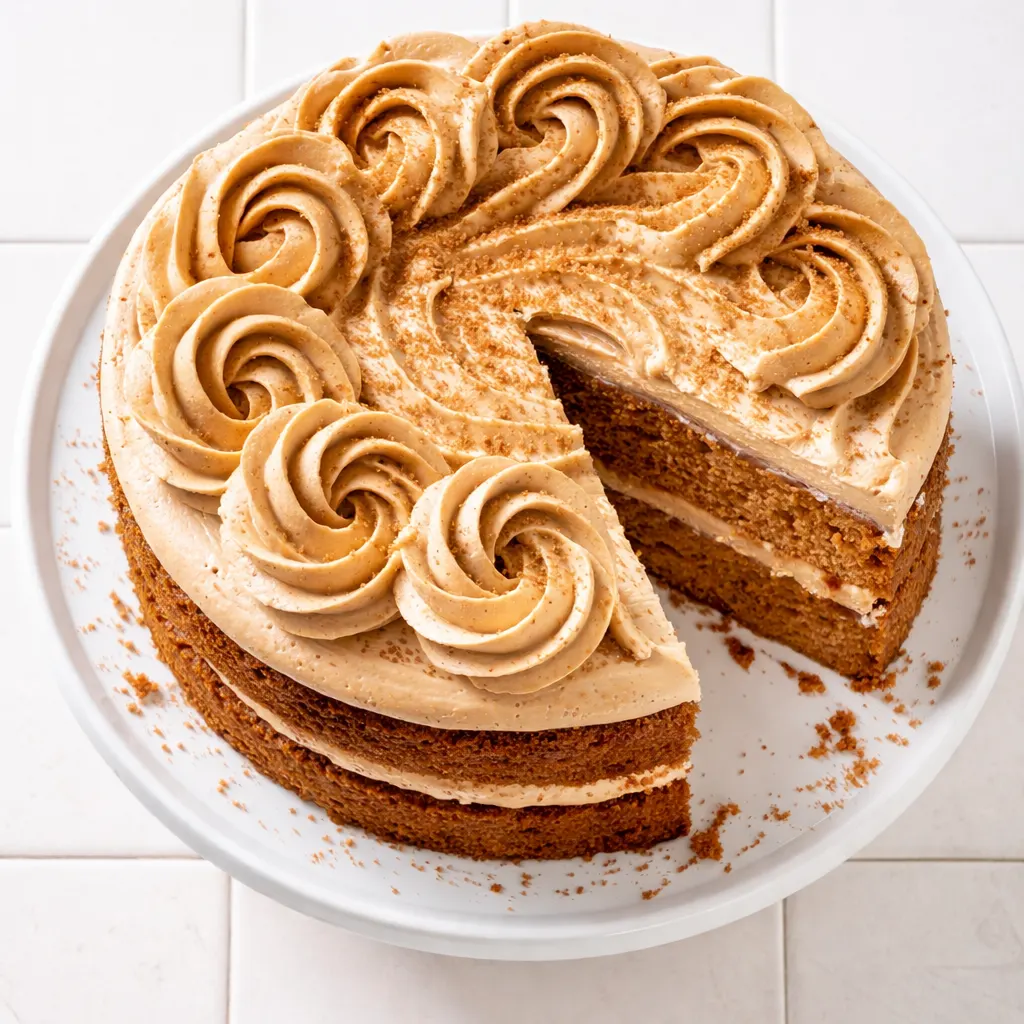
Regular white sugar cakes are fine, but they don’t have the depth to stand up to coffee and caramel. Brown sugar brings moisture and a deep, almost molasses-like richness that wraps around the bold flavors instead of hiding behind them. I use dark brown sugar because Celestine always said “go ahead and commit” — and she was right.
The other trick is blooming the coffee in the buttermilk. The acid in the buttermilk reacts with the baking soda to give you a tender crumb, and the coffee deepens everything without making it taste like breakfast. It’s the same principle as adding coffee to chocolate cake — it doesn’t scream “coffee,” it just makes everything taste more like itself.
Everything You Need (And a Few Notes From Me)
- 3 cups (360g) all-purpose flour: Spoon and level it. Don’t scoop straight from the bag or you’ll pack in too much and get a dry cake.
- 2 cups (400g) packed dark brown sugar: Light works too, but dark gives you that deeper flavor. I always press my brown sugar into the measuring cup — no shame.
- 1 cup (226g) unsalted butter, softened: Real butter. Leave it on the counter for an hour before you start.
- 4 large eggs, room temperature: Cold eggs will seize the butter and give you a lumpy batter. Set them out with the butter.
- 1 cup (240ml) buttermilk, room temperature: It reacts with the baking soda to give you a tender crumb. No buttermilk? Add a tablespoon of lemon juice or vinegar to whole milk and let it sit for 5 minutes.
- 1/2 cup (120ml) strong brewed coffee, cooled: Leftover morning coffee is perfect. I use a dark roast. Don’t use instant unless you absolutely have to — it changes the depth.
- 2 tsp baking powder & 1/2 tsp baking soda: Both work together for lift and tenderness.
- 1 tsp salt: I season at every stage — a little in the cake, a little in the caramel, a flake on top.
- For the Coffee Buttercream: 1 1/2 cups (340g) unsalted butter, 5 cups (600g) powdered sugar, 3 tbsp strong brewed coffee (cooled), 2 tsp vanilla extract, pinch of salt.
- For the Salted Caramel: 1 cup (200g) granulated sugar, 6 tbsp (85g) unsalted butter, 1/2 cup (120ml) heavy cream, 1 tsp flaky sea salt.
What to Pull Out Before You Start
- Three 8-inch round cake pans — I like light-colored metal for even baking
- Stand mixer or hand mixer — either works, but you’ll do a lot of creaming
- Saucepan — heavy-bottomed for the caramel so it heats evenly
- Off-set spatula — makes frosting way easier
- Piping bags or zip-top bags — for the buttercream if you want a clean look
- Parchment paper rounds — cut them for the bottom of the pans, it’s the only way to guarantee they won’t stick
Let’s Build This Cake (Layer by Layer)
I do the cake layers first, then the caramel, then the frosting. It flows that way, and by the time the cakes are cool, the caramel is ready to go.
Preheat & Prep: Get your oven to 350°F. Grease and flour your pans and line the bottoms with parchment paper rounds.
- Cream the butter and sugar: Beat the butter and brown sugar together on medium-high until it’s light and fluffy, about 4 minutes. Scrape the bowl halfway through. Don’t rush this — it’s where the air goes in.
- Add the eggs: One at a time, beating well between each. The batter should look smooth and thick before you move on.
- Mix the dry ingredients: Whisk the flour, baking powder, baking soda, and salt together in a separate bowl.
- Combine the wet: Stir the cooled coffee into the buttermilk. It might look a little curdled — that’s normal. It’s just the acid doing its job. (📸 Photo tip: The buttermilk-coffee mixture will look slightly separated. That’s exactly what it should look like.)
- Alternate dry and wet: Add the flour mixture in three additions, alternating with the buttermilk mixture, starting and ending with the flour. Mix until just combined — overmixing develops gluten and makes the cake tough. I stop the mixer as soon as the last streak of flour disappears.
- Divide and bake: Divide the batter evenly between the three pans. Bake for 25–30 minutes, until a toothpick inserted in the center comes out clean or with a few moist crumbs. (📸 Photo tip: The cakes should be golden brown and just pulling away from the sides of the pan.) Cool in the pans for 10 minutes, then turn out onto a wire rack to cool completely.
- Make the caramel: While the cakes cool, make the caramel. Heat the sugar in a heavy-bottomed saucepan over medium heat, stirring constantly with a whisk until it melts into a deep amber liquid. Add the butter and stir until melted, then slowly pour in the cream (it will bubble up — keep stirring). Remove from heat and stir in the flaky salt. Let it cool for 10–15 minutes before using. The first time I made caramel I was terrified it would seize. If it does, just add a tablespoon of warm water and whisk over low heat — it’ll come back together.
- Make the coffee buttercream: Cream the butter until it’s pale and fluffy, about 5 minutes. Add the powdered sugar gradually, then the cooled coffee and vanilla. Beat for a full 5 minutes on medium-high until it’s light, airy, and spreadable. If it looks too soft, pop it in the fridge for 10 minutes.
- Assemble the cake: Level the cake layers with a serrated knife. Place one layer on your serving plate, spread a generous layer of buttercream, and drizzle a tablespoon of caramel. Repeat with the second layer. Top with the third layer, then frost the entire outside with the remaining buttercream. Drizzle the remaining caramel on top, letting it drip down the sides. I let the caramel chill for 2–3 minutes before pouring so it stays thick and doesn’t run all the way down.
Making This Cake Ahead of Time (A Real Life-Saver)
This cake actually gets better after a day in the fridge. The flavors meld together and the crumb gets even more tender. I make the cake layers on Friday, the caramel and frosting on Saturday morning, and assemble it a few hours before we serve it. My secret: I wrap the cooled cake layers in plastic wrap while they’re still slightly warm — it traps the steam and keeps them moist.
- Fridge: Store assembled cake in an airtight container for up to 4 days. Bring to room temperature 30 minutes before serving.
- Freezer: Wrap unfrosted cake layers tightly in plastic wrap and foil for up to 3 months. Frost and assemble after thawing.
- Reheat: Don’t. This is a room temperature cake. The fridge makes the buttercream firm, so just give it time to come back before you serve it.
What I’ve Learned From Making This Cake Too Many Times to Count
- Room temperature ingredients are non-negotiable. Cold butter doesn’t cream properly. Cold eggs seize the batter. Set everything out an hour before you start. I set a timer on my phone so I don’t forget.
- Don’t overmix the flour. Once you add the dry ingredients, mix until just combined. Overmixing develops gluten and makes the cake tough. I stop the mixer as soon as the last streak of flour disappears — even if it looks a little lumpy, that’s fine.
- For clean slices, use a hot knife. Run a sharp knife under hot water, wipe it dry, and slice. Wipe the blade between cuts. This works for any layer cake, and it’s the difference between a messy slice and a photo-ready one.
- If your caramel seizes, don’t panic. It happens. Just add a tablespoon of warm water and whisk over low heat. It’ll come back together. I’ve done it a dozen times and it’s never failed.
Swaps That Actually Work
- Dairy-Free: Use a high-quality vegan butter (I like Miyoko’s) and a good dairy-free milk + vinegar for the buttermilk. Use coconut cream in the caramel. The texture will be slightly different but still delicious.
- Gluten-Free: Use a 1:1 gluten-free flour blend. I’ve tested this with King Arthur’s and it works beautifully.
- Mocha Version: Add a tablespoon of cocoa powder to the flour mixture for a mocha twist. It deepens the chocolate-coffee thing without making it a chocolate cake.
- Pecan Praline: Add a layer of toasted pecans between the cake layers for crunch. This is the Southern version Celestine would approve of — she put toasted pecans on everything.
Questions I Get About This Cake All the Time
Q: Why did my caramel crystallize?
A: Sugar crystals are stubborn. Make sure your whisk and saucepan are completely clean before you start. A drop of lemon juice or a teaspoon of corn syrup helps prevent crystallization. If it does seize, add a little warm water and whisk over low heat — it’ll come back together. You’ve got this.
Q: Can I use instant coffee?
A: Yes, in a pinch. Dissolve 2 tablespoons of instant coffee in 1 tablespoon of hot water. It won’t be as complex as brewed coffee, but it’ll still taste good. I’ve done it when I was out of fresh coffee and it worked fine.
Q: How long does this cake last? Can I freeze it?
A: In the fridge, up to 4 days. Bring it to room temperature before serving — it’s even better on day two when the flavors have had time to settle. You can freeze the unfrosted cake layers for up to 3 months. Wrap them tightly in plastic wrap and then foil. I don’t recommend freezing the assembled cake because the caramel can get weepy.
Q: What do you serve with this cake?
A: A scoop of vanilla ice cream or a dollop of fresh whipped cream cuts the richness perfectly. My family drinks it with cold milk — even the adults. For a Sunday supper, I serve it with strong coffee and nothing else. It’s the kind of cake that doesn’t need much company.
More Recipes My Family Makes on Repeat
If you liked this one, here are a few others that get the same reaction at our table:
- [INTERNAL LINK PLACEHOLDER: Celestine’s Simple Southern Biscuits] — Flaky, buttery, and the only biscuit recipe you’ll ever need. My daughter can eat three in one sitting.
- [INTERNAL LINK PLACEHOLDER: Creamy Red Beans and Rice] — Smoky, slow-cooked, and tastes like Monday in New Orleans. The pot liquor is the best part.
- [INTERNAL LINK PLACEHOLDER: Simone’s Favorite Chocolate Chip Cookies] — Crispy edges, soft centers, and she approved every single batch. I’ve made these more times than I can count.
This cake takes a little time, but I promise you — when you set it on the table and everyone goes quiet after the first bite, you’ll know exactly why I keep coming back to it. It’s the cake I make when I want the house to smell like a celebration, and it never lets me down.
If you try it, drop a comment below — I love hearing how it goes for you! And tag me on Pinterest or Instagram so I can see yours.
📌 Salted caramel coffee buttercream cake recipe with a tender brown sugar crumb — save this for your next birthday party or Sunday supper showstopper.
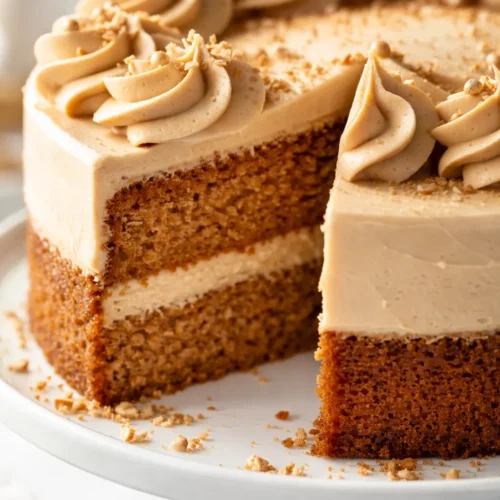
Tender Brown Sugar Cake with Silky Coffee Buttercream & Salted Caramel
Equipment
- Three 8-inch round cake pans
- Stand mixer or hand mixer
- Heavy-bottomed saucepan
- Off-set spatula
- Piping bags or zip-top bags
- Parchment paper rounds
Ingredients
For the Cake
- 3 cups all-purpose flour
- 2 cups packed dark brown sugar
- 1 cup unsalted butter, softened
- 4 large eggs, room temperature
- 1 cup buttermilk, room temperature
- 1/2 cup strong brewed coffee, cooled
- 2 tsp baking powder
- 1/2 tsp baking soda
- 1 tsp salt
For the Coffee Buttercream
- 1 1/2 cups unsalted butter, softened
- 5 cups powdered sugar
- 3 tbsp strong brewed coffee, cooled
- 2 tsp vanilla extract
- 1 pinch salt
For the Salted Caramel
- 1 cup granulated sugar
- 6 tbsp unsalted butter
- 1/2 cup heavy cream
- 1 tsp flaky sea salt
Instructions
- Preheat oven to 350°F. Grease and flour three 8-inch round cake pans and line the bottoms with parchment paper rounds.
- Cream the butter and brown sugar together on medium-high until light and fluffy, about 4 minutes. Scrape the bowl halfway through.
- Add the eggs one at a time, beating well between each. The batter should look smooth and thick.
- Whisk the flour, baking powder, baking soda, and salt together in a separate bowl.
- Stir the cooled coffee into the buttermilk. It may look slightly curdled – that’s normal.
- Add the flour mixture in three additions, alternating with the buttermilk mixture, starting and ending with the flour. Mix until just combined – stop as soon as the last streak of flour disappears.
- Divide the batter evenly among the prepared pans. Bake for 25–30 minutes, until a toothpick inserted in the center comes out clean or with a few moist crumbs. Cool in pans for 10 minutes, then turn out onto a wire rack to cool completely.
- Make the caramel: Heat the sugar in a heavy-bottomed saucepan over medium heat, stirring constantly with a whisk until it melts into a deep amber liquid. Add the butter and stir until melted, then slowly pour in the cream (it will bubble up – keep stirring). Remove from heat and stir in the flaky salt. Let cool for 10–15 minutes before using.
- Make the coffee buttercream: Cream the butter until pale and fluffy, about 5 minutes. Gradually add the powdered sugar, then the cooled coffee and vanilla. Beat for a full 5 minutes on medium-high until light, airy, and spreadable.
- Assemble the cake: Level the cake layers with a serrated knife. Place one layer on your serving plate, spread a generous layer of buttercream, and drizzle a tablespoon of caramel. Repeat with the second layer. Top with the third layer, then frost the entire outside with the remaining buttercream. Drizzle the remaining caramel on top, letting it drip down the sides. Let the caramel chill for 2–3 minutes before pouring so it stays thick.
Notes
Related posts:
 This Raspberry Lemon Cake With White Chocolate Is the Only Layer Cake You Need for Spring Celebrations
 Peach Cobbler That Bakes Its Own Crust (Golden, Juicy, 40 Minutes)
 Snickerdoodle Zucchini Bread That’s Moist, Swirled, and Secretly Good for You
 The Gluten-Free Chocolate Zucchini Bread You’d Never Guess Is Gluten-Free (It’s Rich, Moist & Impossible to Stop Eating)