
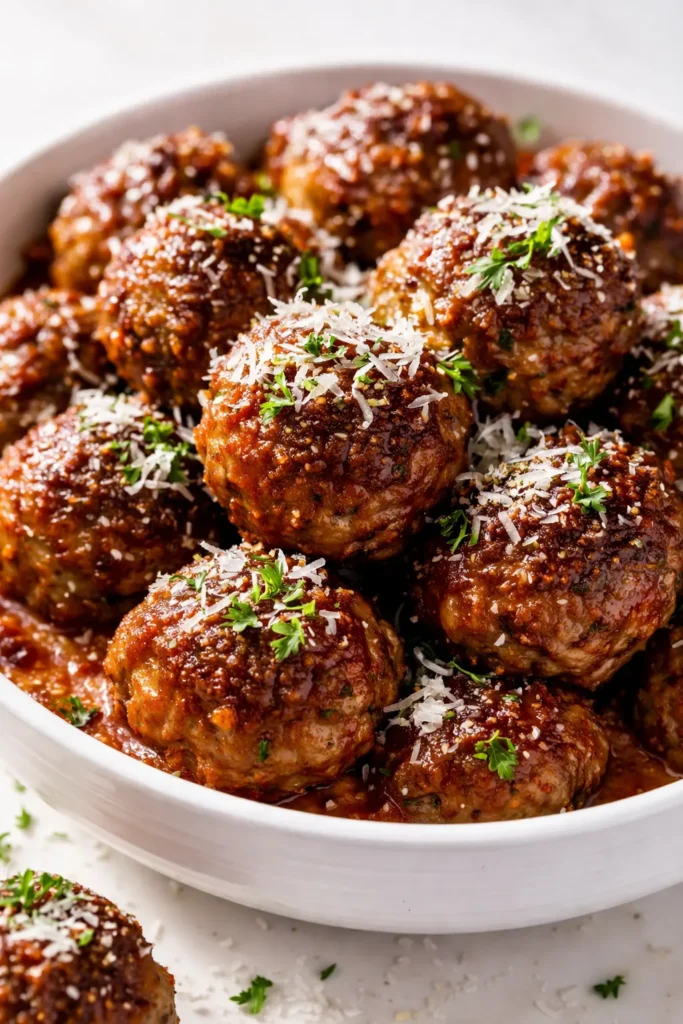
The first time I made these meatballs for Marcus, he took one bite, closed his eyes, and said, “This tastes like my nonna’s.” I’d never met his nonna. But I knew exactly what he meant. These are the kind of meatballs that are incredibly tender on the inside, browned and flavorful on the outside, and swimming in a gravy that thickens into something you’ll want on everything—pasta, crusty bread, or just straight from the spoon.
The short version: Thirty minutes of hands-on work, two hours of simmering, and you get a Sunday dinner that makes everyone at the table go quiet.
I make these at least once a month, and my eight-year-old Simone, who has opinions about everything from cornbread to meat texture, declared them “the best ones” after her first bite. That’s the review that counts.
- Serves: 6 as a main (with pasta)
- Hands-On Time: 30 min | Total Time: 2 hours
- Difficulty: Medium (but the steps are simple—it’s the patience that counts)
- Cost per serving: ~$3.50
- Calories: ~420 per serving (4 meatballs with sauce, no pasta)
- Dietary Notes: Can be made gluten-free with breadcrumb swap; naturally dairy-free option
(Photo above: Overhead shot of browned meatballs nestled in a deep red tomato sauce, a sprig of fresh basil on top, steam rising. A wooden spoon rests on the edge of a heavy Dutch oven. Warm afternoon light from the window.)
Why These Meatballs Work (It’s Not Just the Meat)

The secret is a panade—a paste made from bread and milk that keeps the meatballs tender and prevents them from turning into hockey pucks. I learned this from Marcus’s family, but it’s the same principle Celestine used with her crab cakes: moisture and fat need a binder that doesn’t fight back. You mix it into the meat gently, barely handling it, and the result is a meatball that stays soft even after a long simmer.
The second trick is browning them first—not cooking them through, just getting a deep brown crust. That adds flavor that the sauce then picks up and spreads around. Skip this step and you get a pale, sad meatball that tastes like it’s been boiled. Don’t skip it.
And finally, the simmer. These meatballs need at least 45 minutes in the sauce—long enough for the flavors to marry, for the fat to render into the gravy, and for everything to get cozy. The sauce itself gets richer, almost velvety. That’s the magic of low and slow.
Ingredients Worth Talking About
- 1 pound ground beef (80/20) + 1 pound ground pork: The pork adds fat and sweetness. Beef alone works, but the blend is better. My local butcher grinds it fresh on Saturday mornings; that’s when I buy it for Sunday dinner.
- ½ cup plain breadcrumbs (or gluten-free panko): The base of the panade. Make sure they’re plain—seasoned ones throw off the salt balance. I’ve used crushed Saltines in a pinch and it worked, but the texture is slightly denser.
- ⅓ cup whole milk (or unsweetened almond milk): This soaks the bread and creates the panade. It’s non-negotiable for tenderness. Simone can’t tell the difference with oat milk, so that’s our go-to now.
- 1 large egg: Helps bind everything together. If you’re doubling the batch, use one egg per pound of meat.
- ½ cup finely grated Parmesan (plus more for serving): Adds saltiness and umami. Use the real stuff, not the green can—it actually makes a difference here. I buy a wedge and grate it on a microplane while the bread soaks. Worth the two minutes.
- 3 cloves garlic, minced: Fresh only. I’ve done the jarred stuff in a pinch and the flavor is flat.
- ¼ cup fresh parsley, chopped: Dried parsley is sad. Fresh adds brightness that survives the simmer.
- 1 teaspoon kosher salt, ½ teaspoon black pepper, 1 teaspoon dried oregano, ½ teaspoon fennel seeds (crushed): The fennel is Marcus’s nonna’s touch—it’s subtle, but without it the meatballs taste like they’re missing something. Crush the fennel seeds with the side of a knife or in a mortar; whole seeds are too strong.
- For the sauce: 2 tablespoons olive oil, 1 small onion (finely chopped), 3 cloves garlic (minced), 1 can (28 oz) whole San Marzano tomatoes (crushed by hand), 1 teaspoon kosher salt, ½ teaspoon sugar (if needed), 2 sprigs fresh basil. Canned is fine—just crush them yourself. The texture is way better than pre-crushed.
What You’ll Need (It’s Minimal)
- A large mixing bowl (for the meat mixture)
- A rimmed baking sheet or large plate (for holding the formed meatballs)
- A large heavy-bottomed pot or Dutch oven (5- or 6-quart)
- Tongs or a slotted spoon
- A wooden spoon
If you don’t have a Dutch oven, a deep skillet or large saucepan works—just make sure it can hold all the meatballs in a single layer once you add the sauce.
Let’s Make Them (Step by Step)
I like to get the panade going first, then chop everything else while the bread soaks. It flows better that way.
Prep: Pour the milk over the breadcrumbs in a small bowl and let them sit for 5 minutes. They’ll turn into a thick paste.
- Mix the meatball base: In a large bowl, combine the ground beef, ground pork, panade, egg, Parmesan, garlic, parsley, salt, pepper, oregano, and crushed fennel seeds. Use your hands to gently mix—just until everything is combined. Don’t squeeze or overwork it. You want it light.
(📸 Photo tip: You should be able to see small bits of parsley and garlic throughout, but no streaks of unmixed meat.) - Form the meatballs: Lightly oil your hands (this keeps the mixture from sticking), then roll the meat into 1½-inch balls—about the size of a golf ball. Place them on the baking sheet as you go. You should get about 20 meatballs.
(📸 Photo tip: They should look uniform, not perfectly round—a little rustic is good. If they’re too smooth they’ll be dense.) - Brown the meatballs: Heat the olive oil in your Dutch oven over medium-high heat. Working in two batches so you don’t crowd the pot, add the meatballs and cook until deeply browned on all sides, about 6–8 minutes total per batch. Don’t move them around too much—let them form a crust. Transfer them to a plate (don’t wipe the pot).
- Start the sauce: Lower the heat to medium. Add the chopped onion to the same pot and cook, stirring, until softened and golden, about 5 minutes. Add the garlic and cook another 30 seconds. Then add the crushed tomatoes, salt, and a pinch of sugar if the tomatoes taste too acidic. Use the wooden spoon to scrape up any browned bits from the bottom—that’s all flavor.
- Simmer the meatballs in sauce: Nestle the meatballs back into the pot, along with any juices that collected on the plate. Add the basil sprigs. Bring the sauce to a gentle simmer (you want small bubbles, not a rolling boil), then cover the pot partially and let it cook for 45 minutes to 1 hour. Stir once or twice, very gently, to make sure nothing sticks. The sauce will thicken and the meatballs will absorb some of it.
My trick: I taste the sauce about halfway through and adjust salt. If it’s too tangy, I add another pinch of sugar. - Serve: Spoon over pasta, polenta, or pile onto a crusty roll for meatball subs. Grate fresh Parmesan on top and finish with a drizzle of good olive oil. That’s it.
How I Meal Prep These for the Week
I make a double batch on Sundays: one for dinner that night and one to stash for busy weeknights. The raw meatballs freeze beautifully on a baking sheet, then I transfer them to a freezer bag. When I want them, I drop them frozen into a simmering sauce and add 15 minutes to the cook time.
- Fridge: Store cooked meatballs and sauce together in an airtight container for up to 4 days. They actually taste better on day two.
- Freezer: Yes—fully cooked meatballs in sauce freeze great. Use a freezer-safe container for up to 3 months. Thaw overnight in the fridge.
- Reheat: Gentle simmer on the stovetop is best. The microwave works in a pinch, but the texture loses some tenderness.
Things I Wish I’d Known the First Time
- Don’t overmix. I know I said it, but it’s the number one mistake. Mix just until the panade is distributed. Overworking makes tough meatballs, and there’s no fixing that.
- Crush the tomatoes yourself. Pre-crushed tomatoes have added calcium chloride that keeps them from breaking down. Hand-crushed whole tomatoes give you a thicker, more rustic sauce. I’m not gatekeeping—it actually makes a difference.
- Brown in batches. I used to crowd the pan and ended up steaming the meatballs instead of searing them. Two batches takes an extra 5 minutes and gives you that crust you’re after.
- Let them rest in the sauce. If you’re not serving right away, leave the meatballs in the warm sauce off the heat for 10 minutes. They soak up a little liquid and become even more tender. Even if you mess this part up, they’ll still be good—I’ve done it.
Swaps That Actually Work
- Gluten-free: Use gluten-free breadcrumbs or crushed gluten-free crackers (like Schar). The panade still works—just check that the crumbs are fine, not coarse.
- Dairy-free: Replace milk with unsweetened almond or oat milk, and omit the Parmesan (or use a dairy-free alternative). The meatballs will be a little less rich, but still tender. Simone couldn’t tell when I used oat milk.
- All beef: Use 2 pounds of ground beef (80/20). Add an extra tablespoon of olive oil to the mixture to make up for the missing fat from pork.
- Spicy version: Add ½ teaspoon red pepper flakes to the meat mixture, or throw a whole dried chili into the sauce as it simmers. My version for adult dinner nights only.
Questions I Get About These Meatballs All the Time
Q: Why did my meatballs turn out tough?
A: Ugh, I’ve been there. Most likely the panade was too dry (not enough milk) or you overmixed them. Next time, make sure the bread is fully soaked and use a light hand when mixing. Also, don’t crank the heat when simmering—gentle bubbles only. You’ve got this next time.
Q: Can I use just ground turkey or chicken?
A: Yes, but add a little fat—I mix in 2 tablespoons of olive oil or grated zucchini to keep them from drying out. The flavor will be milder, so bump up the garlic and oregano. I’ve tested this with turkey and it works! Just don’t skip the panade.
Q: How long do these last? Can I freeze them?
A: In the fridge, 4 days in an airtight container. In the freezer, they’re good for up to 3 months. I freeze them in a single layer on a baking sheet first, then bag them up so they don’t stick together. To reheat, thaw overnight in the fridge and warm gently on the stovetop. The microwave works if you’re in a rush, but the oven (300°F for 15 minutes) keeps them more tender.
Q: What do you serve with these?
A: We do spaghetti most often—Simone calls it “noodle night.” But they’re also amazing over creamy polenta, on a crusty roll with provolone (meatball sub), or even on their own with a side of sautéed greens. My kids love them with garlic bread for dipping in the leftover sauce.
More Recipes My Family Makes on Repeat
If you liked these meatballs, here are a few others that get the same reaction at our table:
- Slow-Simmered Red Sauce — The sauce base I use when I’m not making meatballs; it’s just as good on pasta alone.
- Garlic Bread with Herbed Butter — The perfect side for sopping up every last drop of gravy.
- Easy Tiramisu — The dessert that finishes a Sunday dinner right, and you can make it ahead.
These meatballs take time, but they don’t take much fuss. That’s the kind of recipe I love—one where you put in a solid half hour of work, then let the stove do the rest while you sit down with a glass of wine and watch the afternoon light shift across the kitchen. That’s Sunday dinner at our house.
If you try them, drop a comment below and tell me how they turned out for you—I love hearing the wins (and the near-wins too, because we’ve all had those).
📌 Save this Sunday gravy meatball recipe for your next family dinner—it’s the one that gets requested every single week, and it freezes beautifully for busy nights.
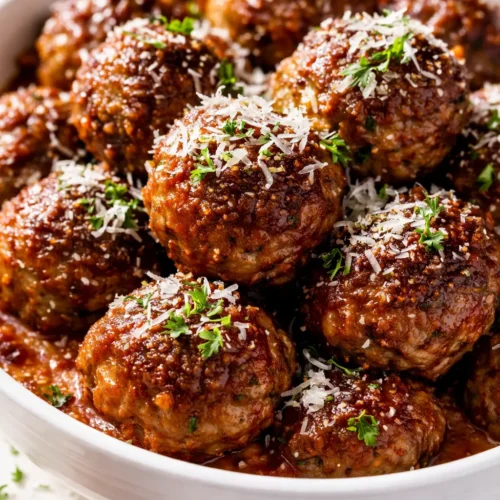
Sunday Gravy Meatballs for Family Dinner: Rich, Herby, and the Only Recipe You’ll Need
Equipment
- Large Mixing Bowl
- Rimmed Baking Sheet
- Dutch Oven or Heavy-Bottomed Pot (5-6 quart)
- Tongs or Slotted Spoon
- Wooden Spoon
Ingredients
Meatballs
- 1 pound ground beef (80/20)
- 1 pound ground pork
- 1/2 cup plain breadcrumbs or gluten-free panko
- 1/3 cup whole milk or unsweetened almond milk
- 1 large egg
- 1/2 cup finely grated Parmesan cheese
- 3 cloves garlic, minced
- 1/4 cup fresh parsley, chopped
- 1 teaspoon kosher salt
- 1/2 teaspoon black pepper
- 1 teaspoon dried oregano
- 1/2 teaspoon fennel seeds, crushed
Sauce
- 2 tablespoons olive oil (for browning)
- 1 small onion, finely chopped
- 3 cloves garlic, minced
- 1 can (28 oz) whole San Marzano tomatoes, crushed by hand
- 1 teaspoon kosher salt
- 1/2 teaspoon sugar (optional, if needed)
- 2 sprigs fresh basil
Instructions
- Prep the panade: In a small bowl, combine the breadcrumbs with the milk and let sit for 5 minutes until a thick paste forms.
- Mix the meatball base: In a large bowl, combine the ground beef, ground pork, panade, egg, Parmesan, garlic, parsley, salt, pepper, oregano, and crushed fennel seeds. Use your hands to gently mix just until everything is combined. Do not overwork.
- Form the meatballs: Lightly oil your hands, then roll the mixture into 1½-inch balls (about the size of a golf ball). You should get about 20 meatballs. Place them on a rimmed baking sheet.
- Brown the meatballs: Heat olive oil in a Dutch oven over medium-high heat. Working in two batches, add the meatballs and cook until deeply browned on all sides, about 6–8 minutes per batch. Do not crowd the pot. Transfer to a plate.
- Start the sauce: Reduce heat to medium. Add the chopped onion to the same pot and cook until softened and golden, about 5 minutes. Add the garlic and cook 30 seconds. Add the crushed tomatoes, salt, and sugar if needed. Scrape up any browned bits from the bottom of the pot.
- Simmer the meatballs in sauce: Nestle the meatballs back into the pot, along with any accumulated juices. Add the basil sprigs. Bring to a gentle simmer, then cover partially and cook for 45 minutes to 1 hour, stirring gently once or twice. The sauce will thicken and the meatballs will become tender.
- Serve: Remove the basil stems. Spoon over pasta, polenta, or pile onto crusty rolls. Top with grated Parmesan and a drizzle of good olive oil.
Notes
Related posts:
 Breakfast Crunchwraps That Stay Golden and Crisp in 30 Minutes — The Only One You’ll Need
 Savory Red Lentil Pancakes That Stay Crispy and Keep You Full Until Lunch
 Marry Me Chickpeas: The Creamy, Garlicky Version That’s Actually Worth the Hype – in 30 Minutes
 Creamy Tuscan Gnocchi That Tastes Like a Slow Sunday in Italy — in Under 30 Minutes