
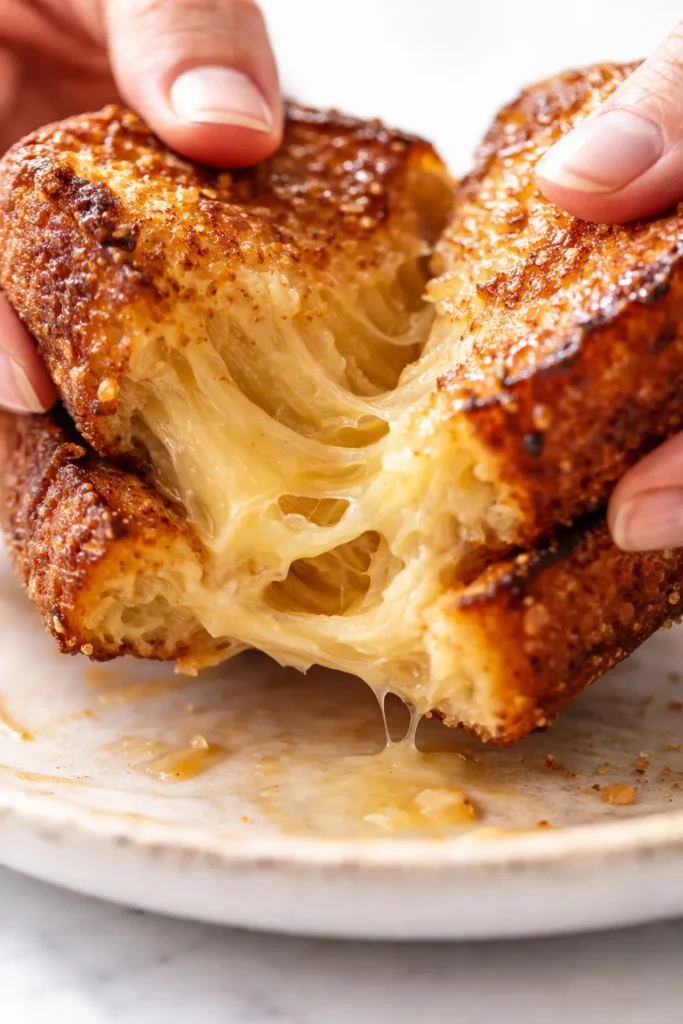
The first time I made vegan French toast for Simone, she studied it the way she studies everything — skeptical. “It’s not the same,” she said, after one bite. She wasn’t wrong. But she asked for it again the next week, and the week after. By the third time, she stopped asking if it was the same. She just ate.
The short version: Vegan French toast that’s rich, custardy, and actually sets up properly — no sogginess, no eggy aftertaste (obviously), and no waiting four hours for the bread to soak.
I’ve made vegan French toast more times than I can count — for weekends, for brunch with friends who thought they’d miss the real thing, and for that skeptical eight-year-old who now requests it on Saturdays.
- Serves: 4 (2 slices per serving) as breakfast
- Hands-On Time: 10 min | Total Time: 20 min
- Difficulty: Easy once you get the custard ratio right
- Cost per serving: ~$1.50
- Calories: ~280 per serving
- Dietary Notes: Naturally vegan; gluten-free and nut-free options available
The Custard Trick That Changes Everything
The problem with most vegan French toast is the same problem I had the first three times: too much liquid, not enough binder. Regular French toast uses eggs for structure — the egg proteins set up in the heat and turn a wet piece of bread into a firm, custardy slice. Take away the eggs and you don’t just lose flavor, you lose physics. Silken tofu is the solution I landed on after a dozen tests. It blends into the milk completely, bringing enough protein to create that set, plus a richness that reads as “custard” rather than “soggy bread.” A little cornstarch reinforces the structure. The result is a slice that holds its shape, browns evenly, and doesn’t fall apart when you flip it.
Ingredients Worth Talking About
- 8 thick slices day-old bread (brioche-style or sturdy sourdough): Fresh bread soaks up too much liquid and turns to mush. Day-old bread has tighter crumb that absorbs evenly. If all you have is fresh, toast it lightly first. Celestine would say you’re not being fancy — you’re being smart about the bread.
- 1 cup unsweetened oat milk: Oat milk is the creamiest nondairy milk for this. Almond or soy work, but oat gives the most body without a beany flavor. I tested coconut milk once — too thin and the coconut flavor competed with the cinnamon.
- 4 oz silken tofu (half a standard block): This is the binder. No need to press it — just throw it in the blender. Don’t substitute firm tofu; the texture is wrong. If you’re tofu-averse, you can replace the tofu with 3 tablespoons chickpea flour — same structure, different flavor profile.
- 2 tablespoons maple syrup (plus more for serving): Sweetness and moisture. Don’t use agave — it’s thinner and won’t brown the same way.
- 1 teaspoon vanilla extract: The non-negotiable aromatic. Real, not imitation.
- 1 teaspoon cinnamon: I use Ceylon if I have it — warmer, less punchy. Cassia works fine.
- 1 tablespoon cornstarch: The hidden structure. Prevents the custard from running through the bread and makes the exterior crisp up nicely. A lot of recipes skip this and wonder why their French toast is wet inside. Now you know.
- Pinch of nutritional yeast (optional but recommended): Adds a savory note that rounds out the sweetness. You won’t taste it — that’s the point. Try it once and you’ll see what I mean.
- ¼ teaspoon fine sea salt: Balances the sweetness and enhances everything.
- Vegan butter or coconut oil for the pan: Butter tastes better; coconut oil works if that’s what you have.
What to Pull Out Before You Start
- Blender or immersion blender (for the custard)
- Shallow dish wide enough for a slice of bread
- 12-inch nonstick skillet or well-seasoned cast iron
- Spatula (thin, flexible — the kind you’d use for pancakes)
No special equipment. The blender makes the tofu vanish into the milk, but you can whisk and mash the tofu through a fine-mesh sieve if you don’t have one.
Let’s Make It
Prep the bread: If your bread is fresh, spread the slices on a baking sheet and let them sit out for 15 minutes while you make the custard. Not required with day-old bread.
- Blend the oat milk, silken tofu, maple syrup, vanilla, cinnamon, cornstarch, nutritional yeast (if using), and salt in a blender until completely smooth. Scrape the sides once — this takes about 30 seconds. The custard should look like thin heavy cream.
- Pour the custard into a shallow dish. Place a slice of bread in the custard, let it sit for 10 seconds, then flip and let the other side sit for 10 seconds. No longer. Lift it out and let the excess drip off for 5 seconds. This is not a soak — this is a dip. Oversoaking is the number one cause of soggy French toast.
- Heat your skillet over medium heat and add 1 tablespoon of vegan butter. Wait until the butter is melted and shimmering, not smoking. Place the dipped bread in the skillet — you should hear a gentle sizzle. If it screams, turn the heat down.
- Cook for 2–3 minutes per side. The first side is ready when the edges look set and the bottom is deep golden brown — lift a corner to check. Flip carefully and cook the second side until golden, about 1–2 minutes longer. Don’t press down with the spatula; you’ll squeeze out the custard.
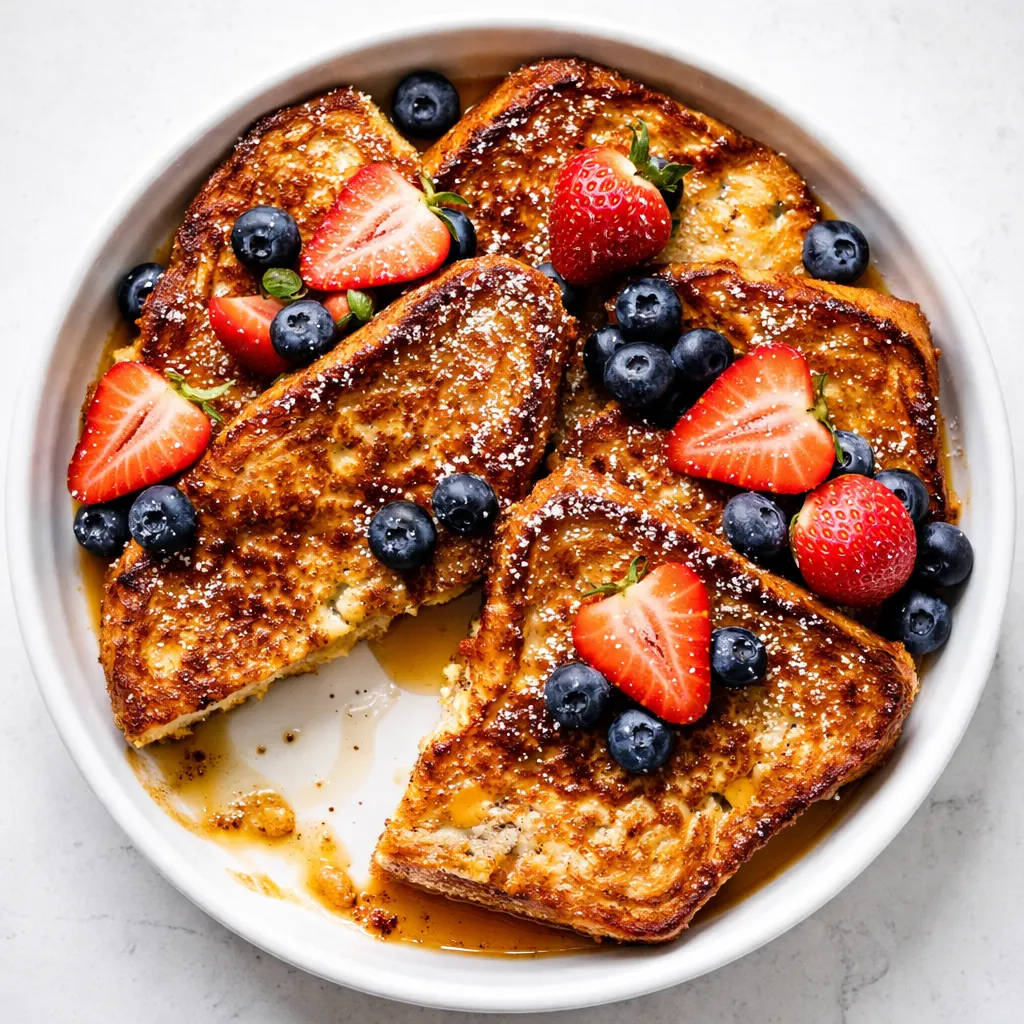
- Serve immediately with warmed maple syrup, fresh berries, a dusting of cinnamon, or whatever you like. Repeat with remaining slices, wiping the pan clean and adding fresh butter between batches.
What I Wish I Knew the First Time
- Don’t oversoak the bread: The most common mistake I see is people treating vegan French toast like regular French toast and letting the bread sit in the custard for a minute. With silken tofu in the blend, the liquid is denser — 10 seconds per side is all you need. Any longer and the interior turns wet and never sets up.
- Temperature matters more than you think: Start at medium heat. If the pan is too hot, the outside browns before the inside cooks through — you get a hard shell and raw custard. Too low and the bread steams rather than fries. Medium heat, a patient sizzle, and a buttered pan every batch.
- Rest the dipped bread before cooking: After you lift the slice from the custard, let it rest on the edge of the dish or a plate for 15 to 20 seconds. This lets the extra liquid run off and the bread start absorbing the custard evenly. It makes the difference between a slice that turns out patchy and one that’s uniformly golden.
- Double the batch and freeze the extras: Cooked vegan French toast freezes beautifully. Cool the slices in a single layer on a baking sheet, then transfer to a freezer bag. Reheat in a toaster or a hot skillet straight from the freezer — no thawing needed. Simone eats them for breakfast on school days.
Make It Yours: Variations & Swaps
- Gluten-free: Use a sturdy gluten-free bread (I like one that’s made with rice flour and tapioca starch, not a light white bread). Add an extra 2 teaspoons of cornstarch to the custard to compensate for the lack of gluten structure.
- Nut-free: Oat milk is naturally nut-free. Skip the almond extract if you’re adding it and stick with vanilla.
- Pumpkin spice version: Replace the cinnamon with 1½ teaspoons pumpkin pie spice and add 2 tablespoons pumpkin purée to the blender. Reduce oat milk to ¾ cup so the custard stays thick.
- Savory French toast: Omit the maple syrup, cinnamon, and vanilla. Add ¼ teaspoon black salt (kala namak) for an eggy aroma, a pinch of turmeric for color, and serve with sautéed mushrooms and spinach.
Questions I Get About This Recipe
Q: Why did my vegan French toast turn out soggy?
A: This almost always happens because the bread soaked too long or the pan wasn’t hot enough. Stick to the 10-second dip per side, and make sure your skillet is at medium heat (not medium-low). If the bread is very fresh or thin, reduce the dip time to 5 seconds per side.
Q: Can I make this gluten-free?
A: Yes — use a sturdy gluten-free bread and increase the cornstarch to 1½ tablespoons. Avoid soft GF breads or those made mostly of potato starch; they’ll fall apart. Sourdough-style GF breads work best.
Q: How long does vegan French toast last, and can I freeze it?
A: Cooked slices keep in an airtight container in the fridge for up to 3 days. To reheat, crisp them in a toaster or a dry skillet for the best texture. For longer storage, freeze the cooked slices in a single layer, then transfer to a freezer bag — they’ll be good for 2 months. Reheat straight from frozen in a toaster or 375°F oven for 6–8 minutes.
Q: What do you serve with vegan French toast?
A: Classic maple syrup and berries are always correct. For something heartier, I like a side of crispy tempeh bacon and sautéed apples with a pinch of cayenne. If it’s a holiday brunch, a dollop of coconut whipped cream and a sprinkle of toasted pecans makes it feel like an occasion.
Simone now makes her own batch on Saturday mornings. She uses this recipe, and she adds a little extra cinnamon. That’s the best test — when someone else takes over.
📌 This vegan French toast recipe is rich, custardy, and not soggy — save it for your next lazy Sunday brunch or holiday breakfast.