
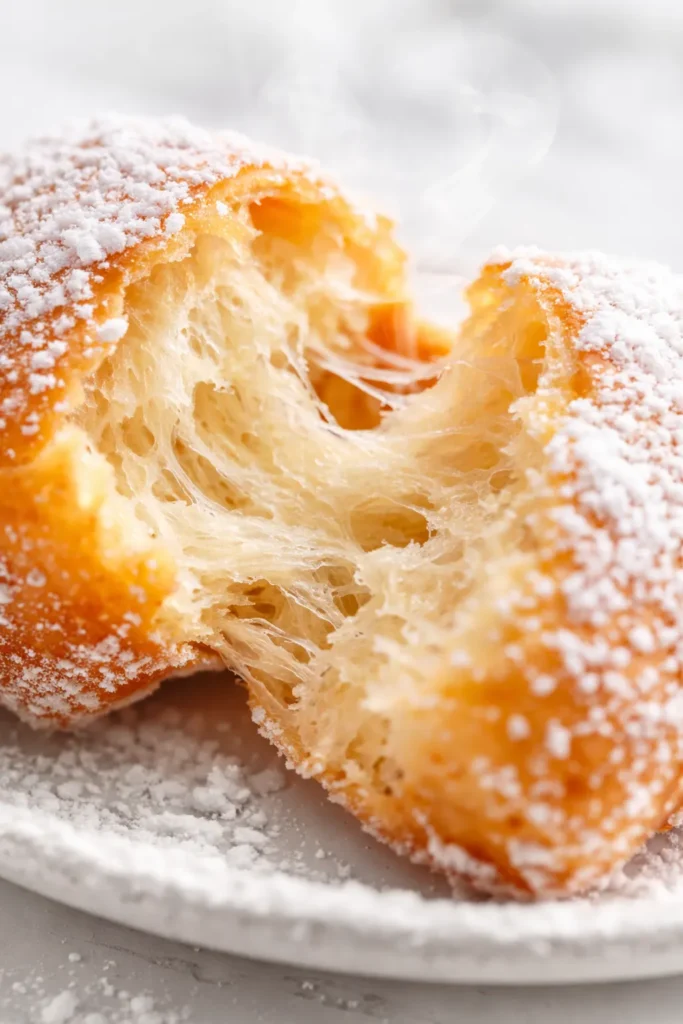
Celestine made her beignets on Saturday mornings, but only when the humidity was low. “The oil behaves better when the air isn’t thick,” she’d say, and she was never wrong about the kitchen. She had a rule about the vanilla too: one bean for the milk, and one splash of the real extract just before the flour went in. That double hit of vanilla is what made her beignets stand apart from the powdered-sugar clouds they serve on Decatur Street. It was the difference between a souvenir and a meal.
The short version: Homemade vanilla beignets that are lighter, more fragrant, and less greasy than the ones you queue up for — made completely doable in your own kitchen with a double-vanilla trick that survives the fryer.
I spent three years testing this recipe to match that specific vanilla-forward flavor Celestine insisted on, and this version finally gets it right. Living in Atlanta now, I don’t have the luxury of walking to a French Quarter cafe. So I make these at home. And honestly, they’re better.
- Serves: 4–6 as a brunch or dessert
- Hands-On Time: 25 min | Total Time: 1 hr 35 min (includes two rises)
- Difficulty: Easier than you think if you trust the sticky dough and keep the oil at 350°F
- Cost per serving: ~$2.50
- Calories: ~320 per serving (about 3 beignets)
- Dietary Notes: Vegetarian. Adaptable for dairy-free with oat milk + vegan butter.
The Vanilla Technique That Changes Everything
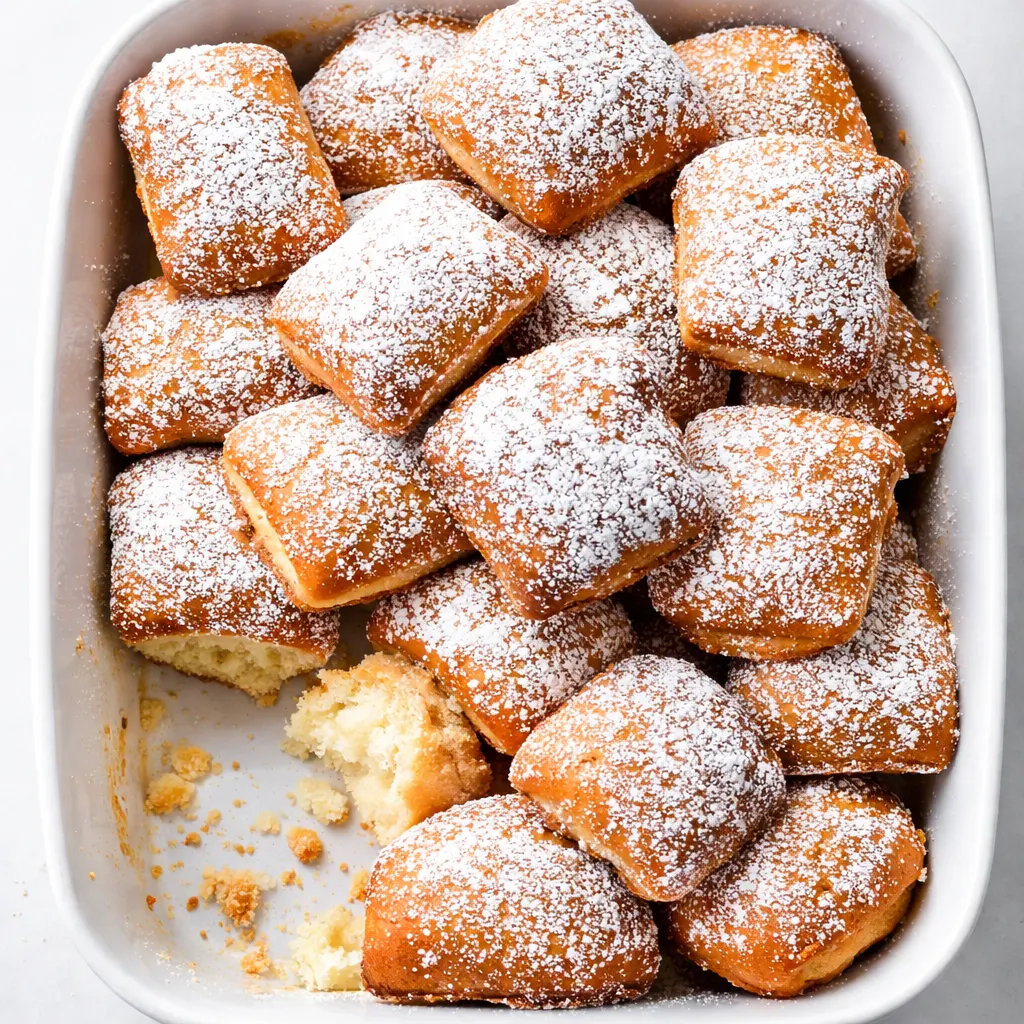
Most beignet recipes treat vanilla as an afterthought — a splash of extract stirred into the liquid at the end. But vanilla’s aromatic compounds are volatile, meaning they burn off and degrade with heat. If you just add extract to the hot dough, you lose most of it to the fryer. The solution is two-pronged. First, you steep a split vanilla bean in the warm milk and cream. This extracts the deeper, custard-like base notes that can withstand the high heat. Second, you add a boost of vanilla bean paste or pure extract right before the flour goes in. This preserves the floral top notes that hit your nose before the beignet even reaches your mouth. That double layer is what makes this version smell and taste distinctly like vanilla, not like sugar and oil.
The second thing that changes everything is the hydration of the dough. Most home cooks make it too stiff because they’re afraid of sticky dough. The wetter dough is what creates the steam pockets that produce that signature pillowy center. It is not a mistake. It is the structure of the beignet.
Ingredients Worth Talking About
- 1 vanilla bean + 1 tsp vanilla bean paste (or pure extract): The bean goes into the scalded milk for a custard-like base note. The paste or extract gets added right before the flour to boost the floral top notes. This is the double-vanilla method. Do not use imitation vanilla here — the difference is not subtle.
- 3 ½ cups bread flour: The higher protein content gives the beignets their signature chew while staying light. All-purpose works, but it won’t be as pillowy. Celestine used all-purpose because that’s what she had, and she made it work, but bread flour makes it better.
- ½ cup evaporated milk: This is the NOLA secret in a can. It adds a slight sweetness and richness that regular milk doesn’t, without making the dough heavy. It also helps the browning in the fryer.
- 2 ¼ tsp active dry yeast (one packet): We’re proofing it to make sure it’s alive. It’s not difficult — just five minutes with sugar and warm milk. If it doesn’t foam, your yeast is dead. Start over.
- ¼ cup granulated sugar: Just enough to feed the yeast and add a whisper of sweetness to the dough. The beignets themselves aren’t sweet — the powdered sugar on top provides that.
- 1 large egg: Adds richness and helps with structure. Let it come to room temperature so it emulsifies properly into the dough.
- 2 tbsp unsalted butter, melted: Adds tenderness and a bit of flavor. Brown the butter first if you want a deeper, nuttier note.
- Canola or peanut oil for frying: Neutral oils with a high smoke point. Do not use olive oil. Do not use coconut oil. The flavor will compete with the vanilla.
- Powdered sugar for finishing: A generous amount. Put it in a paper bag and shake the hot beignets in it — this is the correct method.
What to Pull Out Before You Start
- Heavy-bottomed pot or Dutch oven for frying (maintains heat better than a thin pan)
- Candy/fry thermometer (the oil temp must stay at 350°F — this is non-negotiable)
- Rolling pin (or a wine bottle in a pinch — Celestine did this)
- 3-inch pizza wheel or biscuit cutter
- Sheet pan lined with parchment for the cut beignets to do their second rise
- Paper bags for shaking the beignets in powdered sugar
Let’s Make These Beignets
First, scald the vanilla cream: In a small saucepan, combine ¾ cup whole milk and ¼ cup heavy cream. Split the vanilla bean lengthwise and scrape the seeds into the milk, then drop the pod in. Heat over medium-low until small bubbles form around the edges — do not let it boil. Remove from heat, cover, and let steep for 15 minutes. Remove the pod, scraping any remaining seeds back into the milk. Let cool to lukewarm (about 110°F).
- Proof the yeast: In the bowl of a stand mixer, combine ½ cup warm water (110°F), 1 tablespoon of the sugar, and the active dry yeast. Stir gently and let sit for 5 minutes until foamy. If it doesn’t foam, your yeast is dead. Discard and start over with fresh yeast.
- Make the dough: Add the cooled vanilla cream, the evaporated milk, the remaining sugar, the egg, the melted butter, and the salt to the yeast mixture. Mix on low with the paddle attachment until combined. Switch to the dough hook. Add the bread flour gradually, mixing until a shaggy, sticky dough forms. This will take about 2 minutes. The dough should be soft and tacky — not stiff. If it looks dry, add a tablespoon of warm water. If it looks wet, resist the urge to add more flour.
- First rise: Scrape the dough into a lightly oiled bowl, turning to coat. Cover with plastic wrap and a kitchen towel. Let it rise in a warm, draft-free place until doubled in size, about 45 minutes. A warm oven (turned off with the light on) works perfectly.
- Roll and cut: Punch down the dough gently. Turn it out onto a well-floured surface. Roll it into a 1/3-inch thick rectangle. Use a pizza wheel or sharp knife to cut it into 2.5-inch squares. Place the squares on the parchment-lined sheet pan, leaving a little space between them.
- Second rise: Cover the cut beignets loosely with a clean kitchen towel. Let them rest for 20 minutes. This is critical — it makes them light and pillowy. Do not skip this step.
- Fry: Pour 2 inches of oil into your Dutch oven. Heat to 350°F. Carefully drop 3-4 beignets into the hot oil, making sure not to crowd the pot. Fry for 60-90 seconds per side, until deep golden brown. Use a slotted spoon to flip them. The beignets should puff up dramatically and float immediately.
- Drain and sugar: Transfer the fried beignets to a paper towel-lined plate for just 30 seconds to drain excess oil. Then place them in a paper bag with a generous amount of powdered sugar. Close the bag and shake vigorously until fully coated. Transfer to a serving platter.
Notes from 40 Batches of Beignets
- The Wet Dough is Your Friend: It’s going to feel like a mistake. It’s not. The stickiness is what creates the open, airy crumb. If you add too much flour, you’ll end up with dense, bready beignets instead of pillowy ones. Trust the process.
- Don’t Skimp on the Second Rise: If you fry them right after cutting, they will be dense. The 20-minute rest helps them relax and puff properly in the oil. Set a timer. It matters.
- The Oil Temperature is Everything: If it drops below 325°F, the beignets get greasy and heavy. If it goes above 375°F, they burn before the inside cooks. Let the oil come back to 350°F between batches. A thermometer is not optional — it’s the difference between success and a greasy mess.
- Sugar Immediately: The powdered sugar won’t stick if the beignets have cooled down. Put them in a paper bag with the sugar and shake while they’re still hot. This is the correct way to get that thick, snowy coating.
Make It Yours: Beignet Variations
- Chocolate Beignets: Add 2 tbsp cocoa powder to the flour mixture. Add a handful of mini chocolate chips to the dough during the last minute of mixing. The chocolate version is a crowd favorite in my house — Simone asks for it specifically.
- Lemon-Ricotta Beignets: Replace ¼ cup of the milk with whole milk ricotta and add the zest of one lemon to the dough. The ricotta makes them extra tender and the lemon cuts the richness. Serve with a drizzle of honey instead of powdered sugar.
- Savory Beignets: Omit the vanilla and the powdered sugar. Add 1 tsp black pepper, ½ tsp cayenne, and ½ cup shredded sharp cheddar to the dough. Serve warm with honey or pepper jelly. They disappear fast.
- Dairy-Free: Use full-fat oat milk, vegan butter, and a can of coconut cream instead of evaporated milk. The texture will be slightly different, but the vanilla technique still works beautifully.
Questions I Get About These Beignets
Q: Why did my beignets turn out dense and heavy?
A: This happens when the dough was too stiff (too much flour) or the second rise was skipped. The dough should be very soft and tacky. And don’t skip that 20-minute rest after cutting. It is the step that makes them light.
Q: Can I make these with instant yeast?
A: Yes. Use equal amounts, but skip the proofing step. Mix it directly with the flour. The rest of the method stays the same. The active dry yeast gives a slightly more robust flavor, but instant is perfectly fine for a weeknight batch.
Q: How do I store and reheat leftover beignets?
A: Beignets are best the day they are made, but you can store them in a paper bag at room temperature for one day. Do not store them in an airtight container — they will get soggy. Reheat in a 350°F oven for 5 minutes. Do not microwave. They will turn into rubber.
Q: What do you serve with beignets besides powdered sugar?
A: A chicory coffee with warm milk is the classic. For a gathering, I also put out a bowl of salted caramel sauce and some fresh berries to cut the richness. A cold glass of milk works too, especially if kids are involved.
These beignets are the closest I’ve gotten to the ones Celestine made. They’re not a tourist souvenir — they’re a weekend morning when the whole house wakes up to the smell of hot oil and vanilla. That’s the version worth making.
📌 This homemade vanilla beignet recipe is lighter and more fragrant than the cafe version — save it for your first Mardi Gras morning or your next slow Sunday brunch.