
The secret to this creamy steak pasta isn’t heavy cream — it’s the butter, the garlic, and a splash of the water you cooked the pasta in. That’s the trick my grandmother Celestine used for her stovetop pastas, and it’s the one that keeps this from feeling heavy. The steak gets a beautiful crust in a hot skillet, the pasta cooks up perfectly in salted water, and the whole thing comes together in the time it takes to set the table. This is the recipe I make when I need something that feels like a weekend meal on a Tuesday night.
The short version: Seared steak, tender pasta, and a garlic butter sauce that coats every single noodle — start to finish, it’s 30 minutes.
I’ve made this on busy weeknights when Simone has an event and on Saturday nights when we want something that feels special without much effort. It works every time. The steak gets a beautiful crust, the pasta cooks up perfectly, and the sauce comes together in the same pan — fewer dishes, more flavor.
- Serves: 4 as a main
- Hands-On Time: 30 min | Total Time: 30 min
- Difficulty: Easy enough for a weeknight
- Cost per serving: ~$5.50
- Calories: ~620 per serving
- Dietary Notes: Contains dairy, gluten (can be adapted with GF pasta)
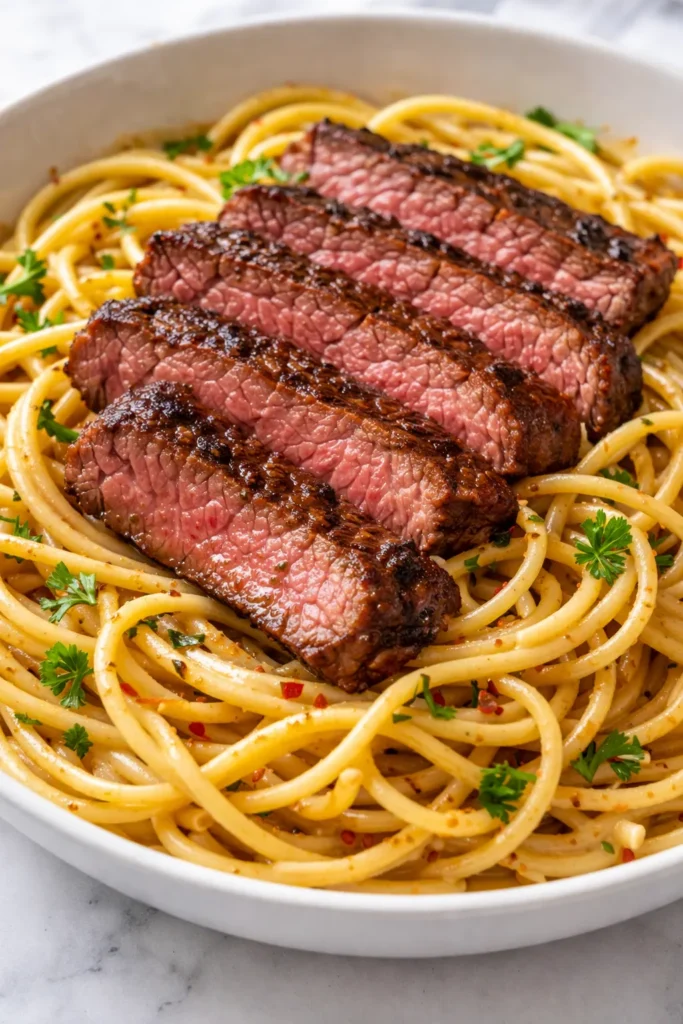
(Photo above: overhead shot of the pasta in a wide, shallow white bowl. The steak strips are nestled on top, a few parsley flakes scattered across. The sauce clings to the fettuccine, glossy and rich. Warm, moody lighting from the left.)
Why This Sauce Tastes Like It Simmered All Day (When It Really Didn’t)
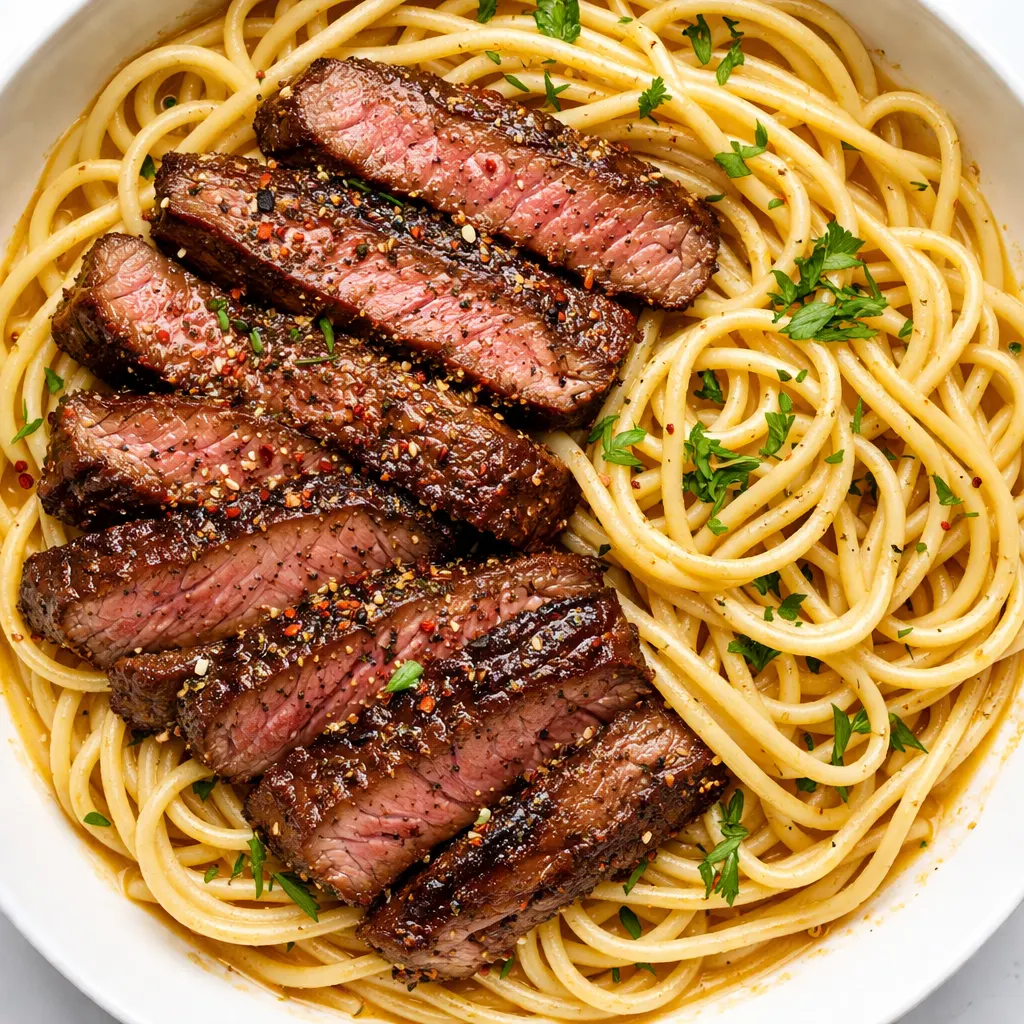
The sauce comes together in the time it takes the pasta to boil. The secret is building it in the same pan you seared the steak in — those browned bits left behind are pure flavor that you can’t get from any shortcut. The fond, as it’s called, dissolves into the butter and cream and gives the sauce a savory depth that tastes like it cooked for an hour.
The pasta water is the real binder. It has starch from the pasta that naturally thickens the sauce and helps it cling to every noodle. You don’t need a roux or a ton of cream — just good butter, fresh garlic, and that starchy water. It’s the technique Celestine used for her Sunday gravies, and it translates beautifully to a weeknight pasta.
The result is a creamy, savory, garlicky sauce that feels luxurious but won’t weigh you down. It coats the pasta evenly and leaves just enough in the bottom of the bowl to drag a piece of bread through.
What You’ll Need (and a Few Things I’ve Learned About Them)
- 1 lb ribeye or sirloin steak: Ribeye has enough fat to stay tender during the quick sear. If you use sirloin, watch the cook time closely — it can go from medium to tough in about 30 seconds. I usually buy one thick steak (about 1.5 inches) rather than two thin ones. It sears better and stays juicier.
- 12 oz fettuccine or pappardelle: Wide noodles that catch the sauce best. My family likes fettuccine, but any long pasta works. Don’t use angel hair — it’s too delicate and will get lost under the steak.
- 6 tbsp unsalted butter: We’re using a good amount here — this is what makes the sauce glossy and rich. If you only have salted, skip the extra salt until the end and taste first.
- 6 garlic cloves, minced: Fresh, not from a jar. Pre-minced won’t give you the same sweet, mellow punch when it cooks in the butter. Take the 5 minutes to do it fresh. I mince mine fine so it almost melts into the sauce.
- ½ cup heavy cream: This isn’t an alfredo — it’s a butter-based sauce with cream to finish. Half and half works in a pinch, but the sauce won’t be as luscious.
- 1 cup reserved pasta water: The real binder. Don’t drain your pasta without reserving at least a cup. I scoop it out with a measuring cup right before I drain.
- 1 cup freshly grated Parmesan: The pre-shredded kind has anti-caking agents that stop it from melting smoothly. Worth the extra minute of grating. Pecorino Romano is fine too, just use a little less — it’s saltier.
- Fresh parsley and lemon: Fresh flat-leaf parsley for color and a squeeze of lemon at the end. Lemon wakes the whole thing up. Don’t skip it just because it’s not a main ingredient — it makes everything taste brighter.
Tools for the Job
- 12-inch cast iron or heavy stainless steel skillet: A heavy pan holds heat better for a good sear. Nonstick won’t give you the same crust.
- Large pot for boiling pasta: 4 quarts of water minimum.
- Tongs: For flipping the steak and tossing the pasta.
- Chef’s knife and cutting board: For the garlic and parsley.
- Measuring cups and spoons: Have them ready — this moves fast.
Let’s Make It — Start to Finish
This moves fast, so I like to have everything prepped and measured before I turn on the heat. It’s a 30-minute recipe, not a 30-minute prep time.
Prep and sear: Pat the steak dry with paper towels and season generously with salt and black pepper on both sides. Don’t hold back on the salt — it’s the only chance to season the meat itself. Heat 1 tablespoon of vegetable oil in the skillet over high heat until it shimmers. Sear the steak for 4-5 minutes per side for medium-rare, or until it reaches 135°F internally. Transfer to a cutting board and let it rest for 5-10 minutes. (📸 Photo tip: The crust should be deep golden brown. If the steak sticks to the pan, let it cook another minute — it’ll release when it’s ready.)
- Cook the pasta: Meanwhile, drop the pasta in heavily salted boiling water. Cook 1 minute less than the package directions. Reserve 1.5 cups of the pasta water just before you drain it. Drain the pasta and set it aside.
- Start the sauce: Reduce the heat under the skillet to medium-low. Add the 6 tablespoons of butter. Once it melts, add the minced garlic and cook for 1-2 minutes, stirring constantly, until fragrant. Scrape up all those browned bits from the bottom of the pan — that’s where the flavor lives.
- Finish the sauce: Stir in the heavy cream and ½ cup of the reserved pasta water. Whisk in the grated Parmesan until the sauce is smooth and creamy. Season with a small pinch of salt and some black pepper. (📸 Photo tip: The sauce should look silky and glossy at this point. If it seems thick, add more pasta water a little at a time.)
- Combine: Add the drained pasta to the skillet and toss it in the sauce until every strand is coated. Add more pasta water as needed until the sauce coats the noodles nicely — you want it to cling, not pool.
- Slice and serve: Slice the rested steak against the grain into thin strips. Gently toss it with the pasta, or lay it on top for a prettier presentation. Squeeze a bit of fresh lemon over everything and finish with a handful of chopped fresh parsley.
Making This Work for Your Week
This one is best fresh because the steak loses its sear and the pasta absorbs the sauce as it sits. But if you’re intentional about it, the leftovers are still really good — just plan ahead a little.
- Fridge: Store in an airtight container for up to 3 days. The pasta will soak up some sauce — add a splash of water or milk when reheating to bring it back.
- Freezer: I don’t recommend it. The texture of the pasta and steak changes too much in the freezer.
- Reheat: In a skillet over medium-low with a splash of water or broth to restore the sauce. The microwave works in a pinch but the sauce can break if you overheat it.
A Few Things I’ve Learned After Making This a Dozen Times
- Get the pan screaming hot: Heat your skillet over high heat for a good 3-4 minutes before you add the oil. When the oil shimmers, the steak goes in. That hard sear is what makes the flavor.
- Rest the steak: It’s tempting to slice it right away. Don’t. Letting it rest for 5-10 minutes keeps the juices in the meat instead of flooding your cutting board. Trust me on this one.
- Don’t oversauce at first: Start with a little pasta water and add more as you toss. You can always add, but you can’t take away. The pasta will keep absorbing liquid as it sits.
- Taste as you go: Season the pasta water. Season the steak. Season the sauce. Each layer builds on the last. Even if you mess up one part, tasting throughout means you can adjust.
- Lemon is non-negotiable: It sounds optional, but a squeeze of fresh lemon right at the end cuts through the butter and cream and makes everything taste brighter. I’ve forgotten it before and the dish was noticeably flatter.
Make It Yours (Without Ruining It)
- Dairy-Free: Use a good quality plant-based butter and full-fat oat milk creamer. The texture will be slightly thinner, but it’s still tasty.
- Mushroom Version: My sister’s favorite. Sear a cup of sliced cremini mushrooms along with the steak. They soak up the browned bits beautifully.
- Spicy Kick: Add a pinch of red pepper flakes to the garlic and butter. Gives it a gentle warmth without dominating the dish.
- Kid-Friendly: Use sirloin or pre-cooked steak tips and skip the lemon at the table. Simone likes bowtie pasta in hers — I swap the fettuccine for farfalle and she eats twice as much.
The Questions I Get About This One
Q: Why did my sauce turn out grainy?
A: That usually means the Parmesan was pre-shredded or the heat was too high. Use freshly grated cheese and keep the heat at medium-low when you add the cream. Low and slow is the way to go.
Q: Can I use a different protein?
A: Yes. Chicken thighs or shrimp work beautifully. For chicken, sear on both sides until cooked through (about 6-7 minutes per side). For shrimp, they only need 2-3 minutes total. Adjust your cook time and let the meat rest just like the steak.
Q: How long does this last? Can I freeze it?
A: 3 days in the fridge in an airtight container. I don’t recommend freezing — the pasta gets mushy and the steak’s texture changes too much. Make it fresh when you can.
Q: What do I serve with this?
A: A simple green salad with a decent vinaigrette to cut the richness. Or roasted asparagus with salt and lemon. We keep it light on the side because the pasta is the main event. My kids love it with a piece of crusty bread to soak up the extra sauce.
More Recipes My Family Makes on Repeat
If you liked this one, here are a few others that get the same reaction at our table:
- My Go-To Garlic Butter Shrimp Pasta — Lighter but just as saucy, and ready in 20 minutes.
- The Best One-Pan Lemon Chicken and Orzo — The orzo soaks up all the flavor as it cooks.
- Easy Skillet Lasagna with No Boiling Required — All the flavor of lasagna without the layering fuss.
This is the pasta I turn to when I need something that feels like a hug but doesn’t keep me in the kitchen all night. I hope it becomes one of your favorites too.
If you try it, let me know how it goes! Drop a comment below or tag me on Pinterest so I can see your version.
📌 Creamy garlic butter steak pasta recipe that comes together in 30 minutes — save it for your next busy weeknight dinner.
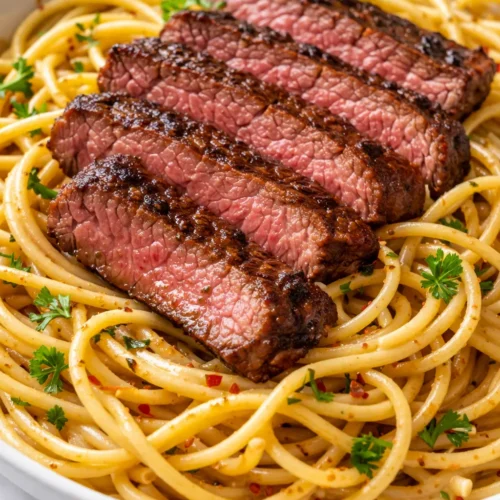
Creamy Garlic Butter Steak Pasta
Equipment
- 12-inch cast iron or heavy stainless steel skillet
- Large pot for boiling pasta
- Tongs
- Chef’s Knife and Cutting Board
- Measuring Cups and Spoons
Ingredients
- 1 lb ribeye or sirloin steak
- 12 oz fettuccine or pappardelle
- 6 tbsp unsalted butter
- 6 cloves garlic, minced
- 1/2 cup heavy cream
- 1 cup reserved pasta water (plus more as needed)
- 1 cup freshly grated Parmesan
- to taste fresh parsley and lemon for garnish
- 1 tbsp vegetable oil
- to taste salt and black pepper
- optional red pepper flakes
Instructions
- Pat the steak dry with paper towels and season generously with salt and black pepper on both sides. Heat 1 tablespoon vegetable oil in a 12-inch cast iron or heavy skillet over high heat until shimmering. Sear the steak for 4-5 minutes per side for medium-rare (135 degrees F internal). Transfer to a cutting board and let rest 5-10 minutes.
- Meanwhile, bring a large pot of heavily salted water to a boil. Cook the pasta 1 minute less than package directions. Reserve 1.5 cups of pasta water just before draining. Drain the pasta and set aside.
- Reduce the heat under the skillet to medium-low. Add 6 tablespoons butter. Once melted, add the minced garlic and cook for 1-2 minutes, stirring constantly, scraping up the browned bits from the bottom of the pan.
- Stir in the heavy cream and 1/2 cup of the reserved pasta water. Whisk in the grated Parmesan until the sauce is smooth and creamy. Season with a small pinch of salt and black pepper. If the sauce seems thick, add more pasta water a little at a time.
- Add the drained pasta to the skillet and toss until every strand is coated. Add more pasta water as needed until the sauce clings to the noodles. Slice the rested steak against the grain into thin strips. Gently toss with the pasta or lay on top. Squeeze fresh lemon over everything and finish with chopped fresh parsley.
Notes
Related posts:
 Breakfast Crunchwraps That Stay Golden and Crisp in 30 Minutes — The Only One You’ll Need
 Marry Me Chickpeas: The Creamy, Garlicky Version That’s Actually Worth the Hype – in 30 Minutes
 Tortellini Carbonara That’s Creamier Than Any Restaurant — in 30 Minutes
 Honey Garlic Sausage and Sweet Potato Sheet Pan Dinner That’s Actually Crispy — in 35 Minutes