TLDR: This banana bread is swirled with melted Biscoff spread and topped with crunchy Biscoff biscuits for extra texture. The key is to layer the batter and Biscoff, then swirl gently to avoid sinking. Expect a moist, tender crumb with caramelized cookie butter ribbons running through every slice.
The first time I pulled this loaf out of the oven, the whole kitchen smelled like a bakery in Brussels — warm bananas, caramelized cookie butter, and that unmistakable Biscoff spiciness. One slice later, I knew I’d never make plain banana bread again. That first batch had a single flaw: the Biscoff sank right to the bottom, leaving a sticky layer instead of beautiful swirls. So I went back to the kitchen, tweaked the layering, and landed on this method that keeps the cookie butter exactly where you want it — suspended in the crumb, ready to be discovered in every bite.
Testing and Refining: How I Got the Perfect Swirl
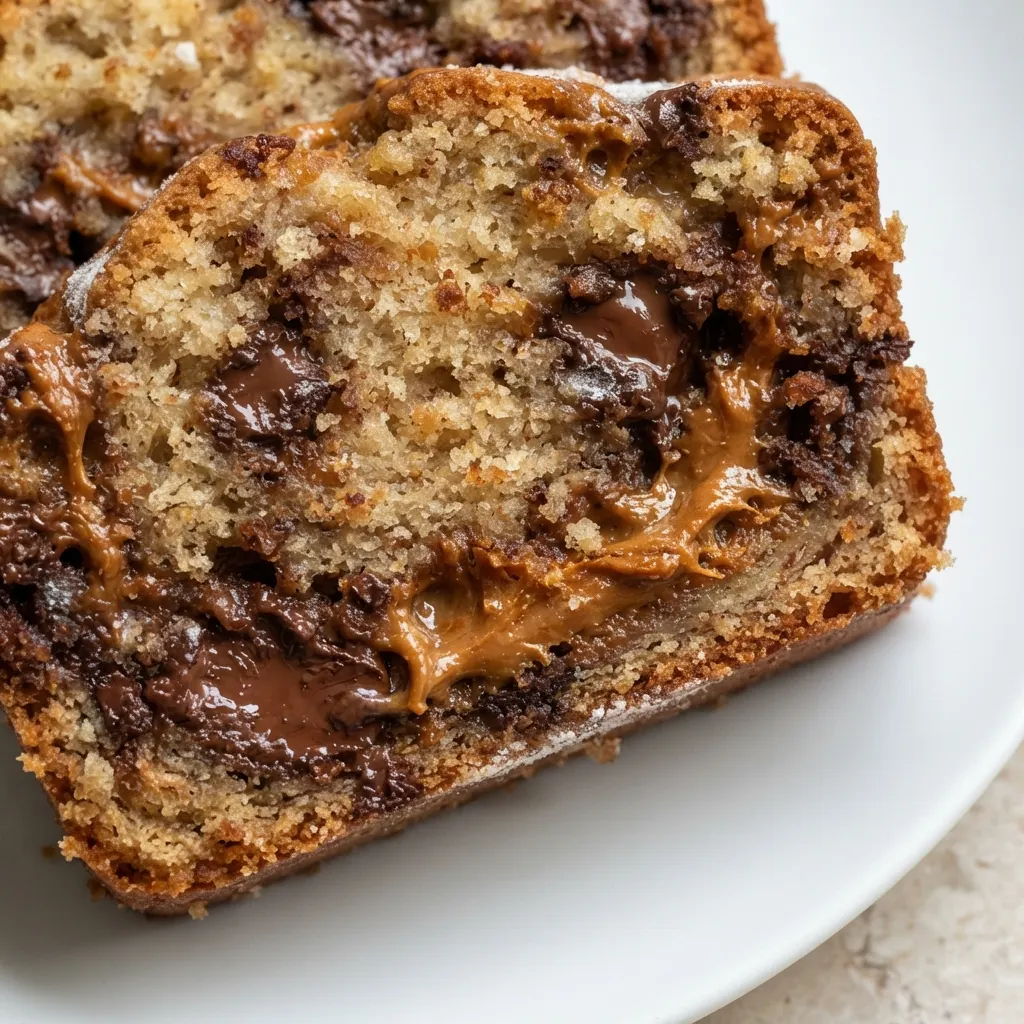
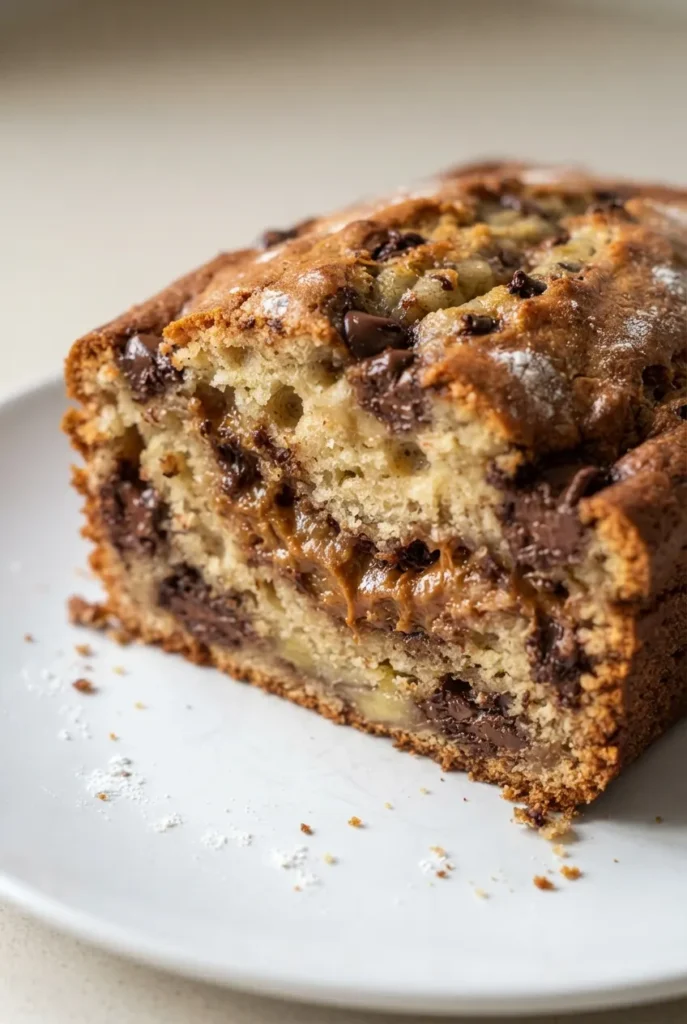
I tested this recipe exactly four times. The first two attempts, I just dolloped the Biscoff on top and hoped for the best — it pooled at the bottom, creating a gummy mess. The third time, I microwaved the Biscoff until it was runny and drizzled it between layers, then used a skewer to swirl. That worked, but the swirl was faint. The winning batch? I used slightly less Biscoff in the middle, spread it in an even layer, and added a thicker top layer of batter before swirling deeply with a toothpick. The result was a perfect marbled pattern that held its shape through baking. The final loaf rose evenly, turned a deep golden brown, and when I sliced it, each piece showed a distinct ribbon of cookie butter against the tender banana crumb. That’s the version I’m sharing here.
- Serves: 10 as a snack or dessert
- Hands-On Time: 20 min | Total Time: 1 hr 30 min
- Difficulty: Easy, even if you’ve never baked banana bread before
- Cost per serving: $1.75
- Nutrition Estimate: 370 Calories, 5g Protein, 46g Carbs, 19g Fat, 8g Saturated Fat, 2g Fiber, 320mg Sodium per serving
- Dietary Notes: Vegetarian; can be made dairy-free by using margarine
(Photo above: close-up shot of the loaf sliced on a rustic wooden board, showing the caramel-colored swirl of Biscoff against the golden crumb, with a whole Biscoff biscuit balanced on top and a few crumbs scattered around. Warm afternoon light from the side highlights the moist texture.)
Why the Layering and Swirl Method Makes All the Difference
The biggest challenge with this Biscoff swirl banana bread is keeping the spread from sinking. Melted Biscoff is heavy — if you just pour it over the batter, gravity pulls it straight to the bottom. The fix is to sandwich it between two layers of batter, then swirl with a skewer that reaches from top to bottom. This interrupts the downward path and traps ribbons of cookie butter inside the crumb. After testing a few methods, I found that using a toothpick to make figure-eight motions creates the most even distribution. The result is a loaf where every slice has a visible, gooey strip of Biscoff rather than just a soggy base.
Another reason this works: the bananas themselves. Two large ripe bananas (or three small ones) provide enough moisture to keep the bread tender for three days. When you add the Biscoff, which is mostly oil and sugar, you get an extra boost of richness that doesn’t weigh down the crumb. I’ve made versions with less banana and the bread felt dry; with the full amount, the texture stays soft and almost custard-like near the swirls.
One final note: don’t overmix the batter after adding the bananas. That’s when gluten develops and creates a tough loaf. Fold gently until you see no more streaks of flour, then stop. The little lumps of banana that remain bake into soft pockets of flavor.
Everything You Need (And a Few Notes From Me)
- 2 large ripe bananas (or 3 small bananas): The riper, the better — brown spots mean more natural sweetness and a stronger banana flavor. Frozen-thawed bananas work too; just drain off excess liquid.
- 250 grams margarine or unsalted butter (I use Stork Original): Softened to room temperature. Margarine makes a slightly fluffier crumb; butter gives more flavor. Both work perfectly.
- 200 grams sugar (white or golden caster sugar): Golden caster adds a subtle caramel note that complements the Biscoff. Regular white sugar is fine.
- 1 teaspoon vanilla extract (optional): It rounds out the banana flavor nicely. Skip it if you’re out.
- 4 medium eggs (or 3 large eggs), room temperature: Cold eggs seize the butter and make the batter stiff. Leave them on the counter for 30 minutes or pop them in warm water for 5.
- 300 grams self-raising flour (or 300g plain flour plus 2 teaspoons baking powder): If using plain flour, whisk the baking powder through the flour before adding. Don’t skip the salt — it balances sweetness.
- 1 teaspoon ground cinnamon (optional): Cinnamon and Biscoff are best friends. Add it if you like warm spices.
- 0.5 teaspoon salt: Essential for bringing out the flavors. Even if your butter is salted, add this.
- 150 grams chocolate chunks or chips (flavour of your choice): Dark chocolate chunks are my go-to — they contrast the sweet Biscoff beautifully. Milk chocolate works too but may make it sweeter overall.
- 3 tablespoons Biscoff Spread, plus 1 tablespoon for drizzling: Use the creamy version, not crunchy. The crunchy has biscuit bits that can burn.
- Biscoff Biscuits for topping: About 4–5 biscuits, depending on how many you want on top. I place them just before serving so they stay crisp.
What to Pull Out Before You Start
- Oven
- 2lb loaf tin (about 9×5 inches) — if you only have a 1lb tin, halve the recipe or expect a taller loaf that may need an extra 10 minutes
- Baking paper (parchment)
- Mixing bowls (one large, one small)
- Fork for mashing bananas
- Electric hand mixer or stand mixer (optional — a wooden spoon works if your butter is very soft)
- Microwave-safe bowl for melting Biscoff
- Skewer or toothpick for swirling
- Wire rack for cooling
Let’s Make It (Step by Step)
I usually start by getting the bananas mashed and the butter softening, then move right into creaming. It’s a straightforward process — no fancy skills required.
Prep the oven and tin: Preheat to 160°C fan / 180°C conventional. Grease your 2lb loaf tin and line it with a strip of baking paper that hangs over the long sides — this makes lifting the bread out easy.
- Mash the bananas: In a small bowl, use a fork to mash the bananas until smooth. A few small lumps are fine — they’ll bake into soft pockets. Set aside.
- Cream the butter, sugar, and vanilla: In a large bowl, beat the softened margarine or butter with the sugar and vanilla until pale and fluffy — about 3 minutes with an electric mixer. It should look light and creamy.
- Mix in the eggs one at a time: Crack an egg into the creamed mixture and beat well. To stop the mixture from curdling, add 2 tablespoons of the 300g flour along with each egg. Repeat until all eggs are incorporated. The batter will look smooth and thick.
- Add the remaining dry ingredients: Sift in the rest of the flour, the salt, and the cinnamon if using. Fold gently with a spatula until just combined — you don’t want to overwork the gluten.
- Fold in the banana and chocolate: Add the mashed banana and the chocolate chunks. Fold again until evenly distributed. The batter will be thick and slightly lumpy from the banana. That’s perfect.
- Layer half the batter in the tin: Spoon about half of the batter into the prepared loaf tin and smooth the top with the back of a spoon.
- Melt and pour the Biscoff: Spoon the 3 tablespoons of Biscoff spread into a small microwave-safe bowl. Microwave on high for 10–20 seconds until it’s runny (check at 10 seconds and stir). Pour the melted Biscoff over the batter in the tin, spreading it gently with the spoon — don’t press it in, just let it sit on top.
- Add the remaining batter and swirl: Spoon the rest of the batter on top of the Biscoff layer. Use a skewer or toothpick to gently swirl the two layers together. Insert the skewer all the way to the bottom and make figure-eight motions. Don’t over-swirl — about 8–10 passes is plenty. You want distinct ribbons, not a muddy batter.
- Bake until golden and done: Bake for 60–70 minutes. Start checking at 60 minutes: the bread should be risen, deep golden brown, and a toothpick inserted into the center should come out clean or with a few moist crumbs (but no wet batter). If the top is browning too fast, tent loosely with foil after 45 minutes.
- Cool in the tin, then on a rack: Leave the loaf in the tin for 20 minutes. Then lift it out using the baking paper and transfer to a wire rack to cool completely — at least 1 hour. Slicing warm is tempting, but the crumb sets as it cools.
- Decorate and serve: Once cool, melt the remaining 1 tablespoon of Biscoff (microwave 10 seconds) and drizzle over the top. Place a few Biscoff biscuits on top. Slice and enjoy.
How I Meal Prep This for the Week
I often bake two loaves of this banana bread at once — one for immediate snacking and one to stash in the freezer. The Biscoff banana bread stays moist for three days at room temperature, so it’s perfect for Monday morning coffee or an afternoon pick-me-up. If you’re prepping for a brunch or party, bake it the day before and decorate with the drizzle and biscuits just before serving.
- Fridge: Store in an airtight container at room temperature for up to 3 days. After that, it starts to dry out. The fridge actually speeds up staling, so I avoid it unless the weather is very hot.
- Freezer: Yes — wrap the cooled, undecorated loaf tightly in plastic wrap, then foil. Freeze for up to 3 months. Thaw overnight in the fridge or on the counter for 4 hours. Add the drizzle and biscuits after thawing.
- Reheat: If you want a warm slice, microwave it for 10–15 seconds. It’ll taste fresh-baked. For the whole loaf, warm in a 300°F oven for 10 minutes — but honestly, it’s delicious at room temperature.
Things I Wish I’d Known the First Time
- Room-temperature eggs aren’t negotiable: I’ve tried using cold eggs when I’m in a rush, and the batter stiffens immediately, making the bread dense. Just set the eggs on the counter when you preheat the oven — by the time you’re ready to add them, they’ll be fine.
- Don’t over-swirl the Biscoff: I know it’s tempting to keep going until the batter looks marbled, but too many passes actually destroy the layers. Five or six deep strokes with a toothpick is plenty. You want distinct streaks, not a uniform brown batter.
- Bake on the middle rack: If you bake too low, the bottom might burn before the center sets. The middle rack gives even heat distribution. If your oven runs hot, reduce the temperature by 10 degrees.
- Check doneness with a skewer, not just color: The loaf can look beautifully golden on the outside while being raw in the middle — especially with all that moisture from the bananas and Biscoff. A toothpick is your best friend. If it comes out with wet batter, give it 5 more minutes and check again.
Swaps That Actually Work
- Dairy-Free: Use margarine (like Stork) or a plant-based butter block. The rest of the recipe is naturally dairy-free if you skip the butter. The chocolate chunks — check that they’re dairy-free; dark chocolate usually is.
- Gluten-Free: Substitute the flour with a good quality 1:1 gluten-free baking blend (one that includes xanthan gum). The texture will be slightly more tender, but the Biscoff swirl helps mask any grittiness.
- Lower Sugar: Reduce the sugar to 150 grams. The bananas and Biscoff provide plenty of sweetness — you won’t miss the extra 50 grams. The crumb will be a little less fluffy but still delicious.
- Swap the Chocolate: Use white chocolate chips for a sweeter, creamier contrast. Or swap in chopped Biscoff biscuits (not the spread) for extra crunch — add them with the chocolate.
- Extra Biscoff Hit: Crush two extra Biscoff biscuits and fold them into the batter along with the chocolate. The baked pieces stay slightly crunchy in the middle of the soft bread.
Why Did My Biscoff Sink to the Bottom? And Other Troubleshooting Questions
Q: Why did my Biscoff sink to the bottom of the banana bread?
A: This happens when the Biscoff is added in one big dollop without layering. It’s heavy, so it drops through the loose batter. The fix: spread half the batter first, then pour the melted Biscoff in an even layer, and top with the remaining batter. The swirl keeps each layer in place. If you’re worried, let the batter rest for 5 minutes after filling the tin — it thickens slightly and holds the Biscoff better.
Q: Can I use crunchy Biscoff instead of creamy?
A: I don’t recommend it for the swirl. The biscuit bits in crunchy Biscoff can burn during the long baking time. Use creamy for the interior swirl and save the crunchy for spreading on top after baking, if you like texture.
Q: How do I know when the banana bread is done without over-baking it?
A: The visual cues: the loaf should be deep golden brown and slightly cracked on top. The best test is the skewer test — insert a toothpick into the thickest part (usually the center). If it comes out with a few moist crumbs but no raw batter, it’s done. If it’s still wet, bake 5 more minutes. If it’s completely clean, it might be over-baked, but it’ll still taste good — just a bit drier.
Q: Can I make this vegan?
A: Yes. Use vegan margarine, substitute each egg with a flax egg (1 tablespoon ground flaxseed + 3 tablespoons water per egg, let sit 5 minutes), and check that your chocolate is dairy-free. The Biscoff spread is vegan-friendly. The texture will be slightly denser, but the flavor is still fantastic.
How Do You Store Biscoff Banana Bread?
Q: How long does Biscoff banana bread last, and how should I store it?
A: At room temperature, tightly wrapped in plastic wrap or in an airtight container, it stays fresh for up to 3 days. After that, the banana bread starts to dry out. I don’t recommend refrigerating it because the fridge pulls moisture out of baked goods. If you live in a humid climate, you can store it in the fridge after day 2, but let it come to room temperature before serving.
Q: Can I freeze Biscoff banana bread?
A: Absolutely. Freeze the undecorated loaf (no drizzle or biscuits on top) for best results. Wrap it tightly in plastic wrap, then in foil, and freeze for up to 3 months. Thaw overnight in the refrigerator or on the counter for 4–6 hours. Add the Biscoff drizzle and biscuits after thawing for that fresh-from-the-oven look.
Q: What’s the best way to reheat leftover banana bread?
A: For individual slices, microwave for 10–15 seconds — it’ll be warm and soft. For a whole loaf, place it in a 300°F oven for 10 minutes uncovered. The edges will crisp up slightly, and the center will warm through. If you want the biscuits on top to stay crunchy, add them after reheating.
Q: What do you serve with Biscoff banana bread?
A: It’s lovely on its own with a cup of coffee or tea. For a dessert, serve it warm with a scoop of vanilla ice cream — the cold creaminess against the warm spiced bread is amazing. For brunch, set it out alongside fresh fruit and yogurt. And if you’re feeling extra indulgent, smear a little extra Biscoff spread on each slice before eating. I’ve also been known to heat a slice and top it with a drizzle of caramel sauce — not exactly health food, but worth every bite.
That first perfect loaf disappeared in two days — my neighbors, my sister, and my work colleagues all got a slice. It’s the kind of recipe that makes you look like you spent hours in the kitchen, but really, you just followed a few simple steps. I hope you make this recipe and love it as much as I do.
If you try it, drop a comment below — I love hearing how it goes for you! Tag me on Pinterest so I can see yours!
📌 This Biscoff banana bread with a gooey cookie butter swirl and crunchy biscuit topping — save it for your next weekend baking session when you want something special.
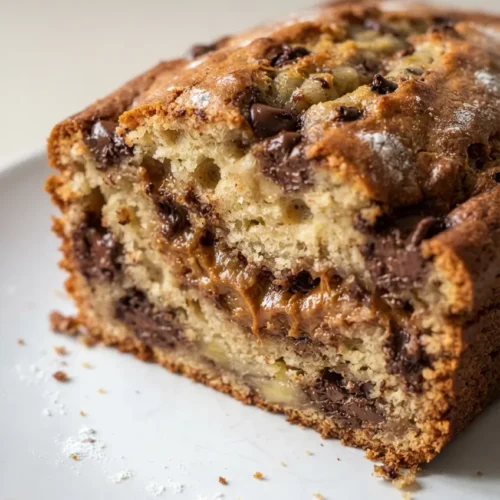
Biscoff Banana Bread
Equipment
- Oven
- 2lb loaf tin
- Baking paper (parchment)
- Mixing Bowls
- Fork
- Electric hand mixer
- Microwave-safe bowl
- Skewer
- Wire rack
Ingredients
- 2 large ripe bananas or 3 small bananas
- 250 grams margarine or unsalted butter softened to room temperature
- 200 grams sugar white or golden caster sugar
- 1 teaspoon vanilla extract optional
- 4 medium eggs or 3 large eggs, room temperature
- 300 grams self-raising flour or 300g plain flour plus 2 teaspoons baking powder
- 1 teaspoon ground cinnamon optional
- 0.5 teaspoon salt
- 150 grams chocolate chunks or chips flavour of your choice
- 3 tablespoons Biscoff Spread for swirl
- 1 tablespoon Biscoff Spread for drizzling
- Biscoff Biscuits about 4-5 biscuits for topping
Instructions
- Preheat oven to 160°C fan / 180°C conventional. Grease a 2lb loaf tin and line with baking paper so it hangs over the long sides.
- Mash the bananas with a fork until smooth with a few small lumps. Set aside.
- In a large bowl, cream the softened margarine or butter with the sugar and vanilla until pale and fluffy (about 3 minutes with an electric mixer).
- Add the eggs one at a time, beating well after each. To prevent curdling, add 2 tablespoons of the flour with each egg.
- Sift in the remaining flour, salt, and cinnamon (if using). Fold gently with a spatula until just combined.
- Fold in the mashed banana and chocolate chunks until evenly distributed. The batter will be thick and slightly lumpy.
- Spoon about half the batter into the prepared tin and smooth the top.
- Melt 3 tablespoons of Biscoff spread in a microwave-safe bowl for 10-20 seconds until runny. Pour over the batter in the tin and spread gently.
- Spoon the remaining batter on top. Use a skewer or toothpick to swirl the layers together with figure-eight motions (8-10 passes). Do not over-swirl.
- Bake for 60-70 minutes, until deep golden brown and a toothpick inserted in the center comes out with a few moist crumbs (no wet batter). If browning too fast, tent with foil after 45 minutes.
- Let the loaf cool in the tin for 20 minutes, then lift out using the baking paper and transfer to a wire rack to cool completely (at least 1 hour).
- Once cool, melt the remaining 1 tablespoon of Biscoff spread (microwave 10 seconds), drizzle over the top, and place a few Biscoff biscuits on top. Slice and serve.
Notes
- Room-temperature eggs aren’t negotiable: Cold eggs stiffen the batter. Leave them out when you preheat the oven.
- Don’t over-swirl the Biscoff: Too many passes destroy the layers. Five or six deep strokes with a toothpick is plenty.
- Bake on the middle rack: Even heat distribution. If your oven runs hot, reduce temperature by 10 degrees.
- Check doneness with a skewer, not just color: The loaf can look golden outside but be raw inside. Insert a toothpick — if it comes out with wet batter, bake 5 more minutes.