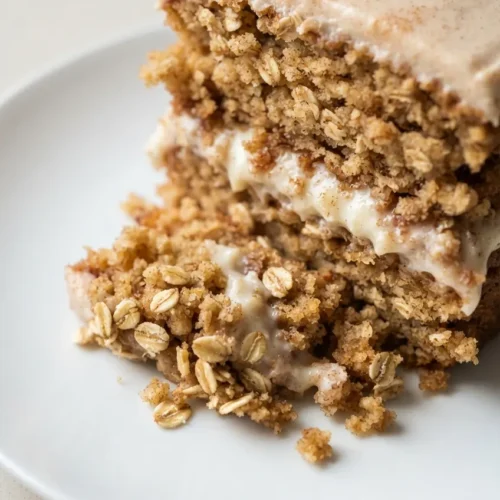
The Oatmeal Cream Pie Cake You'd Never Guess Is This Easy to Make at Home
I've made this oatmeal cream pie cake seven times now for everything from birthday parties to quiet Sunday afternoons, and every single time someone asks for the recipe before they've finished their first slice. The layers are tender but sturdy enough to hold a thick blanket of that vanilla cream filling.
Equipment
- Food processor
- Three 8-inch round cake pans
- Parchment Paper
- Wire racks
- Cake board or serving plate
- Bench scraper
- Electric Mixer
- Toothpick
Ingredients
Cake
- 2 cups old fashioned rolled oats coarsely ground
- 2 cups all-purpose flour
- 1.5 tsp baking powder
- 1 tsp baking soda
- 2 tsp ground cinnamon
- 0.5 tsp ground nutmeg
- 0.5 tsp salt
- 1 cup unsalted butter softened
- 1 cup granulated sugar
- 1 cup brown sugar packed
- 4 large eggs room temperature
- 2 tsp pure vanilla extract
- 1 cup buttermilk room temperature
Vanilla Cream Filling
- 1 cup unsalted butter softened
- 1 cup vegetable shortening
- 4 cups powdered sugar sifted
- 3 tbsp heavy cream
- 1 tsp pure vanilla extract
Buttercream
- 1.5 cups unsalted butter softened
- 5 cups powdered sugar sifted
- 3-4 tbsp heavy cream
Garnish
- 6-8 oatmeal cream pie cookies for garnish
- cookie crumbs for garnish
Instructions
- Preheat and Prep: Set the oven to 350°F. Grease the bottoms and sides of three 8-inch round cake pans, line the bottoms with parchment paper, and dust the sides lightly with flour.
- Grind the Oats: Pulse the rolled oats in a food processor 8-10 times until they look like a mix of coarse flour and small oat pieces. Don't overdo it — you want texture, not dust.
- Whisk Dry Ingredients: In a large bowl, whisk together the ground oats, all-purpose flour, baking powder, baking soda, cinnamon, nutmeg, and salt. Set aside.
- Cream Butter and Sugars: In the bowl of a stand mixer fitted with the paddle attachment, beat the softened butter, granulated sugar, and brown sugar on medium speed for 4-5 minutes until it's light, fluffy, and noticeably paler in color. Scrape the bowl down once during this process.
- Add Eggs and Vanilla: Add the room temperature eggs one at a time, beating well after each (about 30 seconds each). Mix in the vanilla extract.
- Alternate Dry and Wet: With the mixer on low, add the dry ingredients in three additions and the buttermilk in two additions, starting and ending with the dry ingredients. Mix until just combined — overmixing at this stage will make the cake tough.
- Divide and Bake: Divide the batter evenly among the three prepared pans. Bake for 28-32 minutes, until a toothpick inserted in the center comes out clean or with a few moist crumbs. Let the cakes cool in their pans on wire racks for 10 minutes, then turn them out onto the racks to cool completely. The smell of cinnamon and toasted oats will fill your kitchen.
- Beat the Base: In a clean mixer bowl with the paddle attachment, beat the 1 cup softened butter and 1 cup vegetable shortening together on medium speed for 2-3 minutes until completely smooth and combined. The shortening is non-negotiable here — it gives the filling that stable, non-greasy mouthfeel you remember from the cookies.
- Add Sugar Gradually: With the mixer on low, add the sifted powdered sugar 1 cup at a time. After each addition, increase the speed to medium and beat for 30 seconds before adding the next cup. This gradual approach prevents a sugar cloud from exploding into your face.
- Finish With Cream: Add the 3 tablespoons of heavy cream and 1 teaspoon of vanilla extract. Beat on medium-high for 2 minutes until the filling is light, fluffy, and spreadable. Scrape the bowl and paddle well.
- Level the Layers: Once the cakes are completely cool, use a serrated knife to level the tops if they've domed. Save the scraps for snacking or crumbling over the top.
- Layer One: Place one cake layer on your serving plate or cake board. Spread about ¾ cup of the vanilla cream filling evenly across the top, all the way to the edges. The filling should be about ¼ inch thick.
- Layer Two: Top with the second cake layer, pressing gently to adhere. Spread another ¾ cup of filling over it.
- Layer Three: Place the final cake layer on top, bottom-side up for a flat surface.
- Crumb Coat: Spread a thin layer of the prepared buttercream over the entire cake — just enough to catch any loose crumbs. Refrigerate for 20 minutes to set.
- Final Frosting: Apply a thicker layer of buttercream, using a bench scraper to create a naked or semi-naked finish. Leave some patches of cake visible for that rustic look.
- Garnish: Press cookie crumbs along the bottom edge of the cake. Top with whole and halved oatmeal cream pie cookies. A light dusting of cinnamon on the plate finishes the presentation.
Notes
My Best Tips for a Perfect Oatmeal Cream Pie Cake
- Grind the oats yourself. Pre-ground oat flour is too fine and won't give you that characteristic nubby texture. Ten pulses in the food processor is all it takes.
- Check your oven temperature. An oven thermometer is cheap insurance. If your oven runs hot, the edges will brown before the center sets. If it runs cool, the cake will be dense.
- Don't skip the shortening in the filling. All-butter fillings taste great but turn greasy at room temperature and get hard in the fridge. The shortening keeps the filling stable and silky for days.
- Let the cake rest after assembly. This one's important. After you finish decorating, let the cake sit at room temperature for 30 minutes before slicing. The fillings settle, the layers absorb a bit of moisture, and the flavors meld together. It tastes noticeably better.
- Bring leftovers to room temperature before serving. Cold cake from the fridge loses the creamy magic. Five minutes on the counter restores it.