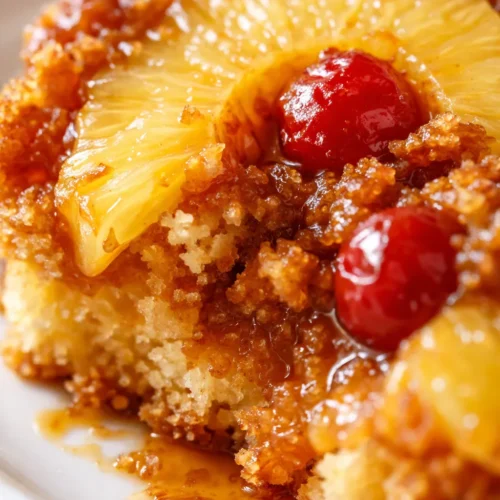
Pineapple Upside Down Cake That's Perfectly Caramelized in Under an Hour
This classic pineapple upside down cake bakes at 350°F for 40–45 minutes. The key is pouring melted butter and brown sugar into the pan before arranging the pineapple rings and cherries. Expect a tender, buttery cake with a sticky caramelized topping that flips out beautifully every time.
Equipment
- 9-inch round cake pan
- Mixing Bowls
- Whisk
- Electric Mixer
- Spatula
- Toothpick
- Plate
Ingredients
Topping
- 1/4 cup unsalted butter, melted Don't skip melting it; cold butter won't mix evenly with the brown sugar.
- 1/2 cup packed brown sugar Pack it firmly into the cup. Loose brown sugar won't give you enough caramel layer. Dark brown sugar adds a deeper, almost molasses-like flavor, but light works beautifully too.
- 7 pineapple rings (canned, drained) Drain them well and pat dry with a paper towel. Extra moisture makes the caramel watery. Use rings, not chunks—they lay flat and create that classic pattern.
- 7 maraschino cherries Drain and pat dry too. Most store-bought cherries are dyed, but the color holds up perfectly. If you want a more natural cherry, look for fancy cherries in syrup.
Cake
- 1 1/2 cups all-purpose flour Spoon and level the flour; don't scoop from the bag. A gluten-free 1:1 blend can be substituted.
- 2 tsp baking powder Check the date—old baking powder leads to a dense cake.
- 1/4 tsp salt If you used salted butter for the caramel, skip this. Fine sea salt dissolves best.
- 1/2 cup unsalted butter, softened Cold butter will leave you with lumps that never cream properly. Let it sit out for about an hour. Softened means you can press a finger into it and leave a dent.
- 3/4 cup granulated sugar Don't reduce it—the cake needs the structure. That's a lesson I learned the hard way.
- 2 large eggs Room temperature. Cold eggs seize the butter and make the batter stiff and hard to work with. If you forget, put them in a bowl of warm water for 5 minutes.
- 1 tsp vanilla extract Pure vanilla, not imitation—though in a cake this simple, imitation still works. I use Mexican vanilla when I'm feeling fancy.
- 1/2 cup milk Whole milk gives the richest crumb, but oat milk or almond milk work too. Not buttermilk—it's too acidic here.
Instructions
- Start by getting your pan ready—this is the part that makes the whole thing work. Prep the topping: Melt the butter in a small saucepan or the microwave, then pour it into your 9-inch round cake pan. Tilt the pan to coat the bottom evenly. Sprinkle the brown sugar over the melted butter—don't stir, just let it sit. Arrange the 7 pineapple rings on top of the sugar. Place one cherry in the center of each ring and one in the center of the pan if there's room.
- Preheat: Set your oven to 350°F (175°C) and make sure a rack is in the middle. While it heats, whisk together the flour, baking powder, and salt in a medium bowl. Set aside.
- Cream butter and sugar: In a large bowl, beat the softened butter and sugar with an electric mixer on medium speed until the mixture looks pale and fluffy—about 2 to 3 minutes. Scrape down the bowl once during mixing. This step builds the cake's structure.
- Add eggs and vanilla: Beat in the eggs one at a time, making sure each is fully incorporated before adding the next. Stir in the vanilla. The batter should look smooth and slightly glossy at this point.
- Alternate dry and wet: Turn the mixer to low and add the flour mixture in three additions, alternating with the milk—start and end with flour. Mix just until the last streak of flour disappears. Overmixing makes the cake tough.
- Pour and spread: Spoon the batter over the pineapple layer, being careful not to disturb the fruit. Use your spatula to spread it evenly to the edges. The batter will be thick—that's correct.
- Bake: Slide the pan into the oven and bake for 40 to 45 minutes, or until the top is golden and a toothpick inserted into the center of the cake comes out clean. You may see a few moist crumbs but no wet batter. The edges should just begin to pull away from the pan. The smell of caramelized sugar and vanilla will fill your kitchen.
- Cool and invert: Let the cake cool in the pan on a wire rack for exactly 5 minutes. Place your serving plate upside down over the pan, then flip the whole thing over in one quick motion. Lift the pan off carefully. If any sugar sticks, just scrape it onto the cake. Serve warm or at room temperature.
Notes
1. Pat the fruit dry every time: Even if the pineapple rings look dry out of the can, they're still wet. Blot them with a paper towel before placing them in the pan. Extra moisture dilutes the caramel and makes the cake soggy around the edges. I know it seems fussy, but it's the difference between a perfect caramel and a watery one.
2. Don't overmix the batter—ever: Once you add the flour, mix just until you can't see any white streaks. Overmixing develops gluten and gives you a tough, dense cake that won't rise properly. Even if you mess this part up a little, it'll still taste good—I've done it—but for the best texture, stop early.
3. Cool exactly 5 minutes on the timer: Two minutes is too short—the caramel is still liquid and will spill everywhere. Ten minutes is too long—the sugar hardens and sticks to the pan. Set a timer the second the pan comes out of the oven. That 5-minute window is your sweet spot.
4. Use a hot knife for clean slices: Run a long, thin knife under hot water, dry it, then slice. The heat cuts through the sticky pineapple without dragging the caramel. Wipe the blade clean between cuts. This is the trick that makes dessert look bakery-perfect.