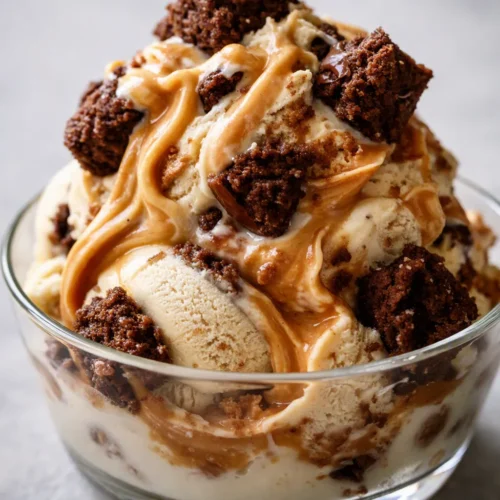
peanut butter brownie ice cream
This isn't just any recipe. This is my go-to method for a foolproof, juicy, bronze-skinned bird that looks like it came out of a professional kitchen. It's built on specific temperatures and timings so you can follow it with total confidence, whether it's your first bird or your fiftieth.
Equipment
- Roasting pan or cast-iron skillet
- Instant-read thermometer
- Kitchen twine
- Cutting Board
- Small saucepan
- Wooden Spoon
- Aluminum foil
- Paper Towels
Ingredients
- 1 whole chicken about 4–5 pounds / 1.8–2.3 kg
- 2 teaspoons kosher salt plus more for the cavity
- 1 teaspoon freshly ground black pepper
- 1 lemon halved
- 4 sprigs fresh thyme
- 2 sprigs fresh rosemary
- 1 small yellow onion quartered
- 3 cloves garlic smashed
- 2 tablespoons melted butter or olive oil
- ½ cup dry white wine or chicken broth for the pan
Instructions
- First, pull your chicken out of the refrigerator and let it sit at room temperature for 30 to 45 minutes. This simple step removes the chill and helps the bird cook more evenly. When you're ready, preheat your oven to 425°F (220°C) and position a rack in the center.Now, pat the chicken completely dry with paper towels. This is the most crucial step for crispy skin. The drier the skin, the crisper the result—I cannot stress this enough. Season the bird generously on all sides, inside and out, with the kosher salt and freshly ground black pepper. Don't forget the cavity; that's where a ton of flavor lives.
- Stuff the cavity with the lemon halves, herb sprigs, onion quarters, and smashed garlic. You don't need to pack it tight; just let it fill the space. Next, use kitchen twine to tie the legs together. This neat little bundle promotes even cooking and gives the bird that classic, polished shape. Tuck the wing tips under the body so they don't burn in the high heat.
- Place the chicken in a large, heavy roasting pan or a cast-iron skillet. Brush the skin all over with the melted butter (or olive oil). This is what will help the skin achieve that beautiful, deep amber color. Slide the pan into the preheated oven and listen—in the first few minutes, you'll hear the skin begin to sizzle and pop, a sound that always makes me think dinner is going to be good.
- Roast the chicken at 425°F (220°C) for 25 minutes. This blasted heat sears the skin and locks in the juices. After 25 minutes, reduce the oven temperature to 350°F (175°C) and continue roasting for 45 to 55 minutes more. A 4- to 5-pound chicken will typically need a total roasting time of 70 to 80 minutes.Your roast chicken is done when an instant-read thermometer inserted into the thickest part of the thigh, without touching the bone, registers 170°F (77°C), and the breast registers 155°F (68°C). The juices should run clear when you pierce the meat.
- This is the hardest part: patience. Carefully transfer the chicken to a cutting board and let it rest, tented loosely with foil, for at least 15 minutes before carving. This allows the juices to redistribute throughout the meat. If you cut into it immediately, all that glorious, flavorful liquid will end up on the board instead of in the meat. When you're ready to carve, remove the legs first, then slice the breast against the grain. Trust me, the wait is worth it.
- While the chicken rests, pour those beautiful pan drippings into a small saucepan. Add the white wine or chicken broth to the roasting pan, and set it over medium-high heat. Scrape up the glorious brown bits from the bottom of the pan with a wooden spoon—this is pure gold. Let it simmer until it reduces slightly and thickens. That's your pan sauce. It's intensely savory from the chicken fat and deeply aromatic from the roasted garlic and herbs. It's a far better option than anything from a store-bought jar.
Notes
Variations:
- Spice-Rubbed: Mix 1 tablespoon smoked paprika, 1 teaspoon ground cumin, and ½ teaspoon cayenne with the salt and pepper before rubbing the bird.
- Buttermilk-Brined: For the juiciest, most flavorful chicken of your life, soak the whole bird in a mixture of 4 cups buttermilk, 2 tablespoons kosher salt, and a teaspoon of black peppercorns for 24 hours before roasting. Pat it perfectly dry and roast as directed.
- Citrus-Herb Butter: Instead of melted butter for brushing, mix 2 tablespoons room-temperature butter with the zest of one orange and 1 tablespoon chopped fresh tarragon. Rub this mixture gently under the skin of the breast before roasting for an intensely aromatic finish.