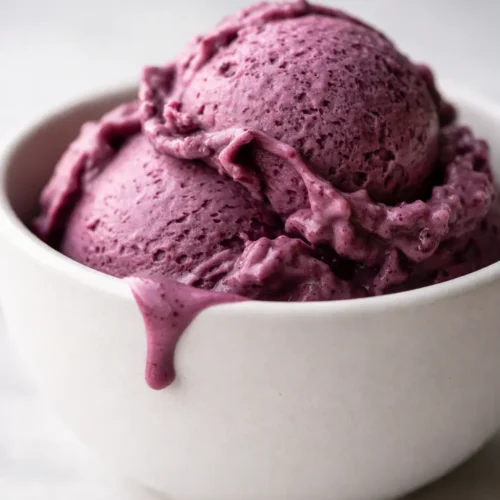
Creamiest Ninja Creami Blueberry Cheesecake Protein Ice Cream
Creamiest Ninja Creami Blueberry Cheesecake Protein Ice Cream. Language: English (US) recipe.
Equipment
- Wire rack
- Rimmed Baking Sheet
- Kitchen twine
- Instant-read thermometer
- Roasting pan
- Carving board
- Chef's Knife
- Wooden Spoon
Ingredients
Ingredients
- 1 whole chicken about 4 to 5 pounds (1.8 to 2.3 kg)
- 1 tablespoon Diamond Crystal kosher salt or 2 teaspoons fine sea salt
- 1 teaspoon freshly ground black pepper
- 1 whole lemon halved
- 6 sprigs fresh thyme plus more for the pan
- 4 cloves garlic smashed
- 2 tablespoons unsalted butter softened
- 1 small yellow onion quartered
- 1 cup low-sodium chicken broth for the pan (240 ml)
Instructions
- Remove the chicken from its packaging and pull any giblets from the cavity—save them for stock or gravy if you like. Do not rinse the bird. Washing raw chicken only splashes bacteria around your sink and counter; the heat of the oven is what makes the meat safe. Instead, pat the chicken dry with paper towels, inside and out, under the wings, everywhere. Use more paper towels than you think you need, then place the bird on a wire rack set inside a rimmed baking sheet.
- Season the cavity with about ¼ teaspoon of the salt and a few grinds of pepper. Then stuff it with the lemon halves, thyme sprigs, smashed garlic, and quartered onion. These aromatics won't just flavor the meat—they'll also keep the cavity moist and feed the pan drippings. Rub the softened butter all over the outside of the chicken, then sprinkle the remaining salt and pepper evenly over the entire surface, including the underside and the wings. Here's a trick I rely on: use the tip of your finger to gently loosen the skin over the breast and the top of each thigh. Slide a few thyme leaves and a tiny smear of butter under the skin. This directly flavors the meat and helps the breast stay moist while it cooks.
- Tuck the wing tips under the body so they don't burn. Then tie the legs together loosely with kitchen twine. A tight, photo-ready truss shields the thighs and makes the dark meat lag behind. Loose is better—you just want the legs to stay in place and hold the aromatics inside.
- Place the chicken in the preheated 425°F (220°C) oven on the middle rack. Roast for fifteen minutes without opening the door. You'll hear the fat start to hiss and pop—that's the skin rendering, and it's one of the best sounds in cooking. Then reduce the oven temperature to 375°F (190°C) and continue roasting. For total cooking time, use this formula: 13 to 15 minutes per pound (0.45 kg) at the reduced temperature, plus the initial 15 minutes at high heat. A 4½-pound chicken will take about 1 hour and 15 minutes to 1 hour 25 minutes total. Start checking at the 1-hour mark if your bird is closer to 4 pounds. Baste once or twice during the last 20 minutes with the juices from the pan—this isn't strictly necessary, but it helps the skin develop an even, glossy sheen.
- About 10 minutes before your calculated time, start checking. Insert your thermometer into the thickest part of the thigh, not touching the bone. When it reads 170°F to 175°F (77°C to 79°C), the bird is done. The breast should read at least 160°F (71°C); it will carry over to a safe 165°F (74°C) while resting. The juices from the thigh should run clear, not pink.
- This is the step most home cooks skip, and it's a shame. Transfer the chicken to a carving board, tilt it slightly to let the juices from the cavity drain into the pan, then rest it, uncovered, for at least 15 minutes. Resting allows the muscle fibers to relax and reabsorb moisture. Carve too early, and those juices end up on the board instead of on your fork.
- While the chicken rests, pour off most of the fat from your roasting pan, leaving the browned bits and about 2 tablespoons of fat. Place the pan over medium-high heat, add the cup of chicken broth, and scrape up the browned bits with a wooden spoon. Let it bubble and reduce until it's thickened just enough to coat a spoon—three to four minutes. Season with a pinch of salt, a squeeze of lemon, and a final crack of black pepper. That's your sauce—silky, intensely chicken-flavored, and perfect over the carved meat.