
Celestine made this cake every spring when the citrus came in — the whole house would smell like sunshine and sugar. She’d pour the warm lemon syrup over the golden Bundt and we’d just stand there watching it soak in, waiting for her to say it was cool enough to cut. This is that cake. The one that tastes like bright, honest lemon in every single bite, stays soft for days, and somehow gets even better by the third slice.
The short version: One bowl, a whisk, 20 minutes of hands-on work, and you get a bright, impossibly moist lemon cake that’ll make your whole kitchen smell like a spring morning.
I’ve made this cake every Easter for the last ten years. Simone starts asking for it in January. That’s the review that matters most.
- Serves: 10-12 as dessert
- Hands-On Time: 20 min | Total Time: 1 hr 20 min (including cooling and syrup soak)
- Difficulty: Easy enough for a Tuesday, pretty enough for Easter brunch
- Cost per serving: ~$1.50
- Calories: ~380 per serving
- Dietary Notes: Vegetarian. Easily adaptable for gluten-free (see swaps below)
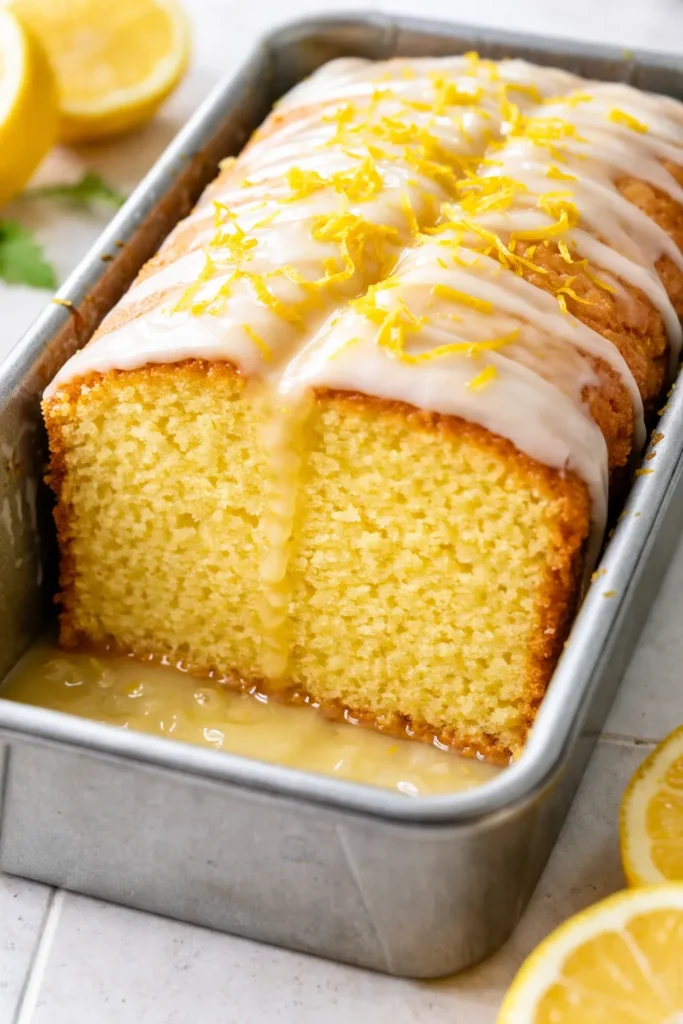
(Photo above: A golden brown Bundt cake on a blue speckled stand, thick lemon icing dripping slowly down the sides. A few thin lemon slices and a sprig of mint sit on the board beside it. Warm afternoon light from the kitchen window catches the glaze.)
The One Step That Makes This Cake Actually Stay Moist
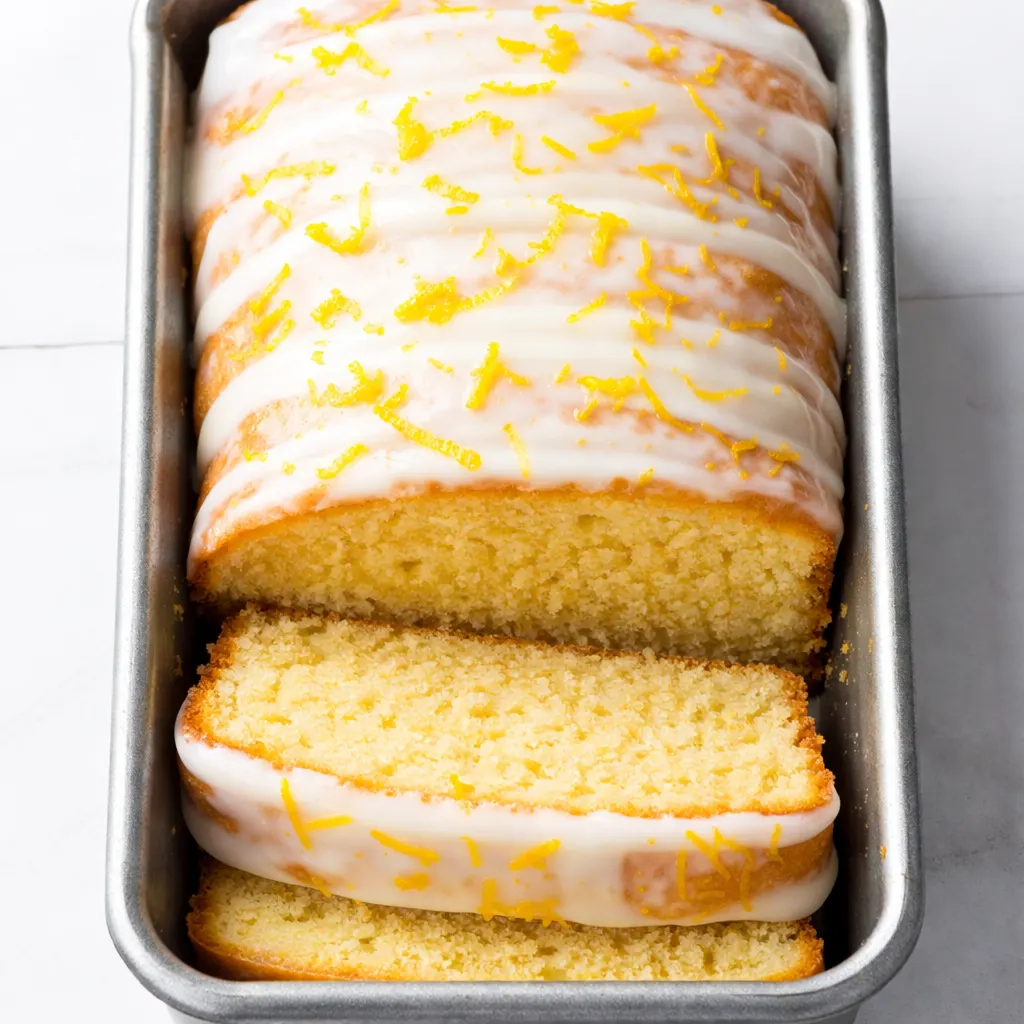
You’ve had dry lemon cake before. We all have. That sad, crumbly thing that tastes more like lemon-scented air than actual fruit. This cake isn’t that. And it comes down to two things: buttermilk in the batter and a hot lemon syrup poured over the warm cake. The buttermilk gives you a tender crumb that doesn’t dry out as it bakes. The syrup soaks into every crevice, adding moisture and a bright citrus punch that hits you right at the front of every bite.
Celestine taught me to bloom the lemon zest in the sugar before adding anything else. You rub them together with your fingers until the sugar looks like wet sand and smells like a lemon tree. That step takes one minute and it releases the essential oils straight into the sugar. No artificial flavoring needed. Just the real thing, distributed evenly through the whole cake.
This is the cake you make when you want something that tastes like you spent hours on it but really just requires a bowl, a whisk, and patience for the syrup to do its job.
Ingredients Worth Talking About (With Real Talk)
- All-purpose flour (2 ½ cups): Not bread flour, not cake flour. AP is the sweet spot here. It gives the cake structure without making it tough.
I use Gold Medal or White Lily depending on what’s in the pantry. Both work. - Granulated sugar (2 cups): This is where the lemon magic starts. You’ll rub the zest into this sugar with your fingers until it smells like you’re standing in a citrus grove.
Don’t use a stand mixer for this step. Your hands are the right tool. - Buttermilk (1 cup): This is non-negotiable. Not regular milk with a splash of vinegar, not thinned yogurt — real, full-fat buttermilk. It’s the moisture secret.
My Walmart carries it. Your grocery store does too. Just buy the real thing. - Lemons (4-5 large): Two for zest and juice in the cake, the rest for the syrup and glaze. If they’re not heavy and fragrant, they won’t give you much flavor.
Get the good ones. The pale, waxy lemons that don’t smell like anything will make a pale, waxy-tasting cake. - Eggs (3 large): Room temperature. I set mine on the counter when I preheat the oven. Cold eggs seize the batter and give you a denser crumb.
Set a timer so you don’t forget them. I’ve made that mistake more times than I’d like to admit. - Butter (1 cup / 2 sticks): Unsalted, softened but not melted. If your butter is too soft, the cake will fall flat in the oven.
Leave it out for about 30 minutes. You want it to give slightly when you press it, not collapse into a puddle. - Vanilla extract (1 tsp): Just enough to round out the citrus. Any more and you’d compete with the lemon.
Pure vanilla, not imitation. This cake is simple enough that the quality of every ingredient shows.
What You Need (It’s Minimal, I Promise)
- Two mixing bowls (one large, one medium)
- A wire whisk and a rubber spatula
- A 10-12 cup Bundt pan (or two 9-inch loaf pans)
- A small saucepan (for the syrup)
- A cooling rack
That’s it. No stand mixer required — a whisk and some arm strength work just fine. If you have a hand mixer, you can use it for creaming the butter and sugar, but it’s not mandatory.
Let’s Make Lemon Cake (Step by Step)
Preheat your oven to 350°F. Butter and flour your Bundt pan like it’s the most important step of the whole recipe — because it is. Get into every groove and crevice. Nobody wants a beautiful cake that doesn’t release from the pan.
Bloom the zest (this is the secret): Put your 2 cups of sugar in a large bowl. Add the zest of 2 lemons. Use your fingertips to rub the zest into the sugar for a full minute, until the sugar looks like wet sand and smells intensely of lemon.
- Cream the butter: Add your 1 cup of softened butter to the bloomed sugar. Whisk until smooth and well combined, about 2 minutes. It should look like a thick, sandy paste.
(📸 Photo tip: Your mixture should look like pale yellow, damp sand. If it’s greasy or separated, your butter was too soft.) - Add the eggs: Whisk in the 3 room-temperature eggs, one at a time, until each is fully incorporated before adding the next. Then whisk in the 1 cup of buttermilk and 1 teaspoon of vanilla. The mixture will look a little curdled — that’s normal.
- Mix the dry ingredients: In a separate bowl, whisk together 2 ½ cups of flour, 2 teaspoons of baking powder, ½ teaspoon of baking soda, and ½ teaspoon of salt.
- Combine wet and dry: Add the dry ingredients to the wet mixture in two additions, whisking gently until just combined after each. Do not overmix. The second the flour disappears, stop.
Overmixed cake is a tough cake. A few small lumps are fine. They’ll bake out. - Bake: Pour the batter into your prepared Bundt pan and smooth the top. Bake at 350°F for 45-50 minutes.
(📸 Photo tip: The cake is done when a toothpick inserted into the center comes out with a few moist crumbs attached — not wet batter. The top should be golden brown and spring back when lightly pressed.) - Make the syrup: While the cake bakes, combine ½ cup of fresh lemon juice (from about 3 lemons) and ¼ cup of granulated sugar in a small saucepan. Simmer over medium heat, stirring occasionally, until the sugar dissolves and the mixture thickens slightly, about 3-4 minutes. Set aside. This is the step that delivers on the “moist and bright” promise.
- Soak the cake: Let the cake cool in the pan for exactly 10 minutes on a wire rack. Then invert it onto the rack. While the cake is still warm, use a pastry brush or a spoon to slowly drizzle and brush the lemon syrup all over the top and sides. You’ll see it absorb immediately. Let the cake cool completely.
This syrup is non-negotiable. Even if you skip the glaze, pour this syrup over the warm cake. - Glaze (optional but recommended): Whisk together 1 ½ cups of powdered sugar with 2-3 tablespoons of fresh lemon juice until smooth. Drizzle over the completely cooled cake.
Make-Ahead Notes (Because We’re All Busy)
This cake actually tastes better the next day. The flavors settle and the syrup has time to work its way through every crumb. I make it the night before, let it cool completely, wrap it tightly, and glaze it the next morning before serving.
- Fridge: Wrapped tightly in plastic wrap, the cake stays moist for 4-5 days. The glaze will soften a bit, but that just makes it even better.
- Freezer: Yes! Freeze the unglazed cake for up to 3 months. Wrap it well in plastic wrap, then a layer of foil. Thaw at room temperature, then add the glaze.
- Reheat: A few seconds in the microwave brings back that just-baked warmth. If you froze a whole cake, let it thaw overnight in the fridge or on the counter.
What I’ve Learned After Making This Cake 50 Times
- Room temperature ingredients aren’t optional. Cold butter doesn’t cream right. Cold eggs seize the batter. Set everything out 30 minutes before you start. Trust me on this one — I’ve made the mistake of rushing it and ended up with a dense, sad cake.
- Don’t overmix the batter. The second the flour disappears, step away. A few lumps are fine. If you keep mixing, you develop the gluten and the cake gets tough. We want soft, not tough.
- The syrup soak is your best friend. Even if you’re short on time and decide to skip the glaze, do not skip pouring that warm lemon syrup over the warm cake. It’s what keeps the cake soft for days and gives it that bright, fresh flavor.
- Cool in the pan for exactly 10 minutes. Any less and the cake will fall apart when you try to unmold it. Any more and the steam will make the outside stick to the pan. Ten minutes is the sweet spot.
- Test your baking powder. If your cake doesn’t rise properly, your baking powder might be old. Pour a little hot water over a teaspoon of it — if it bubbles vigorously, it’s good. If it doesn’t, buy a new can.
Swaps That Actually Work
- Gluten-Free: Use a good 1:1 gluten-free flour blend like Cup4Cup or King Arthur Measure for Measure. I’ve tested this and it works beautifully — just don’t overmix the batter.
- Vegan: Use plant-based butter (I like Miyoko’s), flax eggs (3 tablespoons ground flax + 9 tablespoons water), and a dairy-free yogurt mixed with a little water to thin it out. The texture will be slightly denser but still delicious.
- Blueberry Lemon: Fold in 1 cup of fresh or frozen blueberries tossed in a tablespoon of flour. This is Simone’s favorite version. The berries burst and create little jammy pockets in the cake.
- Lime or Orange: Swap the lemon zest and juice for lime or orange. The orange version is incredibly fragrant and a little sweeter. The lime version tastes like key lime pie in cake form.
The Questions I Get About This Cake All the Time
Q: Why did my cake stick to the pan?
A: Ugh, the absolute worst. Make sure you’re using a generous layer of softened butter (not melted, not spray) and flour. Use a pastry brush to get into every single crevice of the pan. And stick to that 10-minute cooling time — that’s the exact window where the cake has firmed up enough to hold its shape but hasn’t had time to sweat and stick to the pan.
Q: Can I use bottled lemon juice?
A: Please don’t. It has a flat, metallic taste that really stands out in a simple cake like this. Fresh lemons are the whole point of this recipe. You need the zest for the bloom and the fresh juice for the syrup and glaze. It’ll cost you a couple extra dollars but it makes all the difference.
Q: How long does this cake last?
A: Wrapped tightly on the counter, 4-5 days. It actually gets better by day two or three because the syrup has fully distributed through the crumb. I store it under a glass cake dome and it stays perfectly moist.
Q: What do you serve with it?
A: A cup of strong coffee or a big glass of iced tea is all you need. A dollop of lightly sweetened whipped cream or a scoop of vanilla ice cream if you’re feeling fancy. Simone eats it plain, straight off the plate, usually before I’ve even finished slicing it.
More Recipes My Family Makes on Repeat
If you liked this one, here are a few others that get the same reaction at our table:
- [INTERNAL LINK PLACEHOLDER: My Grandmother’s Pound Cake] — Dense, buttery, and perfect with fresh strawberries and cream.
- [INTERNAL LINK PLACEHOLDER: Brown Butter Banana Bread] — The one my kids ask for when the bananas go spotty on the counter.
- [INTERNAL LINK PLACEHOLDER: Simple Citrus Glaze] — The formula I use for every cake, scone, and muffin that needs a bright finish.
This cake is the first thing I bake when I need to remind myself that simple food made well is worth the time. I hope it becomes that for you too. If you make it, drop a comment below or tag me on Instagram — I love seeing your cakes and hearing who in your family claimed the first slice.
📌 This soft, moist & bright lemon cake recipe stays fresh for days and gets even better by the second day — save it for your next spring brunch or Sunday dessert.
My Grandmother’s Lemon Cake That’s Soft, Moist & Bright Enough to Wake You Up
Equipment
- Two mixing bowls (one large, one medium)
- Wire whisk and rubber spatula
- 10-12 cup Bundt pan (or two 9-inch loaf pans)
- Small saucepan
- Cooling rack
Ingredients
- 2 1/2 cups all-purpose flour
- 2 cups granulated sugar
- 1 cup buttermilk (full-fat, real)
- 4-5 large lemons (2 for zest/juice in cake, rest for syrup and glaze)
- 3 large eggs (room temperature)
- 1 cup (2 sticks) unsalted butter (softened but not melted)
- 1 teaspoon vanilla extract (pure)
- 2 teaspoons baking powder
- 1/2 teaspoon baking soda
- 1/2 teaspoon salt
For the Syrup
- 1/2 cup fresh lemon juice (from about 3 lemons)
- 1/4 cup granulated sugar
For the Glaze (optional)
- 1 1/2 cups powdered sugar
- 2-3 tablespoons fresh lemon juice
Instructions
- Preheat your oven to 350°F. Butter and flour your Bundt pan thoroughly — get into every groove. This step is non-negotiable.
- Bloom the zest (the secret): Put 2 cups of sugar in a large bowl. Add the zest of 2 lemons. Use your fingertips to rub the zest into the sugar for a full minute, until the sugar looks like wet sand and smells intensely of lemon.
- Cream the butter: Add 1 cup of softened butter to the bloomed sugar. Whisk until smooth and well combined, about 2 minutes. It should look like pale yellow, damp sand.
- Add the eggs: Whisk in 3 room-temperature eggs, one at a time, until each is fully incorporated. Then whisk in 1 cup of buttermilk and 1 teaspoon of vanilla. The mixture will look a little curdled — that’s normal.
- Mix dry ingredients: In a separate bowl, whisk together 2 1/2 cups flour, 2 teaspoons baking powder, 1/2 teaspoon baking soda, and 1/2 teaspoon salt.
- Combine wet and dry: Add dry ingredients to wet in two additions, whisking gently until just combined after each. Do not overmix. A few small lumps are fine.
- Bake: Pour batter into prepared Bundt pan and smooth the top. Bake at 350°F for 45-50 minutes, until a toothpick inserted in the center comes out with a few moist crumbs (not wet batter).
- Make the syrup: While cake bakes, combine 1/2 cup fresh lemon juice and 1/4 cup granulated sugar in a small saucepan. Simmer over medium heat, stirring occasionally, until sugar dissolves and mixture thickens slightly, about 3-4 minutes. Set aside.
- Soak the cake: Let cake cool in pan exactly 10 minutes on a wire rack. Invert onto rack. While still warm, use a pastry brush or spoon to slowly drizzle and brush the lemon syrup all over the top and sides. Let cool completely.
- Glaze (optional but recommended): Whisk together 1 1/2 cups powdered sugar with 2-3 tablespoons fresh lemon juice until smooth. Drizzle over completely cooled cake.
Notes
Related posts:
 Coconut Flour Banana Bread Muffins That Stay Moist for Days (Not Crumbly)
 My Go-To Ground Beef Stroganoff with the Velvety Sauce That Takes 30 Minutes
 Simple Salisbury Steak That’s Actually Rich and Savory — in 40 Minutes
 My Go-To Asian-Style Ground Beef Lettuce Wraps: Faster Than Delivery, Crispier Than Restaurant Versions