
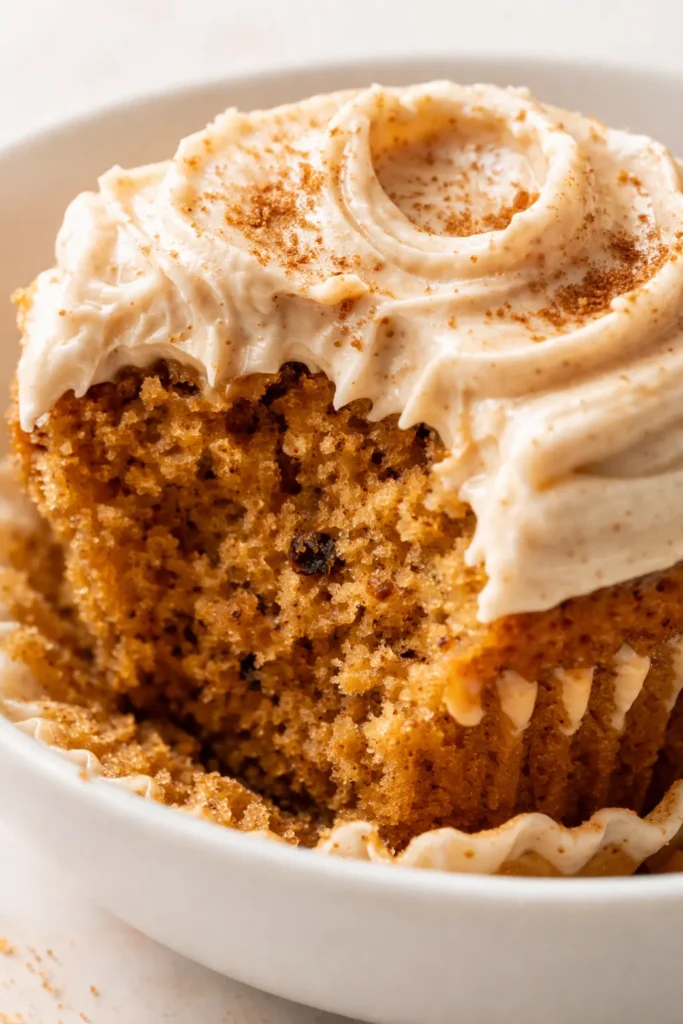
That first bite — the way the soft, spiced crumb melts into the tangy-sweet frosting — is the exact moment I knew this was the recipe. I’d been testing pumpkin cupcakes for weeks, and every version either came out dry or the frosting slid right off. This batch? The cupcakes stayed tender for three days, and the brown sugar cream cheese frosting held its swirl like a dream. My neighbor actually texted me at 9 p.m. asking for the recipe after I dropped off a few.
I’ve made these at least a dozen times since, and they’ve become my go-to for fall birthdays, Thanksgiving dessert tables, and those cozy weekend afternoons when all you want is a good cupcake and a quiet house. The aroma of pumpkin spice toasting in the oven fills the kitchen with cinnamon, ginger, and clove — warm and inviting, like October in a single breath.
The first couple of times I made these, the frosting came out too loose. I wasn’t letting the cream cheese come fully to room temperature, so it never emulsified properly with the butter. That thin frosting would pool around the cupcake base instead of holding a clean swirl. Batch three I let both the butter and cream cheese sit out for a full hour, and I pressed the European cream cheese between paper towels to wick away extra moisture. The difference was immediate: the frosting whipped up thick and silky, and the swirl stayed sharp for two days in the fridge. Now I won’t rush that step.
Most pumpkin cupcake recipes rely solely on butter for fat, but here I use vegetable oil at room temperature. Oil stays liquid at room temperature, so it coats the flour proteins in a way that prevents too much gluten formation — that’s what keeps the crumb soft even after a day or two. Pumpkin purée itself also brings natural moisture and a subtle sweetness that lets you dial back the sugar just enough.
At 320°F, the lower oven temperature gives the centers time to set before the edges over-brown, which is a common issue with standard 350°F baking for pumpkin batters. According to USDA nutritional data, one serving of these cupcakes provides roughly 8% of the daily recommended intake of vitamin A, thanks to the pumpkin purée. That dark brown sugar in the frosting isn’t just for sweetness — it adds a subtle molasses note that plays off the tangy cream cheese in a way regular powdered sugar frosting just can’t match.
- Serves: 12 as a dessert
- Hands-On Time: 30 min | Total Time: 55 min
- Difficulty: Easy enough for a weekday bake — just don’t skip bringing the dairy to room temperature
- Cost per serving: ~$1.40
- Nutrition Estimate: 405 Calories, 4g Protein, 49g Carbs, 22g Fat, 11g Saturated Fat, 1g Fiber, 285mg Sodium per serving
- Dietary Notes: Naturally vegetarian. Easily adaptable for gluten-free or dairy-free.
(Photo above: overhead shot of 12 pumpkin cupcakes on a rustic wooden board, each topped with a tall swirl of brown sugar cream cheese frosting, a small fondant pumpkin resting on the swirl, warm golden afternoon light coming from the left, crumbs scattered casually on the board.)
Everything You Need for These Pumpkin Cupcakes (Plus My Honest Notes)
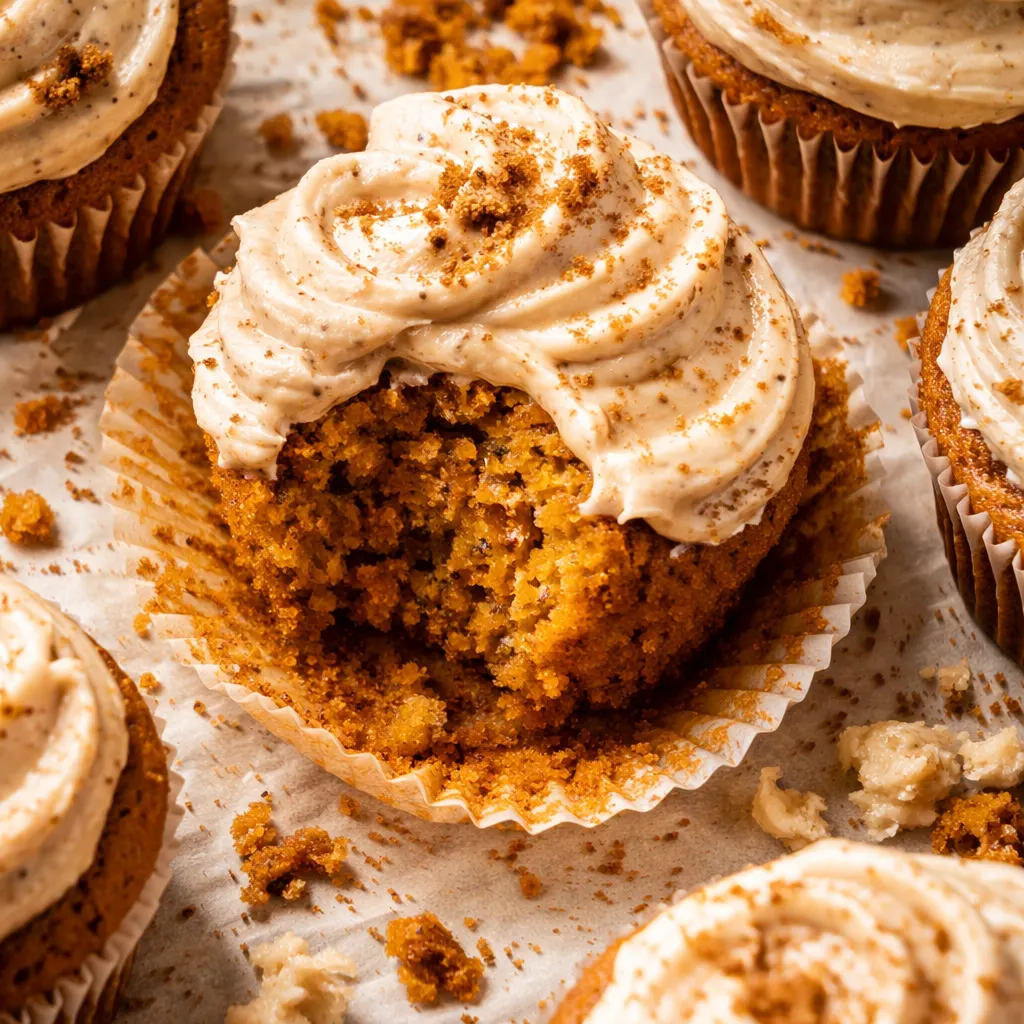
- 170 g all-purpose flour (about 1⅓ cups): The base structure. Spoon and level it — don’t scoop directly from the bag, or you’ll end up with dense cupcakes. I use a digital scale for this one; it’s worth it.
- 1¼ teaspoon baking powder + ¼ teaspoon baking soda: The double leavening gives lift without that metallic aftertaste baking soda alone can leave. Check the expiration dates — old baking powder is the number one reason cupcakes don’t rise.
- ½ teaspoon salt: Balances the sweetness and amplifies the pumpkin spice. Don’t skip it.
- 2½ teaspoon pumpkin spice: The warm backbone of the whole recipe. If you’re out, use 1 tsp cinnamon, ½ tsp ginger, ¼ tsp nutmeg, ¼ tsp allspice, and ¼ tsp cloves. I make my own blend every fall and store it in a little tin.
- 225 g dark brown sugar (about 1 cup, packed): Adds moisture and a deeper flavor than granulated or light brown. Pack it firmly when measuring by volume. This is non-negotiable — light brown sugar won’t give the same molasses depth.
- 280 g pumpkin purée, room temperature (about 1¼ cups): Not pumpkin pie filling — that has added sugar and spices that will throw off the balance. Room temperature blends into the batter more evenly. Cold purée can seize the oil and create lumps.
- 75 g vegetable oil, room temperature (about ⅓ cup): Keeps the cupcakes moist for days. Any neutral oil works — canola, grapeseed, or avocado oil are all fine. I use avocado oil because it’s neutral and has a higher smoke point.
- 2 eggs, room temperature: Cold eggs will stiffen the oil and make the batter difficult to mix evenly. Set them out an hour before you start, or place them in a bowl of warm water for 10 minutes.
- 1 teaspoon vanilla extract: Rounds out the spice flavors. Use pure vanilla if you have it.
- 200 g butter (about 1 cup / 2 sticks): For the frosting. Must be at room temperature — cold butter won’t cream properly and will leave lumps. I take mine out at the same time as the eggs.
- 15 g dark brown sugar (about 1 tablespoon, packed): Added to the butter during creaming for that extra molasses note in the frosting.
- 100 g full-fat cream cheese, room temperature (about 3.5 oz): Low-fat cream cheese has too much water and will make the frosting runny. If using European cream cheese (like Boursin or a block-style), press it between paper towels to soak up excess moisture.
- 345 g powdered sugar, sifted (about 2¾ cups): Sifting is critical — clumps won’t break down fully in the frosting and you’ll have tiny lumps. I sift straight into the mixer bowl to save a dish.
- ½ teaspoon vanilla extract: For the frosting. A second pop of vanilla ties everything together.
What to Pull Out Before You Start
- Oven — preheating to 160ºC (320ºF) conventional setting
- 12-cup cupcake tray
- Cupcake liners (paper or foil both work)
- Large bowl for dry ingredients
- Mixing bowl for wet ingredients
- Whisk (for wet ingredients) and a rubber spatula (for folding)
- Cooling rack
- Paper towels — for pressing moisture out of cream cheese
- Stand mixer with paddle attachment
- Piping bag fitted with a round tip (Wilton 1A or similar)
- Cake tester or a toothpick
- Sifter for the powdered sugar
Let’s Make These Pumpkin Cupcakes (Step by Step, My Exact Process)
I like to get everything measured and set out before I turn on the mixer — it makes the whole process feel calm and intentional. The scent of pumpkin spice and vanilla starts to fill the air as soon as the wet ingredients come together, and by the time those cupcakes hit the oven, your kitchen will smell like a fall candle come to life.
Prep and preheat: Set the oven to 160ºC (320ºF) using the conventional setting. Place an oven thermometer in the middle rack so you know it’s accurate — ovens vary. Line a 12-cup cupcake tray with paper liners — no need to grease them.
- Combine the dry ingredients: In a large bowl, whisk together the all-purpose flour, dark brown sugar, baking powder, baking soda, pumpkin spice, and salt. Make sure the brown sugar is broken up with your fingers if it’s clumpy — those lumps won’t dissolve in the batter. I give it a good 30 seconds of whisking to aerate everything.
- Whisk the wet ingredients: In a separate mixing bowl, whisk together the pumpkin purée, vegetable oil, eggs, and vanilla extract until the mixture is completely smooth and uniform. The color should be a consistent golden orange with no streaks of egg white. You’ll hear the whisk slap against the bowl as the ingredients meld into a single, glossy liquid. Room-temperature ingredients blend in about 20 seconds — cold ones take more elbow grease.
- Fold the wet into the dry: Pour the wet mixture into the dry bowl. Use a rubber spatula to fold gently, scraping the bottom and sides until no dry flour pockets remain. Stop as soon as the batter is smooth — overmixing will make the cupcakes tough. The batter will be fairly thick and smooth, a deep pumpkin-orange that smells of warm spice. The batter should be thick but not stiff — it should drop from the spatula in a single, slow ribbon.
- Fill the liners: Divide the batter evenly among the 12 liners. I use a ¼-cup scoop for even portions, but you can also eyeball it — each liner should be about two-thirds full. If you fill them to the top, they’ll overflow and lose that nice dome.
- Bake: Place the tray in the preheated oven and bake for 23–24 minutes. Start checking at 22 minutes — ovens vary. The cupcake is done when a cake tester inserted into the center comes out clean with no wet batter clinging to it. The edges should be lightly golden and the center should spring back when you gently press it. I always check two cupcakes — one in the center of the tray and one near the edge — because the center ones sometimes need an extra minute.
- Cool: Remove the tray from the oven and set it on a cooling rack. After exactly 5 minutes, lift the cupcakes out of the tin and let them cool completely on the rack. The steam that escapes will carry the final notes of spice and caramelized sugar. If you leave them in the tin too long, the bottoms will get soggy from trapped steam.
- Prepare the frosting ingredients: While the cupcakes cool, let the butter and cream cheese come to room temperature if you haven’t already. If you’re using European cream cheese, place it between two paper towels and press gently to absorb excess liquid. You’ll see the paper towel darken slightly — that’s exactly the moisture you want to remove. Cut the butter into cubes for even creaming. Sift the powdered sugar into a bowl — don’t skip this step.
- Cream the butter and brown sugar: In the stand mixer bowl with the paddle attachment, cream the cubed butter and dark brown sugar together on high speed for 5 minutes. Stop and scrape down the sides, then mix for another 2 minutes. The mixture should be pale, fluffy, and almost doubled in volume. The sound of the paddle hitting the side of the bowl will change from a slosh to a soft, airy thump. This full 7 minutes is what creates that light, airy frosting texture.
- Add cream cheese and vanilla: Drop in the cream cheese and vanilla extract, then blend on medium speed for 1 minute until smooth and creamy. Don’t overmix here — you want it combined, not whipped further. The frosting will go from a pale beige to a smooth, creamy tan. Overmixing after adding cream cheese can make the frosting thin.
- Add powdered sugar: Turn the mixer to low speed and gradually add the sifted powdered sugar in two parts. Let the first addition fully incorporate before adding the second. Once all the sugar is in, scrape down the sides, then mix on medium speed for a final 2 minutes until the frosting is light, fluffy, and holds a stiff peak. Lift the paddle: the frosting should cling to it without sliding off. If it looks too soft after 2 minutes, give it another 30 seconds — it firms up as the sugar dissolves.
- Pipe and decorate: Transfer the frosting to a piping bag fitted with a round tip (Wilton 1A is perfect). Pipe a tall swirl onto each cooled cupcake — start at the outer edge and work your way inward, lifting straight up at the end for a clean peak. Optionally, top with a fondant pumpkin or a light dusting of pumpkin spice or cinnamon. The swirl should hold its shape even after you walk away. I like to do a small test swirl on a plate first to make sure the consistency is right.
How I Meal Prep These for the Week (Or for a Party)
If I’m making these for a weekend gathering, I often bake the cupcakes two days ahead and store them unfrosted. The day of the event, I make the frosting fresh — it takes exactly 10 minutes — and pipe it on. That way the frosting is at its fluffiest, and the cupcakes have had time for the spices to settle into the crumb.
- Fridge: Store frosted cupcakes in an airtight container in the fridge for up to 4 days. Let them sit at room temperature for 20 minutes before serving — the frosting softens and the cupcake feels less dense.
- Freezer: Yes, unfrosted pumpkin cupcakes freeze beautifully. Wrap each one individually in plastic wrap, then place in a zip-top bag. Freeze for up to 2 months. Thaw at room temperature for about an hour before frosting. I would not freeze already-frosted cupcakes — the frosting can separate when thawed.
- Reheat: If you want that just-baked warmth, microwave an unfrosted cupcake for 10 seconds. Do not microwave the frosting — it will melt and slide right off.
Things I Wish I’d Known the First Time (After Making These a Dozen Times)
- Don’t skip the paper towel trick with European cream cheese: Standard American cream cheese blocks are already relatively dry, but European-style or spreadable cream cheese has a much higher moisture content. Pressing it between paper towels for a minute before mixing removes just enough water to keep the frosting from turning into soup. I learned this the hard way when my first batch of frosting wouldn’t hold a swirl at all.
- Let the cupcakes cool completely — like, completely: I know it’s tempting to frost them while they’re still slightly warm, but even a tiny bit of residual heat will melt the cream cheese frosting into a puddle. I wait at least 45 minutes after they come out of the oven, sometimes a full hour. The bottom of the liner should feel cool to the touch.
- Sift the powdered sugar even if you think it’s fine: Pre-sifted powdered sugar still develops clumps during storage. Those clumps won’t break down in the mixer, and you’ll end up with little white lumps in your beautiful brown frosting. Sifting takes 30 seconds and saves you from frustration. Even if you mess this part up a little, it’ll still taste good — I’ve done it.
- Use the conventional oven setting, not convection: Convection ovens run hotter and the fan can cause the cupcakes to dome unevenly or dry out the edges. If you only have a convection setting, reduce the temperature to 150°C (300°F) and check at 20 minutes.
Swaps That Actually Work (Without Ruining the Recipe)
- Gluten-free: Use a 1:1 gluten-free all-purpose flour blend that contains xanthan gum (I like King Arthur Measure for Measure). The batter will be slightly thicker, but the texture holds up beautifully. Don’t skip the cooling time — gluten-free cupcakes benefit from setting fully before frosting.
- Dairy-free: Swap the butter in the frosting for a high-quality plant-based butter (I use Miyoko’s or Country Crock Plant Butter) and use a dairy-free cream cheese alternative. The frosting will be slightly softer, so pipe it right after mixing and refrigerate for 30 minutes to set.
- Egg-free: Replace each egg with ¼ cup of unsweetened applesauce. The cupcakes will be a touch denser and a little more moist, but the flavor is still spot-on.
- Extra pumpkin spice: If you love a strong spice hit, add an extra ½ teaspoon of pumpkin spice to the dry ingredients. It won’t overwhelm — the brown sugar and cream cheese in the frosting balance it out nicely.
- Mini cupcakes: Use a mini cupcake tray and reduce baking time to 10–12 minutes. This makes about 36 mini pumpkin cupcakes — perfect for a party spread.
Common Questions
Q: Why did my cream cheese frosting turn out runny?
A: The most common reason is that the cream cheese was too cold or too warm. If it’s cold, it won’t emulsify with the butter properly, leaving a grainy, watery mess. If it’s too warm (above 70°F), the frosting won’t hold structure. Make sure both the butter and cream cheese are at a comfortable room temperature — around 68°F to 70°F. If your kitchen is especially warm, refrigerate the finished frosting for 15 minutes before piping to firm it up.
Q: Can I use pumpkin pie filling instead of pumpkin purée?
A: No — pumpkin pie filling is pre-sweetened and spiced, so it will throw off the sugar and spice balance completely. The cupcakes would come out overly sweet and the texture would be denser and gummier. Stick with 100% pumpkin purée. If you only have pumpkin pie filling on hand, you’d need to reduce the brown sugar and the pumpkin spice, but I honestly wouldn’t recommend it — just grab a can of purée.
Q: How do I know when the cupcakes are done without overbaking?
A: Use three cues: first, the edges should be lightly golden and just starting to pull away from the liners. Second, the center of the cupcake should spring back when you gently press it with your fingertip — if it leaves a dent, it needs more time. Third and most reliable, insert a cake tester or toothpick into the center of a cupcake; it should come out clean or with a few dry crumbs, not wet batter. Start checking at 22 minutes even if the recipe says 24 — ovens vary, and it’s better to underbake slightly than overbake.
Q: Can I make these vegan?
A: Yes, with a few adjustments. Use a flax egg (1 tablespoon ground flaxseed mixed with 3 tablespoons water per egg, let sit for 5 minutes) or a commercial egg replacer. Replace the butter in the frosting with a vegan butter stick and use a vegan cream cheese like Tofutti or Violife. The vegan frosting will be a bit softer, so refrigerate the piped cupcakes for 20 minutes to set. The texture is still delicious — just a little less sturdy than the dairy version.
These pumpkin cupcakes have become my signature fall bake — the ones I bring to every Friendsgiving, the ones my family asks for by name the second the weather turns cool. I hope they become that for you too.
If you try them, drop a comment below — I love hearing how they turn out in your kitchen. Tag me on Pinterest so I can see your swirl!
📌 These pumpkin cupcakes with brown sugar cream cheese frosting stay moist for days — save this recipe for your next fall gathering, bake sale, or cozy weekend baking project.
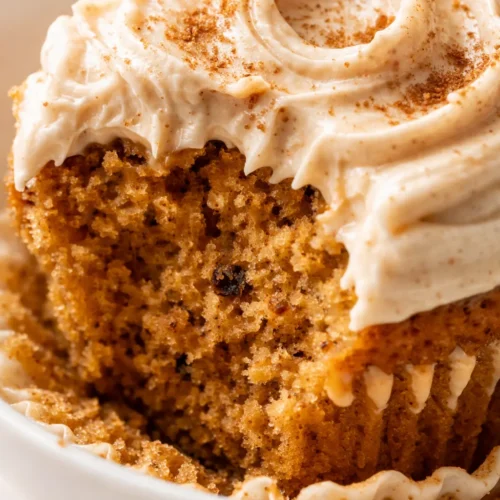
Pumpkin Cupcakes with Brown Sugar Cream Cheese Frosting That Taste Like Fall in Every Bite — Ready in 55 Minutes
Equipment
- Oven
- 12-cup cupcake tray
- Cupcake liners
- Large Bowl
- Mixing Bowl
- Whisk
- Rubber spatula
- Cooling rack
- Paper Towels
- Stand mixer with paddle attachment
- Piping bag with round tip
- Cake tester or toothpick
- Sifter
Ingredients
For the Cupcakes
- 170 g all-purpose flour Spoon and level — don’t scoop directly from the bag.
- 1.25 teaspoon baking powder
- 0.25 teaspoon baking soda
- 0.5 teaspoon salt
- 2.5 teaspoon pumpkin spice If making your own, use 1 tsp cinnamon, ½ tsp ginger, ¼ tsp nutmeg, ¼ tsp allspice, ¼ tsp cloves.
- 225 g dark brown sugar packed
- 280 g pumpkin puree room temperature, not pie filling
- 75 g vegetable oil room temperature, neutral oil like avocado or canola
- 2 large eggs room temperature
- 1 teaspoon vanilla extract
For the Frosting
- 200 g butter room temperature
- 15 g dark brown sugar packed
- 100 g full-fat cream cheese room temperature, European style: press between paper towels
- 345 g powdered sugar sifted
- 0.5 teaspoon vanilla extract
Instructions
- Prep and preheat: Set the oven to 160ºC (320ºF) using the conventional setting. Place an oven thermometer in the middle rack so you know it’s accurate — ovens vary. Line a 12-cup cupcake tray with paper liners — no need to grease them.
- Combine the dry ingredients: In a large bowl, whisk together the all-purpose flour, dark brown sugar, baking powder, baking soda, pumpkin spice, and salt. Make sure the brown sugar is broken up with your fingers if it’s clumpy — those lumps won’t dissolve in the batter. I give it a good 30 seconds of whisking to aerate everything.
- Whisk the wet ingredients: In a separate mixing bowl, whisk together the pumpkin purée, vegetable oil, eggs, and vanilla extract until the mixture is completely smooth and uniform. The color should be a consistent golden orange with no streaks of egg white. You’ll hear the whisk slap against the bowl as the ingredients meld into a single, glossy liquid. Room-temperature ingredients blend in about 20 seconds — cold ones take more elbow grease.
- Fold the wet into the dry: Pour the wet mixture into the dry bowl. Use a rubber spatula to fold gently, scraping the bottom and sides until no dry flour pockets remain. Stop as soon as the batter is smooth — overmixing will make the cupcakes tough. The batter will be fairly thick and smooth, a deep pumpkin-orange that smells of warm spice. The batter should be thick but not stiff — it should drop from the spatula in a single, slow ribbon.
- Fill the liners: Divide the batter evenly among the 12 liners. I use a ¼-cup scoop for even portions, but you can also eyeball it — each liner should be about two-thirds full. If you fill them to the top, they’ll overflow and lose that nice dome.
- Bake: Place the tray in the preheated oven and bake for 23–24 minutes. Start checking at 22 minutes — ovens vary. The cupcake is done when a cake tester inserted into the center comes out clean with no wet batter clinging to it. The edges should be lightly golden and the center should spring back when you gently press it. I always check two cupcakes — one in the center of the tray and one near the edge — because the center ones sometimes need an extra minute.
- Cool: Remove the tray from the oven and set it on a cooling rack. After exactly 5 minutes, lift the cupcakes out of the tin and let them cool completely on the rack. The steam that escapes will carry the final notes of spice and caramelized sugar. If you leave them in the tin too long, the bottoms will get soggy from trapped steam.
- Prepare the frosting ingredients: While the cupcakes cool, let the butter and cream cheese come to room temperature if you haven’t already. If you’re using European cream cheese, place it between two paper towels and press gently to absorb excess liquid. You’ll see the paper towel darken slightly — that’s exactly the moisture you want to remove. Cut the butter into cubes for even creaming. Sift the powdered sugar into a bowl — don’t skip this step.
- Cream the butter and brown sugar: In the stand mixer bowl with the paddle attachment, cream the cubed butter and dark brown sugar together on high speed for 5 minutes. Stop and scrape down the sides, then mix for another 2 minutes. The mixture should be pale, fluffy, and almost doubled in volume. The sound of the paddle hitting the side of the bowl will change from a slosh to a soft, airy thump. This full 7 minutes is what creates that light, airy frosting texture.
- Add cream cheese and vanilla: Drop in the cream cheese and vanilla extract, then blend on medium speed for 1 minute until smooth and creamy. Don’t overmix here — you want it combined, not whipped further. The frosting will go from a pale beige to a smooth, creamy tan. Overmixing after adding cream cheese can make the frosting thin.
- Add powdered sugar: Turn the mixer to low speed and gradually add the sifted powdered sugar in two parts. Let the first addition fully incorporate before adding the second. Once all the sugar is in, scrape down the sides, then mix on medium speed for a final 2 minutes until the frosting is light, fluffy, and holds a stiff peak. Lift the paddle: the frosting should cling to it without sliding off. If it looks too soft after 2 minutes, give it another 30 seconds — it firms up as the sugar dissolves.
- Pipe and decorate: Transfer the frosting to a piping bag fitted with a round tip (Wilton 1A is perfect). Pipe a tall swirl onto each cooled cupcake — start at the outer edge and work your way inward, lifting straight up at the end for a clean peak. Optionally, top with a fondant pumpkin or a light dusting of pumpkin spice or cinnamon. The swirl should hold its shape even after you walk away. I like to do a small test swirl on a plate first to make sure the consistency is right.
Related posts:
 This Raspberry Lemon Cake With White Chocolate Is the Only Layer Cake You Need for Spring Celebrations
 Peach Cobbler That Bakes Its Own Crust (Golden, Juicy, 40 Minutes)
 Snickerdoodle Zucchini Bread That’s Moist, Swirled, and Secretly Good for You
 The Gluten-Free Chocolate Zucchini Bread You’d Never Guess Is Gluten-Free (It’s Rich, Moist & Impossible to Stop Eating)