TLDR: A light, airy Biscoff-infused sponge gets drenched in a warm cookie butter milk mixture, then chilled until velvety smooth. The key is folding the egg whites gently for lift and letting the cake soak overnight for the most luscious, spoon-tender texture you can imagine. It’s a showstopper for summer parties and holiday tables alike.
The first time I made this cookie butter tres leches cake, I didn’t expect the Biscoff to melt into the milk mixture quite like it did — leaving little cinnamon-gold veins throughout the sponge. My husband, who claims he “doesn’t have a sweet tooth,” ate three pieces. Three. I’ve made it for birthdays, for no reason at all, and every single time, the pan comes back empty. It’s the dessert that converts people. That nostalgic snickerdoodle warmth, soaked in a creamy milk bath, makes every single bite taste like a hug.
- Serves: 12 as a generous dessert
- Hands-On Time: 35 min | Total Time: 4 hrs 35 min (or overnight)
- Difficulty: Medium — separating eggs and whipping whites takes a little patience, but the rest is a breeze
- Cost per serving: Approximately $2.50
- Nutrition Estimate: 490 Calories, 9g Protein, 53g Carbs, 28g Fat, 16g Saturated Fat, 1g Fiber, 330mg Sodium per serving
- Dietary Notes: Contains gluten, dairy, and eggs
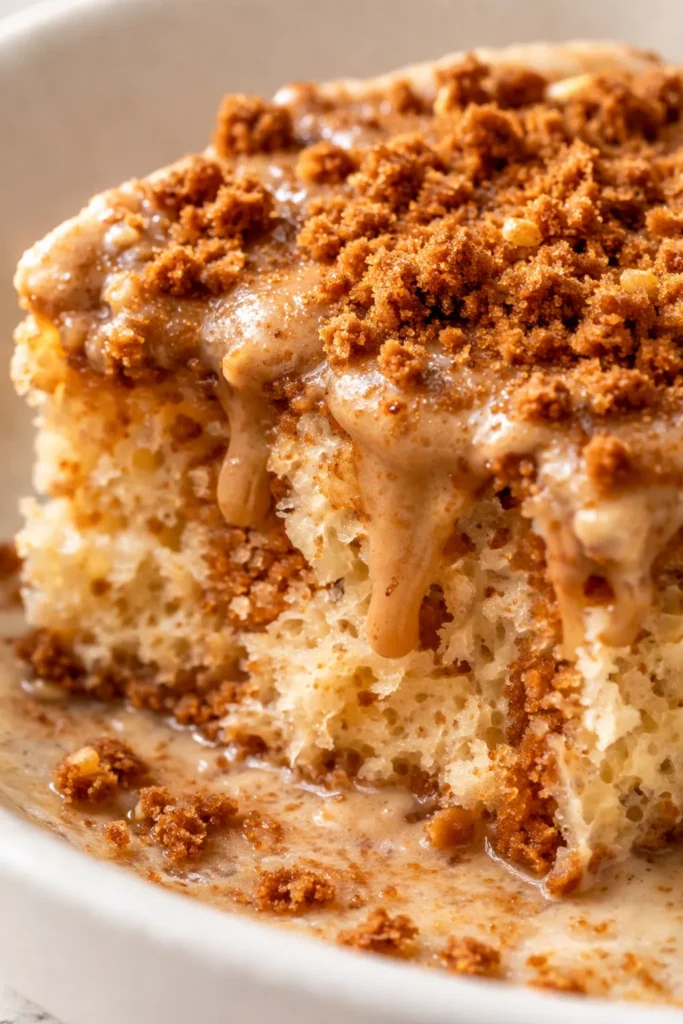
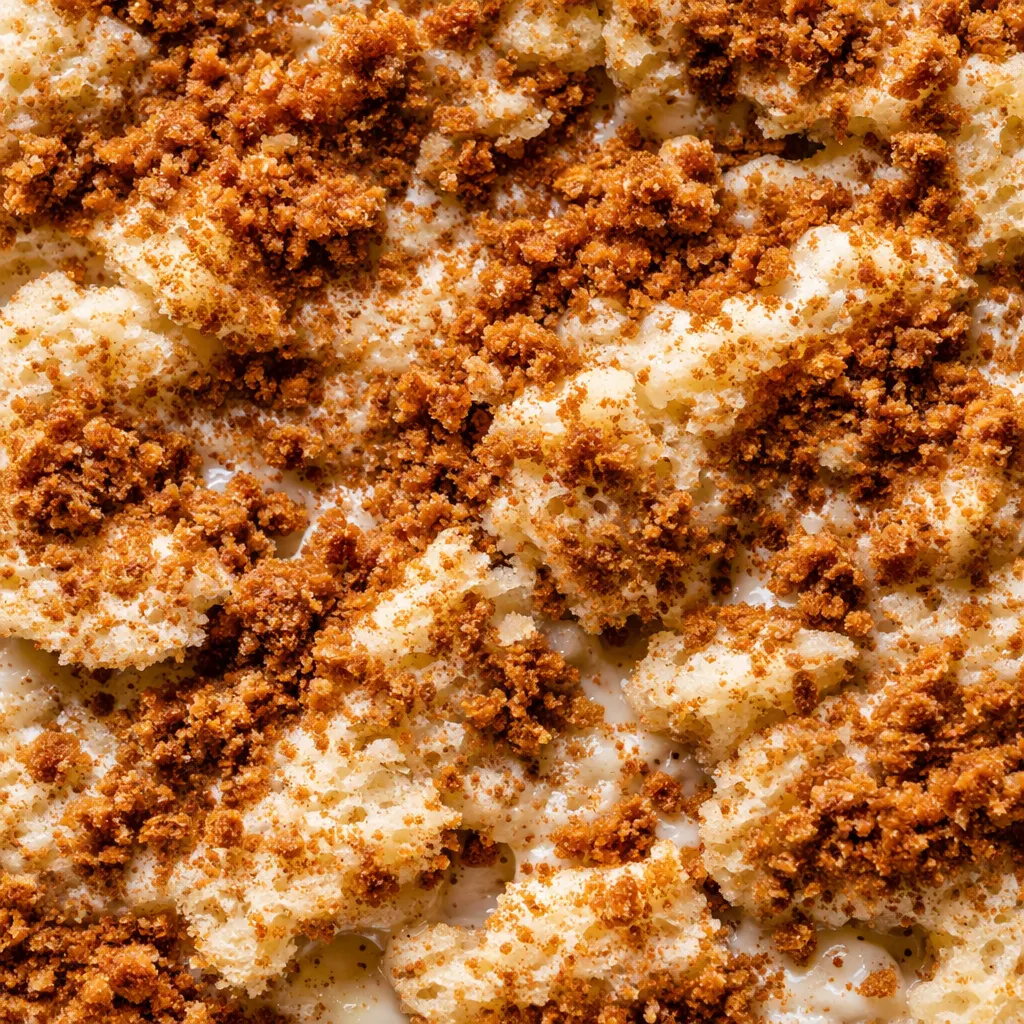
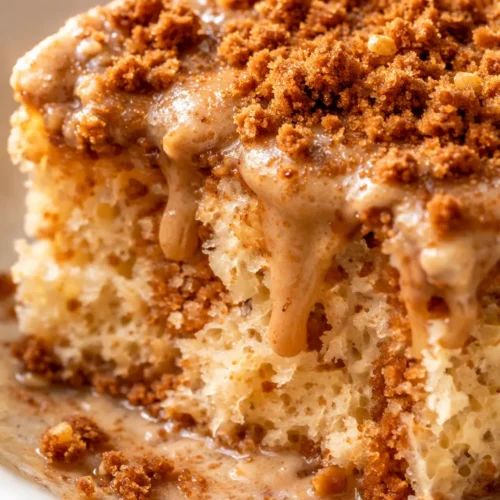
(Photo above: An overhead shot of the finished cake in a 9×13 baking dish, a perfect square cut out and lifted to show the honeycombed, milk-soaked crumb. The top is blanketed in smooth cinnamon whipped cream, dusted with finely crushed Biscoff cookies, and caught in warm, golden-hour light.)
The Testing Narrative: How I Got This Biscoff Tres Leches Cake Right
I learned the hard way that you can’t rush the egg whites in this cake. My first attempt was flat and dense because I under-whipped them and stirred instead of folded. The crumb was tough — like a cookie butter hockey puck. I knew I had to nail the meringue technique.
Batch two was a soaking disaster. I poked a few holes and poured the milk over the top. It puddled in the center and left the edges completely dry. Lesson learned: you need dozens of holes, poked all the way down, while the cake is still warm.
Batch three was the keeper. The crumb was airy, the soak had penetrated every corner, and the top had that signature cloud of cinnamon cream. Now it’s the only way I make this cookie butter version, and I’ll never look back.
Why Cookie Butter Works Magic in a Tres Leches Cake
Traditional tres leches cake is all about the tender sponge and the soak. This version adds a layer of spiced, caramelized flavor. The smell of Biscoff warming in the microwave — a deep, brown sugar and cinnamon scent — is intoxicating. It melds perfectly with the sweet milk mixture, creating something warm and familiar yet completely new.
Warming the cookie butter before whisking it into the three milks is the non-negotiable trick. If you add cold cookie butter, it seizes into hard little bits and won’t create that silky, unified soak. When it’s warm, it dissolves completely, infusing every single bite with its signature flavor. The result is a cake that tastes like a snickerdoodle cookie melted into a cloud.
Everything You Need (Plus a Few Honest Notes)
Every ingredient here plays a specific role. Don’t skip the ones I call out as important — they’re the difference between a good cake and a legendary one.
- 1½ cups (210g) cake flour: Cake flour gives this sponge the delicate, airy crumb it needs to soak up all that milk without turning into paste. All-purpose flour will make it tougher, so stick with cake flour.
- ½ cup (65g) Biscoff cookies, finely ground: A fine crumb, not chunks. Pulse them in a food processor or crush them in a bag with a rolling pin. This adds structure and flavor to the sponge.
- 1 tsp ground cinnamon: Amplifies the Biscoff’s warmth. Don’t skip it.
- 1 tsp baking powder: The leavening agent for lift.
- ½ tsp kosher salt: Balances the sweetness.
- ⅔ cup (133g) sugar: Just enough sweetness for the sponge.
- 6 large eggs, separated: The heart of the cake. The yolks add richness, the whites are whipped for lift. Room temperature eggs whip up fluffier, so pull them out 30 minutes before you start.
- 2 tsp vanilla extract: A must for depth of flavor.
- ¾ tsp cream of tartar: Stabilizes the egg whites so they whip to stiff, glossy peaks. If you don’t have it, use 1 teaspoon of lemon juice or white vinegar.
- 1½ cups heavy cream (or whole milk), divided: Use ½ cup in the batter and 1 cup in the soak. Heavy cream makes a richer soak; whole milk keeps it lighter. Both work.
- 1 (14oz) can sweetened condensed milk: The backbone of the tres leches soak. It adds all the sweetness and creaminess.
- 1 (12oz) can evaporated milk: Thins out the soak without adding extra fat or sweetness, letting the cookie butter shine.
- ½ cup creamy cookie butter, microwaved for 20-30 seconds until warm: Don’t use crunchy cookie butter here — it won’t melt smoothly. Warming it is essential.
- 1½ cups cold heavy whipping cream: For the cloud-like topping.
- 2 Tbsp confectioners’ sugar: Sweetens the cream without being grainy.
- ½ tsp ground cinnamon: Whisked into the cream for a final layer of flavor.
- ⅓ cup crushed Biscoff cookies, for garnish: For that irresistible crunch on top.
What to Pull Out Before You Start
- A 9×13 baking dish (glass or metal both work fine)
- Stand mixer with paddle and whisk attachments (a hand mixer works, too!)
- Large mixing bowls (you’ll need a few)
- Offset spatula (for smoothing the batter and cream)
- Wooden skewer or fork (for poking holes)
- Plastic wrap (for the overnight chill)
Here’s How to Make Cookie Butter Tres Leches Cake
This comes together in a beautiful, steady flow. The sponge bakes in 20 minutes, and the hardest part is waiting for it to chill.
Preheat and Prep: Preheat your oven to 350°F (175°C) with a rack in the center. Grease your 9×13 baking dish well with butter or nonstick spray.
- Mix the dry team: In a large bowl, whisk together the cake flour, finely ground Biscoff cookies, ground cinnamon, baking powder, and kosher salt. Set it aside.
- Beat the yolks and sugar: In your stand mixer bowl with the paddle attachment, beat the sugar and egg yolks on medium-high speed (speed 6-7) for a full 5 minutes. You want it thick, pale, and “ribbony” — when you lift the paddle, the mixture falls back into the bowl in a thick, slow ribbon.
- Add the liquid: Turn the mixer to low and add the vanilla extract and ½ cup of heavy cream. Mix until just combined. It will look a little thin — that’s okay.
- Fold in the dry ingredients: Take the bowl off the mixer. Gently fold the flour mixture into the yolk mixture with a rubber spatula until no streaks remain. Transfer this batter to a large mixing bowl (you’ll need the stand mixer bowl for the egg whites).
- Whip the egg whites: Place the 6 egg whites into the clean stand mixer bowl. Add the cream of tartar. Using the whisk attachment, start on medium speed until frothy, then increase to high speed. Beat until stiff, glossy peaks form, about 3 minutes. They should hold their shape firmly without being dry or grainy.
- Fold everything together: This is the most important step. Take a big scoop of the egg whites (about a third) and fold it gently into the batter to lighten it. Then gently fold in the remaining egg whites in two more batches. Use a wide rubber spatula and cut through the center, scraping the bottom, and turning the bowl. Don’t rush — you want to keep as much air in the batter as possible.
- Bake the sponge: Pour the batter into your prepared dish. Use an offset spatula to smooth it into an even layer. Bake for 15-20 minutes, or until the top springs back when gently touched and a wooden skewer inserted into the center comes out clean. The kitchen will smell like cinnamon toast.
- Make the soak: While the cake bakes, whisk together the remaining 1 cup of heavy cream, the can of sweetened condensed milk, and the can of evaporated milk in a bowl. Microwave the cookie butter for 20-30 seconds until it’s warm and runny, then whisk it into the milk mixture until completely smooth.
- Soak the hot cake: As soon as the cake comes out of the oven, use a wooden skewer or fork to poke holes all over the top — go all the way to the bottom. Slowly pour the milk mixture evenly over the entire cake. Let it cool on the counter for 30 minutes.
- Chill overnight: Cover the dish with plastic wrap and refrigerate for at least 4 hours, but overnight is truly best. The cake gets softer, the flavors meld, and everything sets up perfectly.
- Top and serve: When you’re ready to serve, whip the cold heavy whipping cream, confectioners’ sugar, and ground cinnamon in the stand mixer with the whisk attachment. Aim for medium-stiff peaks — they spread beautifully but still hold their shape. Spread it into an even layer on top of the chilled cake, garnish with crushed Biscoff cookies, and dig in.
The Make-Ahead Plan (This Cake Loves the Fridge)
This is the perfect make-ahead dessert. The cake actually gets better on day two — the sponge fully absorbs the milk mixture, becoming incredibly tender and flavorful.
- Fridge: Make the cake, soak it, and let it chill in the fridge overnight. Wait to top it with the cream until just before serving so it looks pristine. It will keep in the fridge, covered, for up to 4 days.
- Freezer: I genuinely don’t recommend freezing this cake. The dairy in the soak separates when thawed and can make the sponge watery and grainy. It’s best enjoyed fresh from the fridge.
- Reheat: Don’t. This is a cold dessert! Just pull it out of the fridge 10 minutes before serving to take the chill off if you like.
My Best Advice for This Cookie Butter Tres Leches Cake
- Don’t overbake the sponge. 18 minutes is usually the sweet spot. A dry, overbaked sponge can’t soak up the milk mixture properly — it will just repel it. As soon as it springs back, pull it out.
- Warm the cookie butter. This small step makes a huge difference. Cold cookie butter seizes into hard little lumps in the cold milk. Warming it first melts it right in, creating a perfectly smooth, unified soak.
- Pour the soak slowly. Don’t dump it all in the center. Pour it in a slow, steady stream, working your way from the edges to the middle. Give it a few seconds to sink in before adding more. Even if you mess this up a little, it’ll still taste incredible.
- Use room temperature eggs. Cold eggs won’t whip up to the same volume as room temperature eggs. Let them sit on the counter for 30 minutes before you start. It makes a noticeable difference in the lift of your sponge.
Easy Swaps and Variations
- Gluten-Free: Use a high-quality 1:1 gluten-free baking flour that contains xanthan gum (like Bob’s Red Mill or King Arthur). The texture will be slightly more tender, but it works beautifully.
- No Biscoff? You can use graham crackers or vanilla wafers ground into the sponge, and swirl regular caramel sauce into the milk mixture in place of the cookie butter.
- Spice it up: Add a pinch of nutmeg or cardamom to the whipped cream topping. It adds a lovely, unexpected warmth.
- Make it a layer cake: Bake the sponge in two 9-inch rounds, slice them in half horizontally, and create a towering layer cake with the soak brushed between each layer. Top with the cinnamon cream.
Troubleshooting and FAQs
Why did my tres leches cake turn soggy?
This usually happens when the sponge is too fragile or over-soaked. Make sure you bake it all the way through (it should spring back when touched). Also, don’t skip the 4-hour chill — it gives the cake time to set and absorb the liquid evenly. If it’s still too wet, hold back a small amount of the soak next time.
Can I use crunchy cookie butter?
You can, but the crunchy bits won’t melt into the milk mixture, so you’ll get little chunks in the soak. It’s not a bad thing if you like texture, but creamy cookie butter makes for a much smoother, more cohesive soak.
Why isn’t my milk mixture soaking into the cake?
You probably didn’t poke enough holes, or you waited too long to pour. Poke the holes with a skewer while the cake is still hot out of the oven. Pour the milk mixture on immediately — the heat helps the cake drink it up.
How long does it last in the fridge?
Properly covered with plastic wrap, it will last for up to 4 days. The texture gets softer and more pudding-like as it sits, which many people (myself included) absolutely love.
Can I freeze cookie butter tres leches cake?
I really don’t recommend it. The water in the dairy-based soak separates during freezing and thawing, which ruins the smooth, creamy texture. Stick to the fridge for this one.
Can I make this dairy-free?
Yes! Use full-fat oat milk or coconut milk in the cake batter itself. For the soak, use dairy-free sweetened condensed milk (like Nature’s Charm) and full-fat oat or coconut evaporated milk. The texture will be slightly less rich, but it’s still a fantastic dessert.
What do you serve with this cake?
It’s perfect on its own, but it’s also incredible with a side of fresh berries (the tartness cuts the sweetness) or a shot of espresso. I also love serving it with a dollop of barely-sweetened mascarpone for extra richness.
This cookie butter tres leches cake has become my go-to for summer birthdays and dinner parties. It’s forgiving, unforgettable, and genuinely gets better the next day. If you try it, let me know how it goes — I love hearing about your baking wins!
📌 Keep this recipe for an impossibly creamy, perfectly spiced cookie butter tres leches cake — it’s a guaranteed hit for your next gathering.
Cookie Butter Tres Leches Cake: The Soaked Cake That Redefines Dessert
Equipment
- 9×13 baking dish
- Stand mixer with paddle and whisk attachments
- Hand Mixer
- Large mixing bowls
- Offset spatula
- Wooden skewer or fork
- Plastic wrap
Ingredients
- 1½ cups cake flour
- ½ cup Biscoff cookies finely ground
- 1 tsp ground cinnamon
- 1 tsp baking powder
- ½ tsp kosher salt
- ⅔ cup sugar
- 6 large eggs separated
- 2 tsp vanilla extract
- ¾ tsp cream of tartar
- 1½ cups heavy cream (or whole milk) divided
- 1 14oz can sweetened condensed milk
- 1 12oz can evaporated milk
- ½ cup creamy cookie butter microwaved for 20-30 seconds until warm
- 1½ cups cold heavy whipping cream
- 2 Tbsp confectioners’ sugar
- ½ tsp ground cinnamon
- ⅓ cup crushed Biscoff cookies for garnish
Instructions
- Preheat your oven to 350°F (175°C) with a rack in the center. Grease your 9×13 baking dish well with butter or nonstick spray.
- Mix the dry team: In a large bowl, whisk together the cake flour, finely ground Biscoff cookies, ground cinnamon, baking powder, and kosher salt. Set it aside.
- Beat the yolks and sugar: In your stand mixer bowl with the paddle attachment, beat the sugar and egg yolks on medium-high speed (speed 6-7) for a full 5 minutes. You want it thick, pale, and “ribbony” — when you lift the paddle, the mixture falls back into the bowl in a thick, slow ribbon.
- Add the liquid: Turn the mixer to low and add the vanilla extract and ½ cup of heavy cream. Mix until just combined. It will look a little thin — that’s okay.
- Fold in the dry ingredients: Take the bowl off the mixer. Gently fold the flour mixture into the yolk mixture with a rubber spatula until no streaks remain. Transfer this batter to a large mixing bowl (you’ll need the stand mixer bowl for the egg whites).
- Whip the egg whites: Place the 6 egg whites into the clean stand mixer bowl. Add the cream of tartar. Using the whisk attachment, start on medium speed until frothy, then increase to high speed. Beat until stiff, glossy peaks form, about 3 minutes. They should hold their shape firmly without being dry or grainy.
- Fold everything together: This is the most important step. Take a big scoop of the egg whites (about a third) and fold it gently into the batter to lighten it. Then gently fold in the remaining egg whites in two more batches. Use a wide rubber spatula and cut through the center, scraping the bottom, and turning the bowl. Don’t rush — you want to keep as much air in the batter as possible.
- Bake the sponge: Pour the batter into your prepared dish. Use an offset spatula to smooth it into an even layer. Bake for 15-20 minutes, or until the top springs back when gently touched and a wooden skewer inserted into the center comes out clean. The kitchen will smell like cinnamon toast.
- Make the soak: While the cake bakes, whisk together the remaining 1 cup of heavy cream, the can of sweetened condensed milk, and the can of evaporated milk in a bowl. Microwave the cookie butter for 20-30 seconds until it’s warm and runny, then whisk it into the milk mixture until completely smooth.
- Soak the hot cake: As soon as the cake comes out of the oven, use a wooden skewer or fork to poke holes all over the top — go all the way to the bottom. Slowly pour the milk mixture evenly over the entire cake. Let it cool on the counter for 30 minutes.
- Chill overnight: Cover the dish with plastic wrap and refrigerate for at least 4 hours, but overnight is truly best. The cake gets softer, the flavors meld, and everything sets up perfectly.
- Top and serve: When you’re ready to serve, whip the cold heavy whipping cream, confectioners’ sugar, and ground cinnamon in the stand mixer with the whisk attachment. Aim for medium-stiff peaks — they spread beautifully but still hold their shape. Spread it into an even layer on top of the chilled cake, garnish with crushed Biscoff cookies, and dig in.
Notes
- Don’t overbake the sponge. 18 minutes is usually the sweet spot. A dry, overbaked sponge can’t soak up the milk mixture properly — it will just repel it. As soon as it springs back, pull it out.
- Warm the cookie butter. This small step makes a huge difference. Cold cookie butter seizes into hard little lumps in the cold milk. Warming it first melts it right in, creating a perfectly smooth, unified soak.
- Pour the soak slowly. Don’t dump it all in the center. Pour it in a slow, steady stream, working your way from the edges to the middle. Give it a few seconds to sink in before adding more. Even if you mess this up a little, it’ll still taste incredible.
- Use room temperature eggs. Cold eggs won’t whip up to the same volume as room temperature eggs. Let them sit on the counter for 30 minutes before you start. It makes a noticeable difference in the lift of your sponge.