
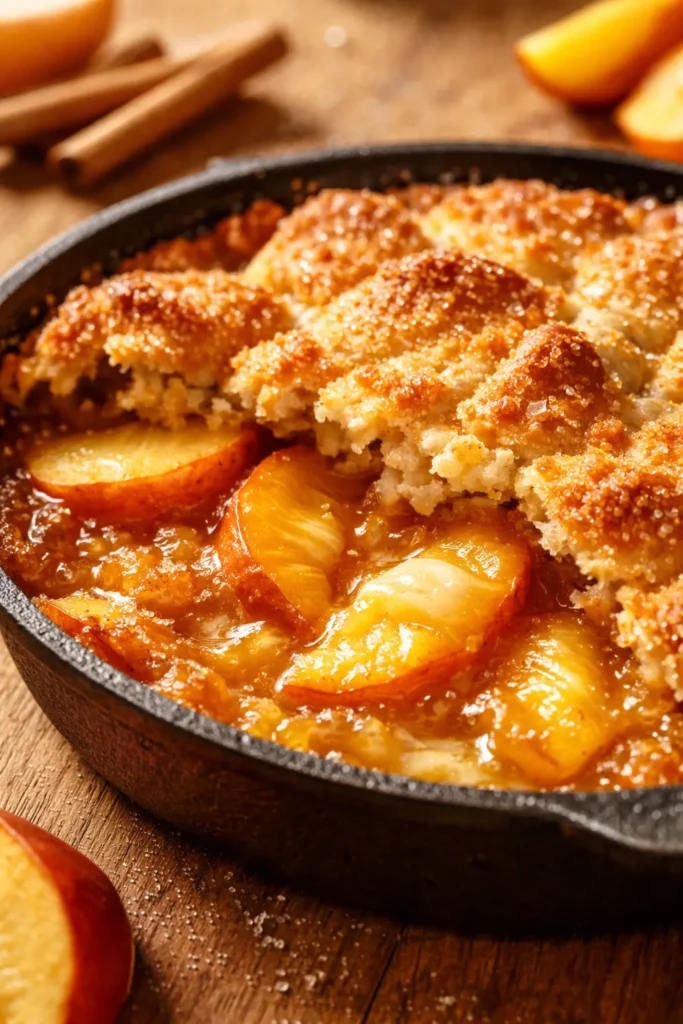
The first time I pulled a cobbler from the oven using this method, I actually heard the crust crack under my spoon — that shattering sound told me I’d never go back to the old stirring technique. The magic isn’t complicated, but it’s intentional. Melting the butter directly in the baking dish and pouring the batter over it creates a layer of hot fat that fries the bottom of the batter as it bakes. That initial blast of heat gives you a crust that’s golden and slightly crisp, never doughy or raw. The peaches sit on top, releasing their juices as the whole thing sets. The flour mixture absorbs just enough liquid to stay tender, and the butter keeps it from turning into a gumbo. According to USDA nutritional data, peaches are a solid source of Vitamin C, but honestly, I’m here for the texture contrast. It works every single time, and it never requires any special technique.
Ingredients That Matter (With My Honest Notes)
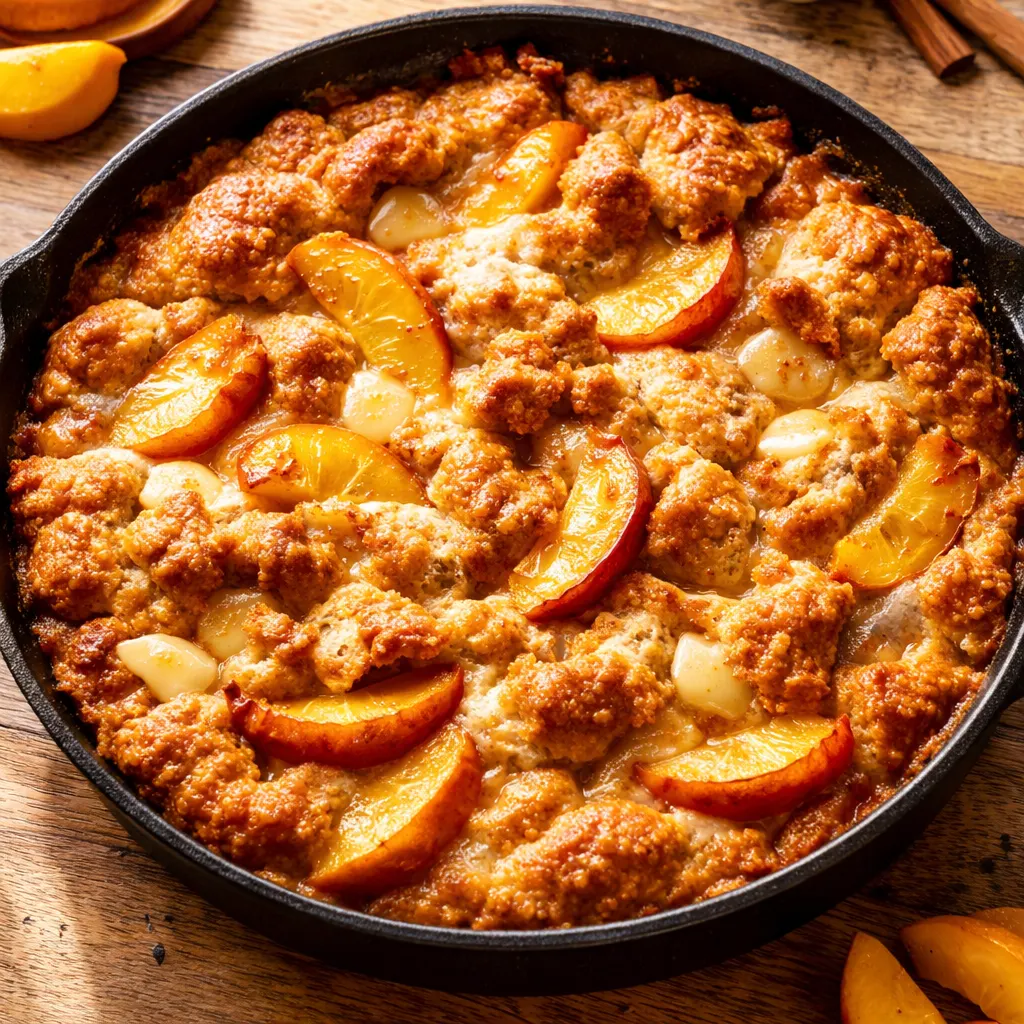
- 5 ripe peaches, sliced: Ripe but firm is the sweet spot. Freestone peaches are easiest to work with. Don’t bother peeling unless you want to — the skins soften as they bake and add nice color.
- 3/4 cup + 1 cup granulated sugar, divided: The first amount coaxes juice from the peaches. The second sweetens the batter. If your peaches are candy-sweet, you can dial the first amount back slightly.
- 1/4 teaspoon + 1/4 teaspoon salt, divided: Salt balances the sweetness and brightens the fruit. Don’t skip it in the batter — it prevents the cobbler from tasting flat.
- 6 tablespoons unsalted butter: Cut into pieces. It needs to melt completely in the hot pan. Do not use margarine or spreads — the water content is wrong and will make the crust tough.
- 1 cup all-purpose flour: Spoon it into your measuring cup and level it off. Scooping packs the flour and makes the batter dense.
- 2 teaspoons baking powder: Check the date. This is the only leavener, so if it’s old, your crust will be flat and heavy.
- 3/4 cup milk: Whole milk gives the richest result, but 2% works fine. Skim milk makes the batter thinner and less tender.
- Ground cinnamon: Be generous here. Sprinkle it over the top before baking — it’s the signature warm note that makes cobbler taste like cobbler.
What to Grab Before You Start
- Saucepan (medium-sized): For macerating the peaches. A wide pan helps the liquid reduce slightly.
- 9×13 inch baking dish: Glass or ceramic works best. Metal can conduct heat too aggressively and darken the crust before the middle sets.
- Large bowl: For mixing the batter. Nothing fancy needed.
- Whisk or spoon: A whisk helps break up lumps quickly, but a wooden spoon works fine.
Making Peach Cobbler: My Exact Process
This recipe moves fast once you start, so have everything measured and ready.
Prep the peaches: In a medium saucepan, combine the sliced peaches, 3/4 cup sugar, and 1/4 teaspoon salt. Stir to coat every slice. Cook over medium heat for 3 to 4 minutes, just until the sugar dissolves and the peaches release their juice. The liquid should look syrupy, not watery. Remove the pan from the heat and set it aside.
- Heat the oven and melt the butter: Preheat your oven to 350°F. Place the 6 tablespoons of butter in the 9×13 dish and slide it into the oven. Let it melt completely, about 5 minutes. When you take it out, the butter should be sizzling — not just melted, but actively bubbling.
- Mix the batter: In a large bowl, whisk together the flour, 1 cup sugar, 2 teaspoons baking powder, and 1/4 teaspoon salt. Pour in the 3/4 cup milk and stir until just combined. A few lumps are completely fine. Overmixing at this stage develops gluten and makes the crust tough.
- Assemble the cobbler: Take the hot dish with the melted butter out of the oven. Carefully pour the batter directly over the butter. Do not stir. It will look strange and separate — that’s the point. Spoon the peaches and all of their syrupy juice evenly over the top of the batter. Sprinkle cinnamon generously over everything.
- Bake: Place the dish in the oven and bake for 38 to 40 minutes. The top should be a deep golden brown, and the peach juice should be bubbling thickly around the edges. A toothpick inserted into the crust (not the fruit) should come out clean.
- Cool briefly: Set the dish on a wire rack and let it cool for 10 minutes. This step is crucial — it lets the juices settle and thicken so you don’t end up with a puddle on your plate.
- Serve: Scoop it warm, preferably with a scoop of vanilla ice cream melting into the top.
How to Make This Ahead (Because Life Is Busy)
I usually make this the day I plan to serve it, but there are ways to get ahead. You can slice and macerate the peaches up to 24 hours in advance and keep them in the fridge. I’ve also mixed the dry ingredients (flour, sugar, baking powder, salt) in a zip-top bag and left it in the pantry. When you’re ready to bake, melt the butter, stir in the milk, and assemble. It takes about five extra minutes.
- Fridge: Leftover cobbler keeps well, covered, for up to 4 days. The crust will soften in the fridge, but the flavor gets even better.
- Freezer: You can freeze the baked cobbler for up to 3 months. Wrap the dish tightly in plastic wrap and foil. Thaw overnight in the fridge before reheating.
- Reheat: The oven is your best friend here. Reheat in a 350°F oven for 15 to 20 minutes to restore the crust’s crispness. The microwave works if you’re in a hurry, but the top will be soft.
Testing This Recipe: What I Learned in My Kitchen
I made this cobbler recipe twenty times over three months, tweaking one variable at a time to see what actually mattered. The first batch taught me that cold butter yields a soggy bottom — the batter absorbs the fat instead of frying in it. Batch seven confirmed that overmixed batter produces a tough, bread-like crust no one wants. By batch twelve, I had the timing dialed: 38 minutes at 350°F gives a golden top with jammy fruit beneath. Each test reinforced the same lesson: the batter-over-butter method is forgiving, but respecting the details — sizzling butter, gentle mixing, the full cooling rest — makes the difference between a cobbler that merely works and one that wows.
Honest Advice After Making This 20 Times
- Don’t overmix the batter. I know it’s tempting to keep stirring until it’s perfectly smooth, but lumps are genuinely your friend. Overmixing develops the gluten in the flour, and that leads to a crust that’s tough and bread-like instead of tender and cakey. Mix it until the flour disappears and stop.
- Let the butter get fully hot. This is the most common mistake I see. The butter needs to be actively sizzling when you pour the batter over it. If it’s just melted, the batter absorbs it instead of frying in it. That initial heat is what creates the crispy bottom layer. I usually leave the pan in the oven for an extra minute after the butter looks melted, just to be safe.
- Taste your peaches. If they’re perfect, peak-season peaches, they might not need the full amount of sugar. I’ve made this with peaches so sweet I cut the maceration sugar down to half a cup. If they’re a little sad and underripe, leave the sugar as written — it helps coax out whatever flavor they have.
- Don’t skip the rest. That 10-minute cooling period isn’t optional. It’s the difference between a cobbler that holds together and one that floods the bowl. The juices need time to thicken, and the crust needs time to set.
Easy Ways to Make It Yours
- Gluten-Free: Substitute a 1:1 all-purpose gluten-free baking flour. The texture will be slightly more tender and crumbly, but it works well. Don’t use almond flour or coconut flour here — they need different liquid ratios.
- Dairy-Free: Use a high-quality vegan butter stick and your preferred unsweetened plant milk. Oat milk gives the best texture. The crust won’t be quite as crisp, but it will still be delicious.
- Spiced: Add 1/4 teaspoon nutmeg and a pinch of cardamom to the batter. It gives the cobbler a warm, aromatic note that pairs beautifully with the peaches.
- Berry Cobbler: Swap two of the peaches for 1 cup of fresh or frozen blueberries. Add a tablespoon of lemon juice to the maceration step. The blueberries will bleed a little, turning the filling a gorgeous deep purple.
- If you only have canned peaches: Drain them well — they’re packed in syrup and you don’t want the extra liquid. Skip the stovetop maceration step entirely and spoon the drained peaches directly over the batter.
Troubleshooting Your Cobbler
Why is my crust gummy instead of golden?
The most likely culprit is that the butter wasn’t hot enough when you poured the batter over it. Make sure it’s actively sizzling — not just melted. Overmixing the batter can also contribute to a gummy texture, so stir until it just comes together and then stop.
Why is my peach cobbler soupy?
Soupy filling usually means too much liquid from the fruit. If using frozen peaches, thaw and drain them thoroughly before macerating. For fresh peaches, make sure you’re cooking the sugar and fruit long enough — the syrup should be thick enough to coat a spoon. Also, don’t skip the 10-minute rest after baking; it gives the juices time to set.
Can I use frozen peaches?
You can, but you’ll need to thaw them completely and drain off the excess liquid. Frozen peaches release a lot of water, and too much liquid will make the cobbler soupy. Macerate them as directed after draining, and reduce the heat time if they’re very soft.
How do I know when the cobbler is done?
The top should be a deep golden brown, and you should see thick bubbles breaking through the crust around the edges. A toothpick inserted into the crust (not into a peach slice) should come out clean or with just a few moist crumbs. If it’s wet with batter, give it another 5 minutes.
Can I reduce the sugar without ruining the recipe?
You can reduce the sugar in the batter to 3/4 cup without major issues. Reducing the sugar in the peach maceration is trickier — it won’t extract as much juice, and the syrup won’t be as flavorful. If your peaches are exceptionally sweet, start by reducing the peach sugar by two tablespoons.
Can I Make This Cobbler Ahead of Time?
How long does it last?
In the fridge, tightly covered, for up to 4 days. The crust will soften as it sits — that’s normal, but it’s one reason I recommend baking it the day you plan to eat it.
Can I assemble it the night before and bake it in the morning?
I don’t recommend it. The batter will start absorbing moisture from the peaches and the butter, making the final texture dense and heavy. This is a same-day recipe, and it’s better for it.
What’s the best way to reheat a single serving?
Microwave it for about 30 seconds, then transfer it to a toaster oven at 350°F for 3 to 5 minutes. The microwave warms it through, and the toaster oven restores some of the crust’s crispness.
What to serve with this cobbler?
Vanilla ice cream is the classic for a reason — the cold creaminess balances the warm, jammy filling. A dollop of whipped cream or a splash of heavy cream is also incredible. If you’re feeling fancy, a spoonful of crème fraîche cuts the sweetness beautifully.
This cobbler is summer on a spoon, the kind of dessert that makes you slow down and actually taste what’s in front of you. I hope it becomes a tradition in your kitchen the way it has in mine.
If you try it, drop a comment below — I love hearing how it goes for you!
📌 This cobbler recipe bakes its own golden crust in 40 minutes — save it for your next summer gathering or lazy Sunday dessert.
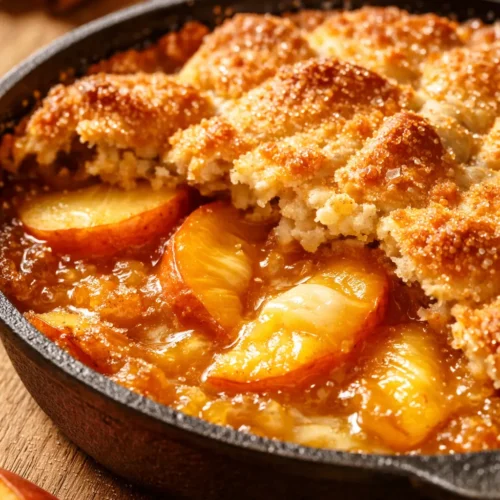
Peach Cobbler That Bakes Its Own Crust (Golden, Juicy, 40 Minutes)
Equipment
- Saucepan
- 9×13 baking dish
- Large Bowl
- Whisk
Ingredients
- 5 ripe peaches, sliced
- 3/4 cup granulated sugar for macerating peaches
- 1 cup granulated sugar for batter
- 1/4 teaspoon salt for macerating peaches
- 1/4 teaspoon salt for batter
- 6 tablespoons unsalted butter
- 1 cup all-purpose flour
- 2 teaspoons baking powder
- 3/4 cup milk whole or 2%
- ground cinnamon generous sprinkle
Instructions
- Prep the peaches: In a medium saucepan, combine the sliced peaches, 3/4 cup sugar, and 1/4 teaspoon salt. Stir to coat every slice. Cook over medium heat for 3 to 4 minutes, just until the sugar dissolves and the peaches release their juice. The liquid should look syrupy, not watery. Remove the pan from the heat and set it aside.
- Heat the oven and melt the butter: Preheat your oven to 350°F. Place the 6 tablespoons of butter in the 9×13 dish and slide it into the oven. Let it melt completely, about 5 minutes. When you take it out, the butter should be sizzling — not just melted, but actively bubbling.
- Mix the batter: In a large bowl, whisk together the flour, 1 cup sugar, 2 teaspoons baking powder, and 1/4 teaspoon salt. Pour in the 3/4 cup milk and stir until just combined. A few lumps are completely fine. Overmixing at this stage develops gluten and makes the crust tough.
- Assemble the cobbler: Take the hot dish with the melted butter out of the oven. Carefully pour the batter directly over the butter. Do not stir. It will look strange and separate — that’s the point. Spoon the peaches and all of their syrupy juice evenly over the top of the batter. Sprinkle cinnamon generously over everything.
- Bake: Place the dish in the oven and bake for 38 to 40 minutes. The top should be a deep golden brown, and the peach juice should be bubbling thickly around the edges. A toothpick inserted into the crust (not the fruit) should come out clean.
- Cool briefly: Set the dish on a wire rack and let it cool for 10 minutes. This step is crucial — it lets the juices settle and thicken so you don’t end up with a puddle on your plate.
- Serve: Scoop it warm, preferably with a scoop of vanilla ice cream melting into the top.
Notes
Related posts:
 Brown Sugar Peach Cake That Tastes Like a Bakery Treat — Ready in Under an Hour
 My Southern Peach Cobbler with Frozen Peaches: Buttery, Jammy, and Ready in 75 Minutes
 Low Calorie Banana Bread That Doesn’t Taste Like a Compromise — Finally
 This Raspberry Lemon Cake With White Chocolate Is the Only Layer Cake You Need for Spring Celebrations