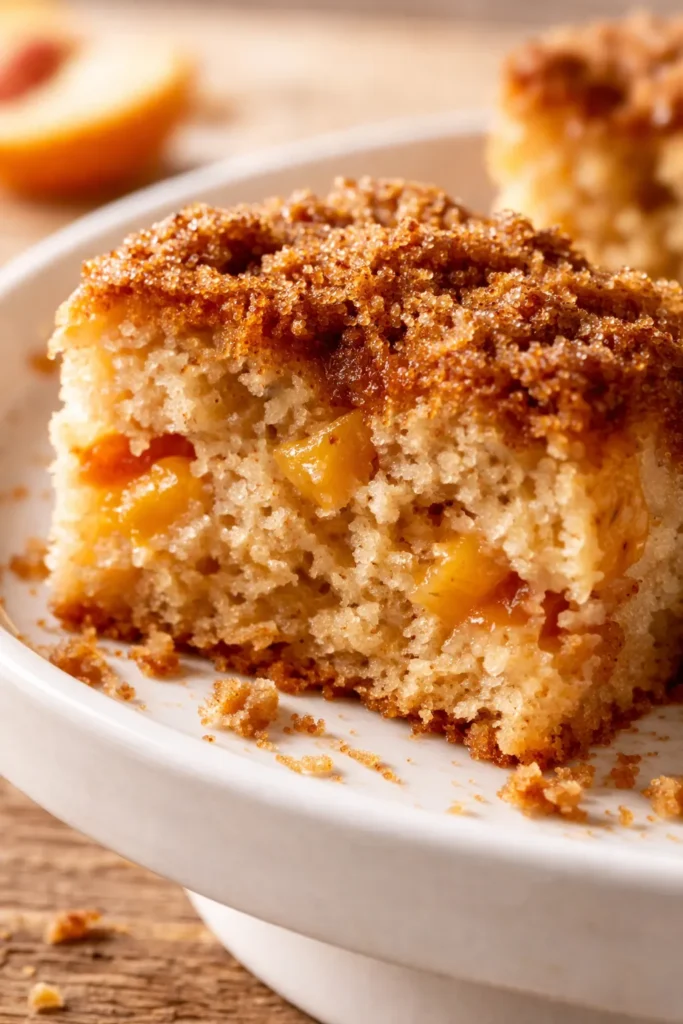
That first bite — where the soft, peachy cake gives way to a buttery brown sugar frosting that’s part caramel, part fudge — is the reason I keep a box of yellow cake mix in my pantry at all times. Last summer, my neighbor asked for the recipe after I brought it to a block party, and she’s made it six times since. The best part? The frosting doesn’t need any fancy techniques — just a saucepan and a whisk, and it sets up like magic.
The first time I made this, the frosting was thin and drippy because I didn’t let it boil long enough. Batch two I brought it to a full rolling boil for a full minute, and the difference was night and day — it poured like thick caramel and hardened into a crackly, sliceable top. Now I set a timer and don’t walk away from the saucepan. The final cake has a soft, peach-studded crumb with a glossy, almost candied topping that shatters when you cut it.
- Serves: 12 pieces
- Hands-On Time: 20 min | Total Time: 1 hour
- Difficulty: Easy — even for a first-time baker
- Cost per serving: ~$1.50
- Nutrition Estimate: 450 Calories, 4g Protein, 65g Carbs, 20g Fat, 12g Saturated Fat, 1g Fiber, 300mg Sodium per serving
- Dietary Notes: Vegetarian. Not dairy-free due to butter and cream in frosting; can use dairy-free substitutes but texture will change
(Photo above: Overhead shot of a golden cake in a 9×12 metal pan, the top covered in a glossy brown frosting with a few cracks, a fork rested on the side on a rustic wooden board, morning light from a window catching the caramel sheen.)
Why Pouring the Frosting While the Cake Is Warm Changes Everything
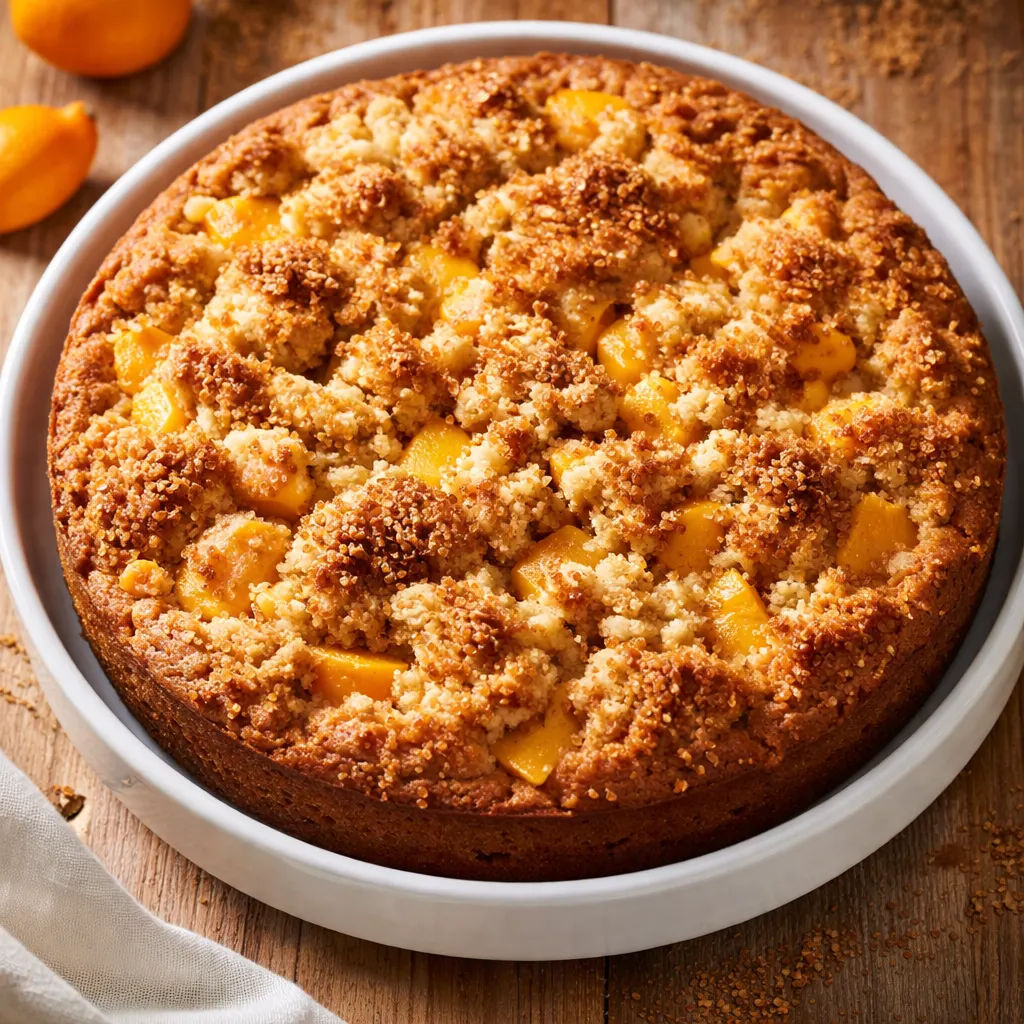
The frosting is a simple brown sugar caramel that you boil on the stove, then whisk in confectioner’s sugar. When you pour it over an almost-cool cake (about 5 minutes out of the oven), it settles into a smooth, even layer without you having to touch it. As it cools, it firms into a dense, chewy shell that cracks beautifully when you slice. If you pour it on a cake that’s too hot, it soaks in and disappears; if you wait until the cake is completely cool, it hardens before you can pour it fully and you’ll have a mess.
Fresh peaches are the star here — they add natural moisture and a sweet-tart pop that balances the rich, buttery frosting. Peaches are at peak sweetness when they yield to gentle pressure — roughly 15% of their weight is natural sugars (USDA nutritional data shows that the sugar content increases as they ripen). If your peaches aren’t fully ripe, the cake will still be good, just a little less fragrant. I’ve used frozen peaches in a pinch (thawed and well-drained), and they work fine — just reduce the peach nectar by 2 tablespoons since frozen fruit releases more liquid.
Everything You Need (And a Few Notes From Me)
- 15 ounces yellow cake mix: The shortcut that makes this weeknight-easy. I use the store brand — no need to get fancy.
- 3 large eggs: Room temperature — cold eggs can make the batter stiff and the cake dense. Set them out 30 minutes before starting.
- 1/3 cup vegetable oil: Keeps the cake moist. You can use melted butter, but the texture will be slightly heavier.
- 1/2 cup peach nectar or peach juice: This adds peach flavor to the cake itself. Look for it in the juice aisle or use the syrup from canned peaches if you’re using those.
- 1 pound peeled and chopped peaches: About 2-3 medium peaches. Leave the skin on if you don’t mind little red flecks — I don’t bother peeling for a rustic look.
- Drop orange food coloring (optional): For a brighter orange tint. Completely optional — I only use it if I’m feeling extra.
- 1/2 cup unsalted butter, cut in pieces: Use unsalted so you control the salt. Cut into pieces so it melts evenly.
- 1/2 cup heavy cream: Don’t substitute milk — the fat in heavy cream is what gives the frosting its rich texture and stable set.
- 1 cup packed brown sugar: Light or dark both work; dark will give a deeper molasses flavor. Pack it firmly into the measuring cup.
- 1 teaspoon vanilla extract: Pure vanilla is best, but imitation works fine here since the brown sugar is the main flavor.
- 2 1/2 cups confectioner’s sugar, sifted: Sifting prevents lumps. Measure it, then sift it into a bowl to have ready.
What to Pull Out Before You Start
- Oven — preheated to 350°F
- 9×12 baking pan — light-colored metal or glass works; dark pans may brown the edges faster
- Toothpick — for testing doneness
- Saucepan — medium-sized, not too small or the frosting can bubble over
- Whisk — for the frosting; a wooden spoon works too but whisk is smoother
- Refrigerator (optional) — for speeding up frosting set
Let’s Make It (Step by Step)
This comes together like a boxed mix cake with a homemade upgrade. Get your peaches chopped and your butter measured before you start the frosting — it sets fast.
Preheat and prep: Preheat your oven to 350°F. Lightly spray a 9×12 baking pan with cooking spray or grease it with butter. Set it aside.
- Mix the cake batter: In a large bowl, blend together the yellow cake mix, 3 large eggs, 1/3 cup vegetable oil, 1/2 cup peach nectar (and the drop of food coloring if using) until well combined. It should be smooth with no dry streaks — about 30 seconds with a whisk. Don’t overmix.
- Fold in the peaches: Gently fold the chopped peaches into the batter with a spatula. Overmixing at this stage can break up the peaches and make the cake dense. Just a few folds until they’re evenly distributed.
- Bake: Pour the batter into the prepared pan and spread it evenly. Bake for 28 minutes, or until done — test with a toothpick inserted in the center; it should come out without wet batter clinging to it, but a few moist crumbs are fine. The sides will just start to pull away from the pan. Let the cake cool in the pan on a wire rack for exactly 5 minutes while you make the frosting.
- Make the frosting: While the cake bakes, combine 1/2 cup unsalted butter (cut in pieces), 1/2 cup heavy cream, and 1 cup packed brown sugar in a medium saucepan. Bring to a boil over medium heat, stirring constantly. Once it reaches a full rolling boil — large bubbles that don’t stop when you stir — let it boil for a full minute. Remove from heat and add 1 teaspoon vanilla extract and the sifted 2 1/2 cups confectioner’s sugar. Whisk vigorously until the frosting is smooth and all lumps are gone. If it’s too thick or lumpy, put it back on low heat for a few seconds and whisk again — but don’t let it boil.
- Pour the frosting: Working quickly, pour the frosting over the warm cake (the 5-minute rest is perfect). Tilt the pan gently to spread it evenly if needed — but try to get it right on the first pour, because the frosting sets fast and you won’t be able to spread it without cracking the surface.
- Let it harden: Let the frosting set at room temperature until firm, about 30 minutes. If you’re in a hurry, pop the pan in the refrigerator for 15 minutes. Once set, slice with a sharp knife — the top will crackle perfectly.
What My Kitchen Testing Taught Me About This Cake
I made this cake seven times before I felt confident enough to share the recipe. Here’s what I learned in those batches — the small details that separate a good cake from a great one.
- Don’t overmix the batter after adding peaches. I know it’s tempting to keep stirring, but those peach chunks release juice and can make the batter heavy. Fold just until you don’t see dry flour, then stop. The cake will come out lighter.
- Boil the frosting for a full minute once it reaches a rolling boil. It’s easy to pull it off too early because it looks ready. Trust me — let those big bubbles tick away for 60 seconds. That extra time concentrates the sugar and butter so the frosting sets properly. If you skip it, you’ll have a puddle, not a sliceable top.
- Let the cake cool exactly 5 minutes before pouring. I’ve done this with a 2-minute rest and the frosting soaked right into the cake, leaving no visible layer. At 10 minutes, the frosting was already thickening in the pan and wouldn’t pour evenly. Five minutes is the sweet spot.
- If your frosting feels too thin after pouring, don’t panic. Wait 10 minutes — it will start to set. If it runs off the edges and pools, it probably needed a longer boil. Next time, add an extra 15 seconds. It will still taste amazing, even if it looks rustic.
- Room temperature eggs make a real difference. I tested this with cold eggs once, and the batter was noticeably stiffer — the cake came out a touch denser. Setting the eggs out for 30 minutes is worth the wait.
Swaps That Actually Work
- Dairy-free: Use a good-quality vegan butter stick (like Miyoko’s) and full-fat coconut cream (chilled, with the liquid drained) in place of heavy cream. The frosting may be a bit softer but still delicious.
- Gluten-free: A gluten-free yellow cake mix works perfectly here. Just follow the box instructions for the mix and add the peaches as directed. No other changes needed.
- Nectarine or apricot: Substitute an equal weight of peeled, chopped nectarines or apricots. The sweetness varies, so you may want to reduce the brown sugar in the frosting by a tablespoon if using very sweet fruit.
- Spiced version: Add 1/2 teaspoon cinnamon and a pinch of nutmeg to the cake batter. It brings out the peachy flavor, especially in colder months.
- Canned peaches: Yes — drain them very well (pat them dry with paper towels) and skip the nectar; use 2 tablespoons of the syrup if needed.
Troubleshooting Your Brown Sugar Peach Cake
Q: Why did my frosting run off the cake and pool at the bottom?
A: This usually means the frosting wasn’t boiled long enough. The mixture needs to reach a full rolling boil and stay there for at least one minute — that drives off some water and melts the sugar so it can firm up. Next time, set a timer as soon as you see big bubbles that don’t stop when you stir. If you’ve already poured it and it’s a mess, scoop it off, reserve it, let the cake cool completely, then rewarm the frosting with a splash of cream and try again.
Q: Can I use canned peaches for this cake?
A: Yes, absolutely — but use peaches packed in juice or light syrup, not heavy syrup, and drain them thoroughly. Pat them dry with paper towels so they don’t add too much liquid to the batter. Reduce the peach nectar to 1/4 cup since the canned fruit already has moisture. The texture will be a little softer, but the flavor is still great.
Q: How do I know when the cake is done?
A: The toothpick test is your friend here. Insert a toothpick into the center of the cake — it should come out with a few moist crumbs clinging to it, but no wet batter. The cake should also spring back lightly when you press the center with a finger. Start checking at 25 minutes; every oven runs a little differently.
Q: Can I make this vegan or dairy-free?
A: You can try using a vegan yellow cake mix and follow the box directions for oil/water instead of eggs. For the frosting, use 1/2 cup vegan butter and 1/2 cup full-fat coconut cream (chilled, not stirred). The coconut flavor will come through a little, but it pairs well with peach. The consistency may be slightly less firm — chill it thoroughly before slicing.
Q: How long does this cake last, and how should I store it?
A: Store it in an airtight container at room temperature for up to 3 days. The frosting stays firm and the cake stays moist — I actually think it’s even better on day two, when the peach flavors have had time to meld. If it’s very hot in your kitchen, you can refrigerate it, but bring slices back to room temperature before serving for the best texture.
Q: Can I make it ahead or freeze it?
A: Yes — bake the cake, let it cool completely, then wrap it very tightly in plastic wrap and foil. Freeze for up to 3 months. When you’re ready to serve, thaw it at room temperature (still wrapped to avoid condensation), then make the frosting fresh and pour it over. Cake freezes beautifully; the frosting does not, so always add it after thawing.
Q: What’s the best way to reheat this cake?
A: Serve it at room temperature for the best texture. If you want it warm, microwave individual slices for about 15 seconds — the frosting gets soft and the cake becomes extra tender. Don’t reheat the whole cake or the frosting will melt and run.
Q: What do you serve with Brown Sugar Peach Cake?
A: A scoop of vanilla ice cream is classic — the cold creaminess balances the chewy frosting. A dollop of whipped cream (lightly sweetened) also works. For a grown-up twist, serve it with a splash of bourbon whipped cream or a drizzle of warm caramel sauce. I actually love it with a cup of black coffee in the afternoon — it’s not too sweet on its own.
This cake has become my go-to for last-minute gatherings and lazy Sunday afternoons. The way that frosting cracks when you slice through it never gets old.
If you try it, drop a comment below — I love hearing how it goes for you! Tag me on Pinterest so I can see yours!
📌 This easy brown sugar peach cake with a crackly caramel frosting is the perfect summer dessert — save it for your next picnic or potluck.
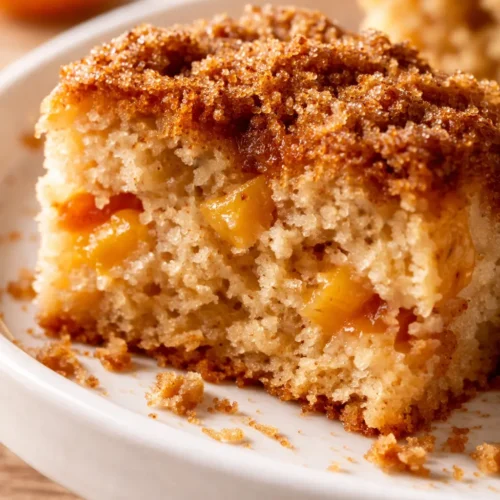
Brown Sugar Peach Cake That Tastes Like a Bakery Treat — Ready in Under an Hour
Equipment
- Oven
- 9×12 baking pan
- Toothpick
- Saucepan
- Whisk
- Refrigerator (optional)
Ingredients
Main
- 15 ounces yellow cake mix
- 3 large eggs
- 0.33 cup vegetable oil
- 0.5 cup peach nectar or peach juice
- 1 pound peaches peeled and chopped, about 2-3 medium
- 1 drop orange food coloring optional
- 0.5 cup unsalted butter cut in pieces
- 0.5 cup heavy cream
- 1 cup brown sugar packed
- 1 teaspoon vanilla extract
- 2.5 cups confectioner’s sugar sifted
Instructions
- Preheat your oven to 350°F. Lightly spray a 9×12 baking pan with cooking spray or grease it with butter. Set it aside.
- In a large bowl, blend together the yellow cake mix, 3 large eggs, 1/3 cup vegetable oil, 1/2 cup peach nectar (and the drop of food coloring if using) until well combined. It should be smooth with no dry streaks — about 30 seconds with a whisk. Don’t overmix.
- Gently fold the chopped peaches into the batter with a spatula. Overmixing at this stage can break up the peaches and make the cake dense. Just a few folds until they’re evenly distributed.
- Pour the batter into the prepared pan and spread it evenly. Bake for 28 minutes, or until done — test with a toothpick inserted in the center; it should come out without wet batter clinging to it, but a few moist crumbs are fine. The sides will just start to pull away from the pan. Let the cake cool in the pan on a wire rack for exactly 5 minutes while you make the frosting.
- While the cake bakes, combine 1/2 cup unsalted butter (cut in pieces), 1/2 cup heavy cream, and 1 cup packed brown sugar in a medium saucepan. Bring to a boil over medium heat, stirring constantly. Once it reaches a full rolling boil — large bubbles that don’t stop when you stir — let it boil for a full minute. Remove from heat and add 1 teaspoon vanilla extract and the sifted 2 1/2 cups confectioner’s sugar. Whisk vigorously until the frosting is smooth and all lumps are gone. If it’s too thick or lumpy, put it back on low heat for a few seconds and whisk again — but don’t let it boil.
- Working quickly, pour the frosting over the warm cake (the 5-minute rest is perfect). Tilt the pan gently to spread it evenly if needed — but try to get it right on the first pour, because the frosting sets fast and you won’t be able to spread it without cracking the surface.
- Let the frosting set at room temperature until firm, about 30 minutes. If you’re in a hurry, pop the pan in the refrigerator for 15 minutes. Once set, slice with a sharp knife — the top will crackle perfectly.