
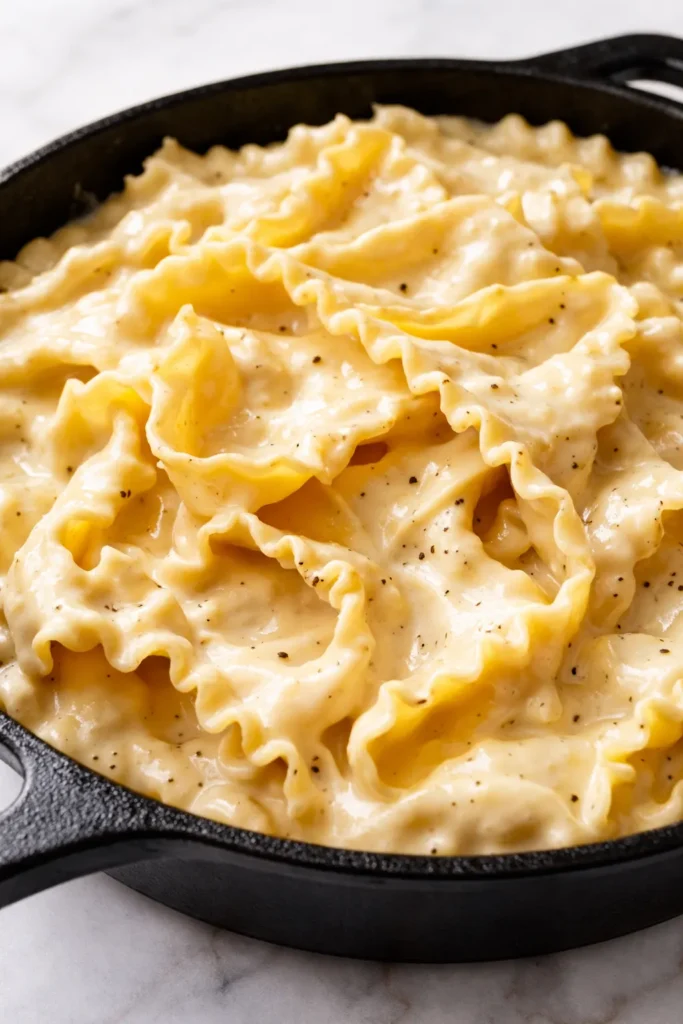
The first time I made lasagna in a skillet, I was skeptical. I’m from New Orleans — we layer things. We take time. But my daughter Simone was hungry, it was a Tuesday, and I had a pound of beef and a box of noodles that needed to turn into dinner in forty minutes. What came out of that skillet was so creamy, so cohesive, that I actually texted my sister a photo before I even finished eating. She asked for the recipe before I finished chewing. That was three years ago. I’ve made it at least thirty times since. It’s the only lasagna I make now.
The short version: This one-skillet lasagna gives you all the creamy, cheesy depth of the Sunday-baked version in about 40 minutes, with just one pan to wash.
I’ve made this on busy Tuesdays, on camping trips, and for company who had no idea it came together in under an hour. My eight-year-old has called it “the best dinner I make” — and she is not generous with compliments.
- Serves: 6 as a main
- Hands-On Time: 20 min | Total Time: 40 min
- Difficulty: Easy, even on a busy Tuesday
- Cost per serving: ~$4.50
- Calories: ~620 per serving
- Dietary Notes: Contains gluten and dairy. See swaps below for gluten-free and dairy-free versions.
(Photo above: Overhead shot of a dark cast iron skillet filled with a bubbling lasagna. A spoon cuts through the center, revealing a cross-section of tender noodles, rich meat sauce, and fluffy ricotta clouds, all topped with a golden, bubbly layer of mozzarella. The skillet sits on a trivet with a crumpled linen napkin beside it.)
Why the No-Boil Method Wins Every Time
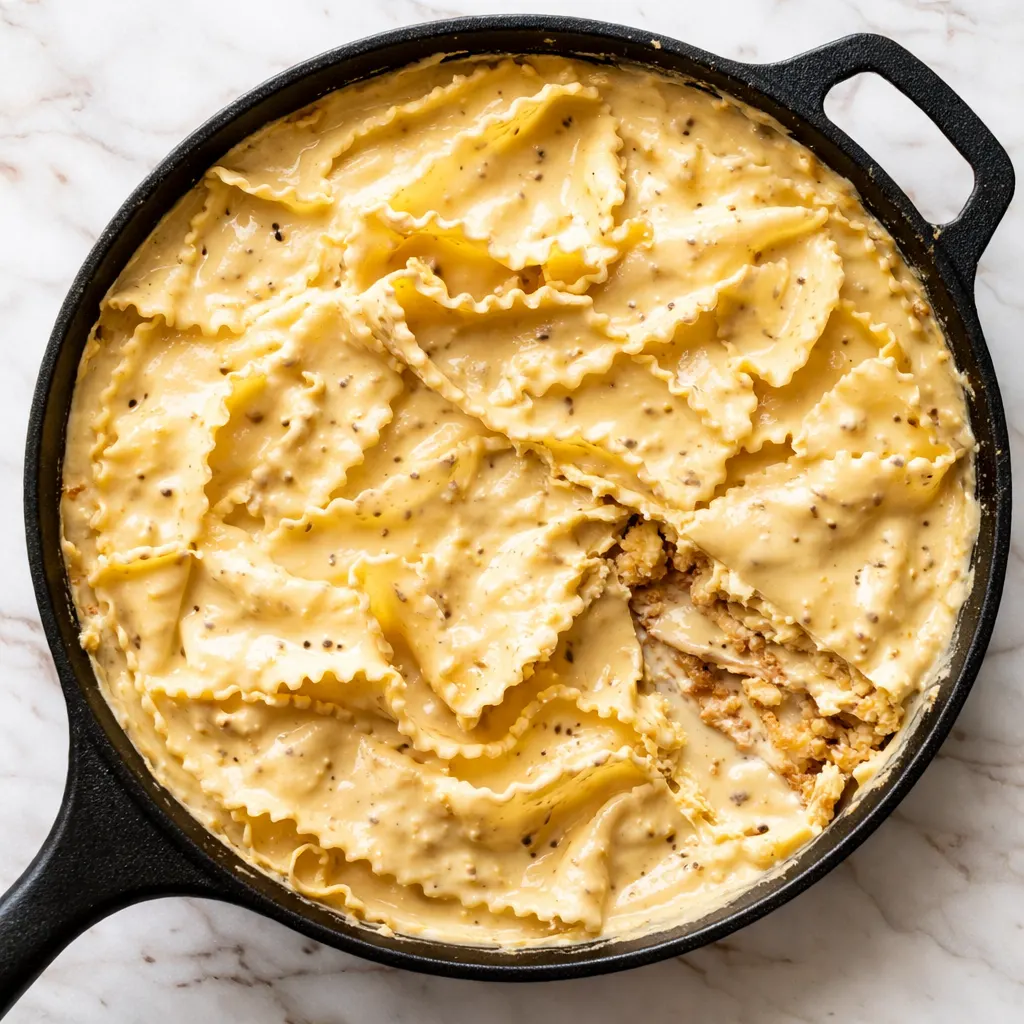
The biggest mistake I see in one-skillet pasta recipes is treating the noodles like they’re going to boil the same way they do in a pot of salted water. They don’t. They need to absorb the broth and the sauce while releasing their starch directly into the liquid around them. That starch migration is what gives you that velvety, almost custardy texture without needing a gallon of cream. It builds the sauce and cooks the pasta at the same time — and that’s the whole point.
Plus, you get this lovely browned bottom if you let it sit for a minute before serving. Not quite a socarrat, but close. My husband Marcus fights me for the corner pieces.
Everything You Need for Skillet Lasagna (Plus My Notes)
- 1 tbsp olive oil: For browning. Don’t skimp — it’s the only fat you’re adding besides the meat.
- 1 lb ground beef (80/20): The fat matters here. Lean beef will be dry. I use a mix of chuck and sweet Italian sausage when I want extra flavor. Simone asked me why I don’t use turkey. I said “because this isn’t that recipe” and she understood.
- 1 medium yellow onion, diced: Cook it until it’s translucent and sweaty — about 5 minutes.
- 4 cloves garlic, minced: I add mine halfway through the onion cook so it doesn’t burn.
- 3 tbsp tomato paste: Bloom it in the pan after the onions and garlic. This is the step that adds depth. Do not skip it. It takes 90 seconds.
- 1 tsp dried oregano and 1/2 tsp red pepper flakes: Bloom these with the paste.
- 1 (28-oz) can crushed tomatoes: Hunt’s or San Marzano. Hand-crushed whole tomatoes work perfectly too.
- 2 cups low-sodium chicken or beef stock: The pasta will drink this up. Beef stock makes it richer, chicken keeps it lighter.
- 9 lasagna noodles, broken into 2-inch pieces: I use curly edge noodles because they catch the sauce better. No-boil or regular both work.
- 1 cup whole milk ricotta: Part-skim is fine but the creaminess takes a hit. My trick: whisk in an egg and a pinch of salt so it sets into little fluffy clouds rather than just melting away.
- 1 large egg: For the ricotta.
- 2 cups shredded whole milk mozzarella: Low-moisture, not fresh. Fresh has too much water and makes the top soggy.
- 1/2 cup grated Parmesan: The real stuff. Not the green can. It doesn’t melt the same.
- Fresh basil and salt/pepper to finish.
What to Pull Out Before You Start
- A 12-inch deep skillet or braiser with a tight-fitting lid: This is non-negotiable. You need the surface area for the pasta to cook evenly and the depth to hold the liquid. I use my 12-inch cast iron shallow braiser. If you don’t have a lid, foil works but the seal won’t be as good.
Let’s Make It — Step by Step
This goes faster than you think. Read through once so you’re ready, then just follow along.
- Brown the meat: Heat the oil in your skillet over medium-high heat. Add the ground beef and cook, breaking it up, until it’s deeply browned and crisp in spots — about 6 to 7 minutes. Don’t stir it constantly. Let it sit so the Maillard reaction can do its thing. Use a slotted spoon to transfer the meat to a bowl, leaving the fat behind. (📸 Photo tip: You want the bottom of the skillet to have a nice brown crust — that’s flavor waiting to be lifted.)
- Sauté the aromatics: Lower the heat to medium. Add the onion and cook until soft, about 4 minutes. Add the garlic and cook for 30 seconds until fragrant.
- Bloom the paste: Push the onions to the side, add the tomato paste directly to the pan, and stir it in the hot fat for about 2 minutes. It’ll darken and smell almost sweet. Add the oregano and red pepper flakes and stir. (📸 Photo tip: The paste should be brick red and glossy, not burned and dull.)
- Deglaze and build the sauce: Pour in the stock and scrape up all those browned bits from the bottom with your spoon. Add the crushed tomatoes, 1/2 teaspoon of salt, and several cracks of black pepper. Bring it to a simmer.
- Cook the pasta: Stir in the broken lasagna noodles, pressing them down so they’re fully submerged in the sauce. Return the browned meat to the pan. Cover, reduce the heat to low, and simmer for 18 to 22 minutes, stirring once halfway through, until the noodles are tender. If it starts looking dry before the pasta is done, add a splash of warm water or stock.
- Prepare the ricotta: While the pasta cooks, stir together the ricotta, egg, the 1/2 cup of Parmesan, and a pinch of salt.
- Add the cheese: Dollop the ricotta mixture evenly over the top of the cooked lasagna. Sprinkle with the shredded mozzarella. Cover again and cook on low for 5 minutes, then remove the lid and let it sit for 2 to 3 minutes so the top sets.
- Rest and serve: This is the hardest step: let the skillet sit off the heat for 5 full minutes. The lasagna will firm up as it rests and the sauce will tighten. Top with torn fresh basil and serve hot.
How I Meal Prep This (And Use the Leftovers)
Lasagna is one of those dishes that gets better on day two. I make a double batch on Sundays and we’re set for Monday and Tuesday lunches.
- Fridge: Cool completely and store in an airtight container for up to 4 days. Reheat in a skillet with a splash of water or stock to loosen the sauce back up.
- Freezer: Yes! Assemble the whole thing in a freezer-safe skillet or baking dish but stop before you add the final cheese topping. Freeze covered for up to 3 months. Thaw overnight in the fridge, then bake at 375°F with the cheese on top until bubbly.
- Reheat: Microwave works in a pinch, but the skillet method keeps the texture right. Medium-low heat, covered, about 8 minutes.
A Few Things I Learned Making This 12 Times
- Don’t trust the package timing on the noodles: Start checking at 15 minutes. Every brand absorbs liquid differently. I’ve had some that are perfect at 16 minutes and others that need 22.
- The lid needs to fit tight: If steam escapes, the pasta won’t cook evenly. If your lid is loose, use a piece of foil underneath it to create a better seal. I learned this the hard way with a big batch that was crunchy on the top and mushy on the bottom.
- Let it rest. I mean it. Lasagna just out of the pan is a puddle. Lasagna that’s rested for 5 to 10 minutes is a cohesive dish that holds its shape on the plate. Even if you’re starving, wait. I know it’s hard. I do it too.
- Season the ricotta: Don’t just dump plain ricotta on top. Stir in an egg and a handful of Parmesan like I mentioned above. It makes a difference between a flat layer and a creamy, set layer.
Swaps That Actually Work (I’ve Tested Them)
- Vegetarian: Swap the beef for 2 cups of finely chopped cremini mushrooms and a can of drained brown lentils. Sauté them well so they get brown and meaty. My friend Tasha makes it this way and her kids don’t even notice the difference.
- Gluten-Free: Use gluten-free lasagna noodles and add 1/2 cup more stock. Check them at 12 minutes — gluten-free pasta goes from al dente to mush fast, so don’t walk away.
- Spicy: Add a diced jalapeño with the onions and use spicy Italian sausage instead of beef. Marcus requests this version specifically.
- Dairy-Free: Use a dairy-free ricotta (Kite Hill is good) and skip the mozzarella. The Parmesan is harder to replace, so I just use nutritional yeast stirred into the sauce.
Questions I Get About This Recipe All the Time
Q: Why did my noodles turn out mushy?
A: Two common reasons: too much liquid or cooking too long. You want the noodles just submerged, not swimming. And start checking them at 15 minutes. Even if there’s a tiny white dot in the center, they’ll keep cooking when you add the cheese and during the rest step.
Q: Can I use jarred marinara instead of crushed tomatoes?
A: Yes, but cut the stock by a full cup. Jarred sauce is thicker and already seasoned, so you’ll need less liquid to keep the pasta from getting waterlogged. And go easy on the salt until you taste it.
Q: Can I use cottage cheese instead of ricotta?
A: Absolutely. I just recommend draining it in a fine-mesh strainer for about 20 minutes first. Cottage cheese has more moisture than ricotta and can make the top a little watery if you skip this step. My sister makes it this way every time and swears by it.
Q: What do you serve with this?
A: A green salad with a sharp vinaigrette — the acid cuts through the richness. We also love it with a side of roasted broccoli or garlic bread. Simone wants hers with a pile of buttered corn. I don’t argue with her logic.
More Recipes My Family Makes on Repeat
If you loved this one-skillet lasagna, here are a few others that get the same reaction at our table:
- Creamy Chicken and Rice Skillet — A one-pot wonder that’s even faster than this lasagna, with a similar creamy, comforting feel.
- My Go-To Weeknight Bolognese — The same deep flavor but over your favorite pasta, and it freezes beautifully for busy weeks.
- Cheesy Ground Beef and Potato Casserole — Hearty, filling, and the kind of dinner that gets eaten in 15 minutes flat.
This is the lasagna I make when I want the Sunday version without the Sunday effort. It’s messy in the best way, it’s rich without being heavy, and it comes together in one pan so cleanup is just as fast. If you try it, drop a comment below — I love hearing how it went for you, and which variations your family loved.
📌 One skillet lasagna recipe that’s creamier than baked and ready in 40 minutes — save it for your busiest weeknights when you still want something that feels like Sunday dinner.
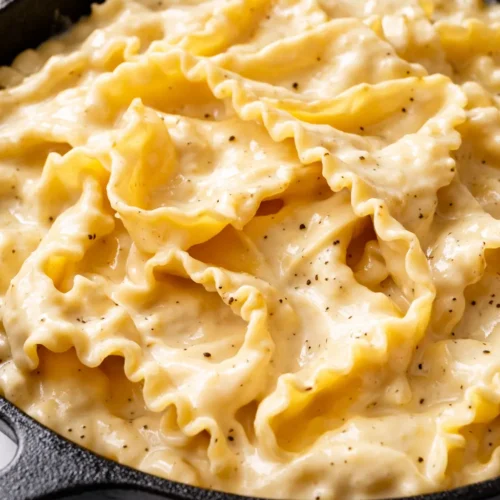
One Skillet Lasagna That’s Creamier Than the Baked Version
Equipment
- 12-inch deep skillet or braiser with tight-fitting lid
Ingredients
For the Meat Sauce
- 1 tbsp olive oil
- 1 lb ground beef (80/20)
- 1 medium yellow onion, diced
- 4 cloves garlic, minced
- 3 tbsp tomato paste
- 1 tsp dried oregano
- 1/2 tsp red pepper flakes
- 28 oz crushed tomatoes
- 2 cups low-sodium chicken or beef stock
- 9 lasagna noodles, broken into 2-inch pieces
- salt and black pepper, to taste
For the Cheese Topping
- 1 cup whole milk ricotta
- 1 large egg
- 1/2 cup grated Parmesan cheese
- 2 cups shredded whole milk mozzarella
- fresh basil leaves, for garnish
Instructions
- Brown the meat: Heat the oil in your skillet over medium-high heat. Add the ground beef and cook, breaking it up, until it is deeply browned and crisp in spots — about 6 to 7 minutes. Don’t stir it constantly. Let it sit so the Maillard reaction can do its thing. Use a slotted spoon to transfer the meat to a bowl, leaving the fat behind.
- Sauté the aromatics: Lower the heat to medium. Add the onion and cook until soft, about 4 minutes. Add the garlic and cook for 30 seconds until fragrant.
- Bloom the paste: Push the onions to the side, add the tomato paste directly to the pan, and stir it in the hot fat for about 2 minutes. It will darken and smell almost sweet. Add the oregano and red pepper flakes and stir.
- Deglaze and build the sauce: Pour in the stock and scrape up all the browned bits from the bottom with your spoon. Add the crushed tomatoes, 1/2 teaspoon of salt, and several cracks of black pepper. Bring it to a simmer.
- Cook the pasta: Stir in the broken lasagna noodles, pressing them down so they are fully submerged in the sauce. Return the browned meat to the pan. Cover, reduce the heat to low, and simmer for 18 to 22 minutes, stirring once halfway through, until the noodles are tender. If it starts looking dry before the pasta is done, add a splash of warm water or stock.
- Prepare the ricotta: While the pasta cooks, stir together the ricotta, egg, the 1/2 cup of Parmesan, and a pinch of salt.
- Add the cheese: Dollop the ricotta mixture evenly over the top of the cooked lasagna. Sprinkle with the shredded mozzarella. Cover again and cook on low for 5 minutes, then remove the lid and let it sit for 2 to 3 minutes so the top sets.
- Rest and serve: This is the hardest step: let the skillet sit off the heat for 5 full minutes. The lasagna will firm up as it rests and the sauce will tighten. Top with torn fresh basil and serve hot.
Notes
- Don’t trust the package timing on the noodles — start checking at 15 minutes.
- The lid needs to fit tight; use foil under a loose lid for a better seal.
- Let the lasagna rest for 5-10 minutes after cooking for a cohesive dish.
- Season the ricotta with an egg and Parmesan — it makes a difference.
Related posts:
 Breakfast Crunchwraps That Stay Golden and Crisp in 30 Minutes — The Only One You’ll Need
 Savory Red Lentil Pancakes That Stay Crispy and Keep You Full Until Lunch
 Marry Me Chickpeas: The Creamy, Garlicky Version That’s Actually Worth the Hype – in 30 Minutes
 Tortellini Carbonara That’s Creamier Than Any Restaurant — in 30 Minutes